|
‘2026 Epidemic Infectious Disease Response Tabletop Exercise’ Conducted
|
|
- Assuming a suspected Ebola virus disease patient… checking everything from isolation to transport, testing and environmental disinfection - Related departments including the emergency room, Infection Control Office, Radiology and Security Team participated, and exercise results will be reflected in the standard manual
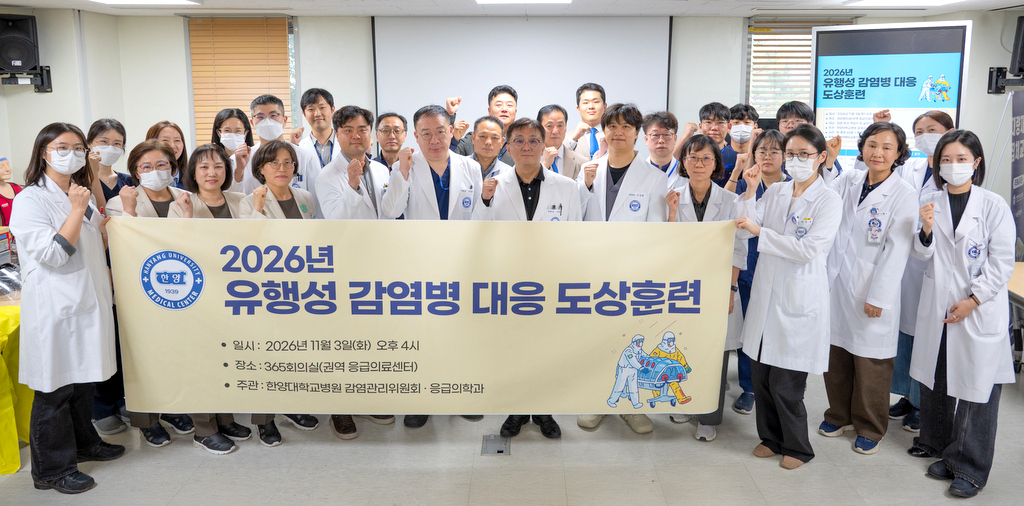
Hanyang University Hospital (President Lee Hyeongjoong) conducted the ‘2026 Epidemic Infectious Disease Response Tabletop Exercise’ in the 365 Conference Room on the 2nd floor of the Regional Emergency Medical Center on November 3.
Organized by the Infection Control Office and the Department of Emergency Medicine, the exercise assumed a situation in which a suspected Ebola virus disease patient who visited the emergency room needed an emergency MRI scan during isolation care. It focused on checking each department’s response system to prevent the spread of infection that could occur during the testing of patients with high-risk infectious diseases and to ensure the safety of patients, medical staff and other visitors.
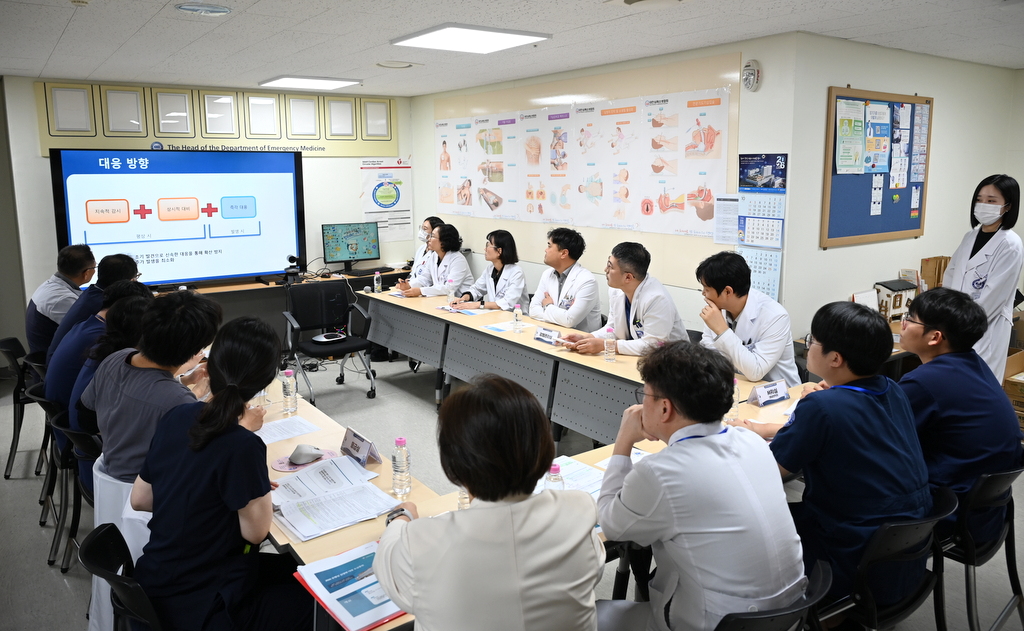
Related departments, including the Infectious Disease Crisis Response Team, the Infection Control Team, the Department of Emergency Medicine, the Department of Nursing, the Department of Radiology, the Emergency Planning Team and the Security Team, participated in the exercise. After a lecture on Ebola virus disease by Professor Kim Jinnam of the Department of Infectious Diseases and an online simulation of donning and doffing Level C protective equipment, participants used floor plans and situation cards to discuss response measures for the hypothetical patient scenario.
The scenario was set as a 36-year-old male patient who visited the emergency room with fever, headache, muscle pain and vomiting after visiting the Democratic Republic of the Congo and showed acute neurological abnormalities, such as unilateral paralysis and decreased consciousness, while in isolation.
Accordingly, the participating departments checked step-by-step response procedures, including ▲emergency room screening and negative-pressure isolation ▲internal reporting and notification to health authorities ▲determining and approving the need for an MRI scan ▲patient transport using a negative-pressure cart and control of movement routes ▲setting up a controlled zone in the examination room and responding to unexpected situations ▲environmental disinfection after testing and reopening of the examination room ▲management of exposed staff and contacts.
In particular, the Department of Emergency Medicine and the Department of Radiology discussed the need for emergency testing of patients with high-risk infectious diseases and ways to conduct testing safely, and the Security Team confirmed measures to control the movement routes of general patients and guardians during patient transport. The department in charge of environmental management and the Infection Control Office checked the procedures for reopening the examination room, including ventilation, environmental disinfection and confirmation of completed disinfection after testing.
Director of the Infection Control Office Kim Bongyoung said, “Thorough advance preparation and interdepartmental cooperation are important so that necessary care can be provided in a timely manner even to patients with high-risk infectious diseases,” adding, “We will reflect the response procedures and areas for improvement identified in this exercise in the hospital’s standard manual so that we can respond quickly and safely in actual infectious disease outbreaks.”
Meanwhile, the matters discussed in this exercise will be reflected in the ‘Hanyang University Hospital Standard Manual for Response to Epidemic Infectious Disease Outbreaks’ and in each department’s infection control education plan (End). |
News
Hanyang University International Hospital