

Total posts : 1394
-
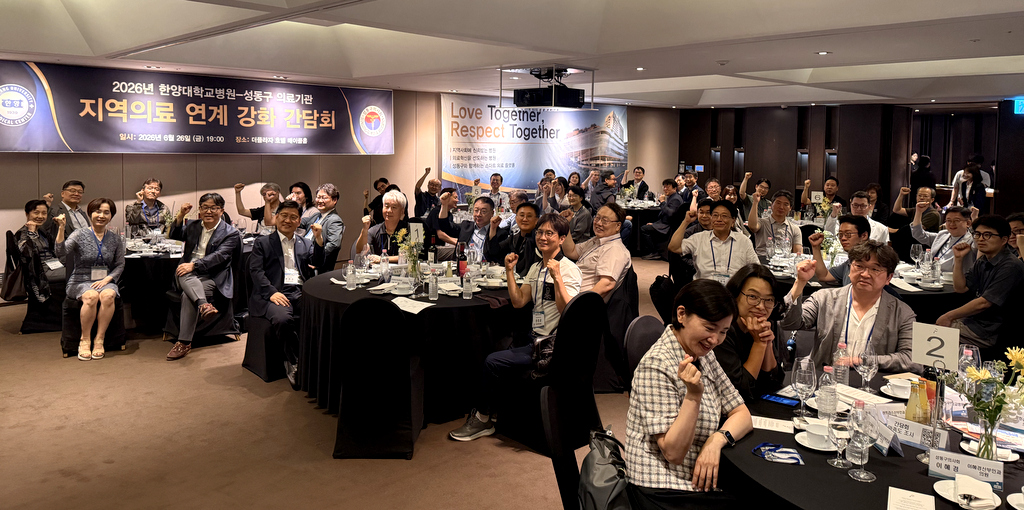
‘Seongdong-gu Medical Institutions Severe Disease Care Network Strengthening Meeting’ Held
- Sharing severe disease and cancer care capabilities and the care cooperation system... strengthening cooperation with local medical institutions Hanyang University Hospital (President Lee Hyeongjoong) held the 'Meeting on Strengthening the Care Network for Cancer Patients and Other Severe Diseases' at the Maple Hall of The Plaza Hotel Seoul on June 26. The meeting was organized to share a rapid and systematic care referral system for patients with severe diseases, including cancer, and to strengthen the cooperation network with medical institutions in Seongdong-gu. About 70 people, including key hospital officials such as President Lee Hyeongjoong and Vice President Lee Hanglak, executives of the Seongdong-gu Medical Association, and local medical institutions and officials in Seongdong-gu, attended the event, sharing Hanyang University Hospital’s severe disease care capabilities and care cooperation system and exchanging views on ways to cooperate for mutual growth. The meeting, emceed by Director of the Customer Service Innovation Center Park Junghwan, began with a screening of the hospital’s promotional video and an introduction of the hospital’s current status, followed by an introduction of severe disease care and the care cooperation system and specialized lectures on cancer. In his welcoming remarks, President Lee Hyeongjoong said, "Close cooperation with local medical institutions is the most important foundation for providing patients with optimal medical services in a timely manner," adding, "Our hospital will continue to strengthen its capabilities in treating severe and emergency diseases and build a care cooperation system that grows together with local medical institutions through prompt referrals and a systematic return referral system." He continued, "We recently became the first tertiary general hospital in Seoul to introduce an AI-based bed monitoring system to all beds, further strengthening the safety management system for inpatients, and ahead of the opening of the Cancer Hospital in the second half of this year, we are further expanding our specialized cancer care capabilities," adding, "We will continue to provide patients with higher-quality medical services based on digital health care and a medical system focused on severe diseases." President Ko Sunyong of the Seongdong-gu Medical Association said, “As Hanyang University Hospital has recently strengthened its cancer care capabilities, including recruiting Professor Ahn Myungjoo, and greatly improved its cancer patient care system, such as establishing a fast-track care system for cancer patients, we have high expectations for the hospital,” adding, “We will continue to provide patients with higher-quality medical services based on a close cooperation system between Hanyang University Hospital and local medical institutions.” In the special lectures, Director of the Lung Cancer Center Jang Hyojoon (Professor of Thoracic Cardiovascular Surgery) spoke on ‘Latest Insights into Lung Cancer Treatment,’ and Distinguished Professor of Medicine Ahn Myungjoo of the Department of Hematology Oncology spoke on ‘Paradigm Shifts in and Understanding of the Latest Anticancer Treatments,’ sharing their latest clinical experience and cases. In particular, Hanyang University Hospital introduced its Fast Track system, operated so that severe patients referred by partner medical institutions can receive care more quickly, and its care cooperation process that connects everything from consultation to testing and surgery in one stop, drawing great interest from partner medical institutions. The Hanyang University Hospital Care Cooperation Center is expanding its care cooperation network focused on severe diseases, cancer and emergency diseases through continuous communication and academic exchange with local medical institutions, including those in Seongdong-gu, and plans to continue taking the lead in building a medical delivery system centered on severe patients based on close cooperation with local medical institutions (End).
2026-06-30
-
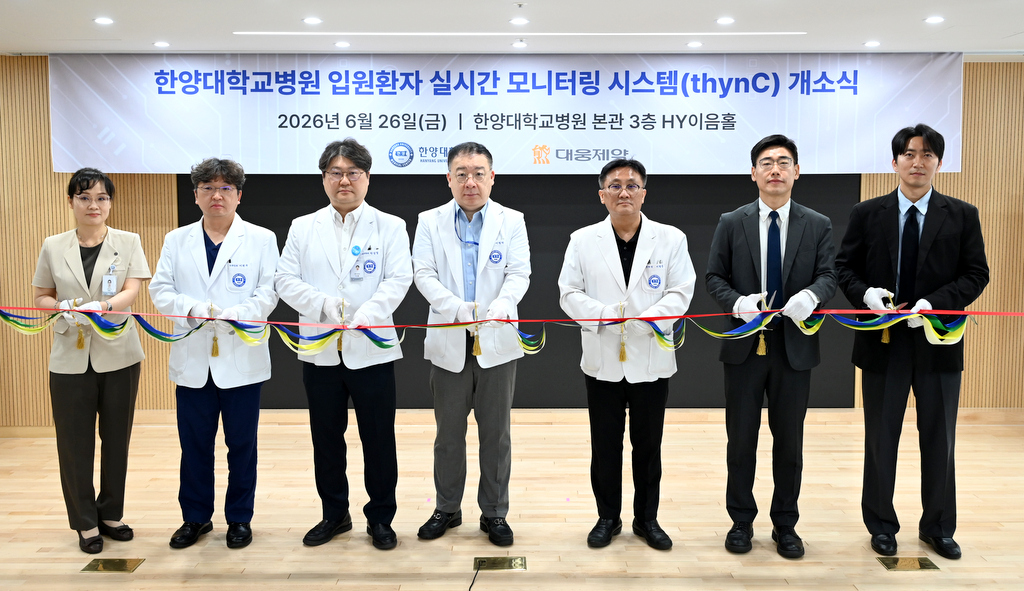
First Tertiary General Hospital in Seoul to Introduce AI Monitoring System ‘thynC’ for All Beds
- Completing a 24-hour real-time vital sign management system for inpatients - AI-based detection of abnormal signs and HIS integration to strengthen patient safety and medical staff work efficiency - President Lee Hyeongjoong: “A turning point in realizing a smart hospital based on digital health care” Hanyang University Hospital (President Lee Hyeongjoong) became the first tertiary general hospital in Seoul to introduce the artificial intelligence (AI)-based bed monitoring system ‘thynC’ for all beds, accelerating the development of a smart hospital based on digital health care. In cooperation with Daewoong Pharmaceutical, Hanyang University Hospital recently completed the installation of the AI-based patient monitoring system in all general beds except special beds, and held the ‘Opening Ceremony for thynC Introduction in All Beds’ at HY Ieum Hall on the 3rd floor of the Main Building on June 26. Key officials and many faculty and staff attended the event and shared the system’s operating status. Whereas medical staff previously measured and recorded patients’ conditions at regular intervals, the new system introduces a constant monitoring system that allows inpatients’ vital signs to be checked in real time 24 hours a day, creating an environment in which changes in patient condition can be continuously detected and abnormal signs identified early. This is especially significant in that it strengthens patient safety and rapid response systems, given the nature of tertiary general hospitals with a high proportion of severe patients. ‘thynC’ is an AI-based smart monitoring system that non-invasively measures key vital signs such as electrocardiogram, heart rate, respiratory rate and oxygen saturation using wearable sensors. The collected data are analyzed by AI in real time, and when abnormal signs occur, an alarm is immediately sent to medical staff to support a rapid response. In particular, integration with the hospital information system (HIS) allows patient data to be automatically recorded and analyzed, greatly reducing the burden of manual data entry for medical staff. As a result, medical staff can focus more on patient care and clinical judgment than on repetitive administrative work. Taking the introduction of this system as an opportunity, Hanyang University Hospital plans to further advance its data-based patient management system and accelerate the establishment of an AI prediction-based medical environment. Furthermore, it intends to actively use digital health care technology to continuously expand patient-centered smart medical services. President Lee Hyeongjoong said, “The introduction of thynC is a key task of our smart hospital strategy for strengthening patient safety,” adding, “We will continue to actively introduce advanced digital medical technologies to provide safer, higher-quality patient-centered medical services.” Daewoong Pharmaceutical CEO Lee Changjae said, “The case of Hanyang University Hospital is a milestone showing that an AI monitoring system can simultaneously enhance patient safety and medical efficiency at a tertiary general hospital,” adding, “Daewoong Pharmaceutical will continue to expand the scope of thynC’s application through cooperation with various medical institutions and continue to grow its digital health care business” (End).
2026-06-29
-
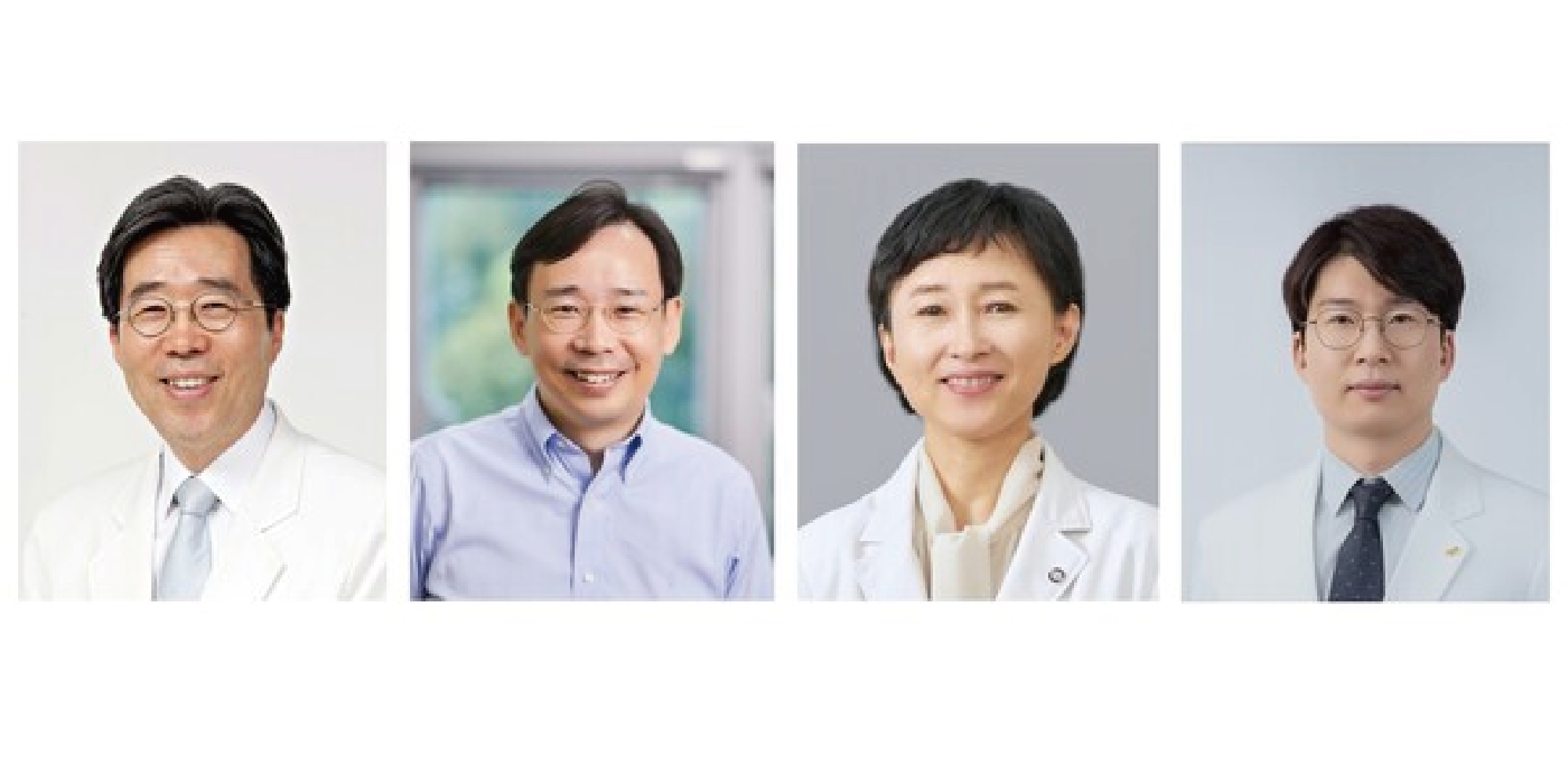
Treatment-Resistant Lupus Nephritis Can Be Identified in Advance Through Blood Immune Cell Signals
- Hanyang University–KAIST joint research team suggests the possibility of predicting treatment resistance through ‘type I interferon signaling’ in monocytes A molecular marker has been presented that can identify, with just a blood test early in treatment, patients who do not respond to standard treatment for ‘lupus nephritis,’ a major complication of systemic lupus erythematosus (SLE), an intractable autoimmune disease. A joint research team led by Distinguished Professor of Medicine Bae Sangcheol of Hanyang University Hospital for Rheumatic Diseases and Professor Shin Euicheol of the KAIST Graduate School of Medical Science and Engineering precisely analyzed the immune cells of lupus nephritis patients over time before and after treatment, and found that in patients who do not respond to treatment, downstream ‘type I interferon’ signals persist and do not switch off even after treatment. Dr. Kim Woojoong of KAIST (currently Assistant Professor at Chung-Ang University Hospital) and Professor Lee Hyesoon of Hanyang University Guri Hospital participated as co-first authors, and the study was published in 'Annals of the Rheumatic Diseases (IF 24.0),' the world's most authoritative international journal in the field of rheumatology [Paper title: Treatment nonresponders in lupus nephritis characteristically exhibit persistent type I interferon signalling in monocytes: a longitudinal single-cell transcriptomic analysis]. Lupus nephritis is a major complication occurring in about 35–60% of SLE patients. It is a key complication that determines patients' prognosis as it is directly linked to impaired kidney function, but many patients do not respond sufficiently to standard immunosuppressive treatment. In particular, because proteinuria and changes in kidney function, the representative indicators for evaluating treatment efficacy, appear later than the actual immunological changes, there was the drawback that medical staff could easily continue insufficient treatment or miss the time to intensify treatment. Using the lupus patient cohort (KUDOS) of Hanyang University Hospital for Rheumatic Diseases, the research team repeatedly collected blood immune cells from patients with biopsy-confirmed active lupus nephritis before the start of treatment and at 3, 6 and 12 months after treatment, and analyzed them using single-cell RNA sequencing. The analysis showed that, among various immune cells, monocytes most clearly distinguished patients who responded well to treatment (hereinafter the complete response group) from those who did not respond (hereinafter the nonresponse group). In the complete response group, type I interferon signals gradually subsided after treatment, whereas in the nonresponse group the signals remained high despite treatment. In particular, the research team confirmed that the specific yardstick for gauging the ‘type I interferon signal’ of monocytes in the blood is six interferon-stimulated genes (IRF7, ISG15, LY6E, IFI44, IFI44L, IFI6). The expression level of these six genes is a molecular marker that concisely shows the activity of type I interferon signaling; it decreased markedly within three months of treatment in the complete response group, while remaining high in the nonresponse group. This signal was also significantly associated with proteinuria and overall lupus disease activity, and notably, the difference already appeared at three months of treatment, before existing clinical indicators (proteinuria, kidney function) showed changes. Distinguished Professor of Medicine Bae Sangcheol said, “This study identified a key immunological mechanism associated with treatment nonresponse in lupus nephritis patients,” adding, “We expect it to serve as a foundation for precision medicine that identifies early, based on blood tests, patients expected to have a poor treatment response and establishes patient-tailored treatment strategies.” [Reference] What is systemic lupus erythematosus [systemic lupus erythematosus (SLE)]? It is a representative rheumatic disease that mainly occurs in young women in their 20s and 30s, and an autoimmune disease in which multiple genetic and environmental factors act in combination to cause abnormalities in the immune system. Lupus can occur in any part of the body, including the skin, joints, brain, kidneys, heart and lungs. Lupus nephritis is a disease in which autoantibodies and immune complexes accumulate in the glomeruli of the kidney and cause inflammation; along with proteinuria and hematuria, it gradually reduces kidney function and can progress to end-stage renal failure in some patients. Standard treatment uses high-dose steroids and immunosuppressants such as mycophenolate mofetil (MMF), but although many patients do not respond sufficiently, there is the limitation that it is difficult to identify nonresponding patients early. By revealing the molecular signals of immune cells important in lupus nephritis, this study is expected to make an important contribution to predicting treatment response early and developing tailored treatments.
2026-06-25
-
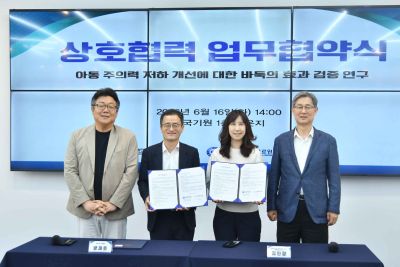
Behavioral Development Promotion Center Signs Business Agreement with the Korea Baduk Association
- Expected to build an evidence-based model for promoting children’s mental health through clinical, educational and research work The Hub Hospital for People with Developmental Disabilities and Behavioral Development Promotion Center of Hanyang University Hospital (Director Kim Inhyang) and the Korea Baduk Association (Secretary General Yang Jaeho) signed a business agreement (MOU) on June 16 at the Korea Baduk Association for a ‘study verifying the effectiveness of baduk in improving attention deficits in children.’ The agreement was arranged to medically and scientifically verify the effects of baduk on children’s attention, cognitive function and emotional development, and on that basis to contribute to promoting children’s mental health and developing educational programs. The signing ceremony was attended by key officials from both institutions, including Distinguished Professor Kwon Junsoo of Hanyang University Hospital, Director of the Hanyang Developmental Medicine Center Kim Inhyang, and Secretary General Yang Jaeho of the Korea Baduk Association. Through the agreement, the two institutions agreed to jointly pursue ▲research verifying the effectiveness of a baduk program for children with attention deficits ▲research design and data collection and analysis ▲program operation and support of specialized personnel ▲presentation of research results and academic activities ▲cooperative projects for the public good. In particular, as the lead research institution, the Hub Hospital for People with Developmental Disabilities and Behavioral Development Promotion Center of Hanyang University Hospital will carry out research design, clinical evaluation, effectiveness verification, data analysis and the writing of the research report, and will ensure the objectivity and reliability of the research through research ethics and Institutional Review Board (IRB) review. The Korea Baduk Association will cooperate to ensure the research proceeds smoothly by providing baduk programs, textbooks, professional instructors and educational materials and by supporting program operation. Director Kim Inhyang said, “As the number of children experiencing attention deficits and emotional and behavioral problems increases, interest in various non-pharmacological intervention programs is also growing,” adding, “This study is a meaningful attempt to verify with objective data the effects of baduk on children’s concentration, cognitive function and emotional development.” She continued, “Through cooperation with the Korea Baduk Association, we will strive to produce research results that help promote children’s mental health and support their development.” Secretary General Yang Jaeho said, “Baduk is a representative mind sport that helps develop thinking skills, concentration and problem-solving abilities,” adding, “Through joint research with Hanyang University Hospital, we hope to scientifically prove the positive effects of baduk and contribute to spreading its social value” (End).
2026-06-18
-
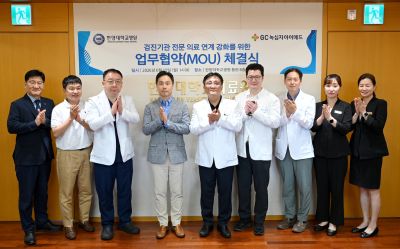
Business Agreement Signed With GC Green Cross I-Med for Customized Specialized Care Linkage
- Strengthening organic cooperation for patients with severe diseases and emergency patients Hanyang University Hospital (President Lee Hyeongjoong) signed a business agreement with GC Green Cross I-Med of the medical corporation Green Cross Medical Foundation in Conference Room 1 on the 8th floor of the East Building on June 15 to strengthen specialized care linkage for health screening institutions. The signing ceremony was attended by key officials of both institutions, including Hanyang University Hospital President Lee Hyeongjoong, Vice President Lee Hanglak, Director of the Lung Cancer Center Jang Hyojoon, Director of the International Breast Cancer Center Cha Chihwan and Director of the Operations Support Division Han Hyunsoo, and GC Green Cross I-Med President Choi Bumhee, Head of the Screening Operations Division Kang Ikyu, Screening Management Unit Head Lee Gahae and Screening Management Unit Head Lim Mijung. The agreement was arranged to provide faster and more specialized medical services to patients with abnormal findings discovered during health screenings. The two institutions agreed to work together to build a systematic care linkage system for patients with severe diseases and emergency patients and to provide seamless medical services from screening to care and treatment. Under the agreement, patients with abnormal findings discovered during GC Green Cross I-Med screenings will be able to quickly book appointments and be linked to specialized care through the Hanyang University Hospital Care Coordination Center. In addition, when an emergency patient arises, the two institutions will cooperate to ensure timely treatment by using an emergency room hotline to share the patient’s condition and quickly confirm whether the patient can be admitted. In particular, the two institutions also established a linkage process for patients with colorectal polyps discovered during health screenings. When polyps are found at GC Green Cross I-Med, procedure schedules are quickly coordinated through close consultation between the Hanyang University Hospital Care Coordination Center and the endoscopy unit, and a system has been put in place so that the process can proceed smoothly through the polypectomy, confirmation of results and referral back. President Lee Hyeongjoong said, “Through this agreement, we have built a linkage system that allows patients whose diseases are found during health screenings to receive specialized care and treatment at the right time,” adding, “Based on our specialized medical staff for severe diseases, including at the Lung Cancer Center and the International Breast Cancer Center, and our advanced medical infrastructure, we will provide optimal patient-centered medical services.” GC Green Cross I-Med President Choi Bumhee said, “Through our cooperation with Hanyang University Hospital, we are now able to provide continuous medical services from screening to the necessary care and treatment afterward,” adding, “Based on close cooperation between the two institutions, we will minimize gaps between screening and treatment and increase patient satisfaction” (End).
2026-06-16
-
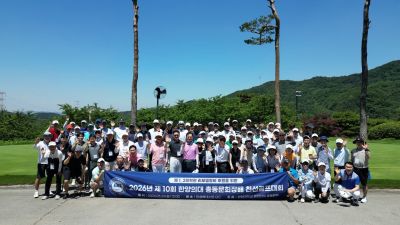
Hanyang University College of Medicine Alumni Association Successfully Holds 10th Friendship Golf Tournament
- An occasion for alumni harmony and sharing for the development of Hanyang University Medical Center and the College of Medicine The Hanyang University College of Medicine Alumni Association (President Kim Byunggeun) held the '2026 10th Hanyang University College of Medicine Alumni Association President’s Cup Friendship Golf Tournament to Support the Remodeling of Medical Buildings 1 and 2' at Anseong Benest GC on May 31. A total of 99 people, including Hanyang University College of Medicine alumni and related officials, attended the event, joining in the round, dinner, extraordinary general meeting, awards ceremony and donation ceremony, strengthening their commitment to their alma mater’s development and harmony among alumni. The event was attended by Alumni Association President Kim Byunggeun, Hanyang University President Lee Ki-jeong, Yoon Hojoo, Executive Vice President for Medical Affairs and President of Hanyang University Medical Center, Alumni Association Honorary Presidents Kang Joonggoo and Ha Hunyoung, Hanyang University College of Medicine Dean Park Hoonki, Hanyang University Hospital President Lee Hyeongjoong, Hanyang University Guri Hospital President Lee Kyuyong, and Hanyang University Director of External Affairs Choi Joongsub, among others. Marking its 10th edition this year, the friendship golf tournament was organized as more than a sports event; it was a sharing event in which alumni came together to improve the educational and research environment for their juniors. The Alumni Association delivered to the College of Medicine 20 million won in donations for the remodeling of Medical Buildings 1 and 2, raised through alumni sponsorships and contributions and savings on event operating costs. Alumni Association President Kim Byunggeun said, “This tournament was a meaningful event organized to support the remodeling project for Medical Buildings 1 and 2,” adding, “The active participation and devotion of our alumni came together, allowing us to deliver 20 million won in donations, exceeding our original goal.” He added, “If some 5,500 Hanyang University College of Medicine alumni join together, we will be able to achieve even greater results for the development of our alma mater and the Medical Center.” In his congratulatory speech, President Lee Ki-jeong said, “I thank the alumni for their interest in and support for the remodeling project for Medical Buildings 1 and 2,” adding, “We will do our best so that juniors can devote themselves to education and research in the best environment.” Yoon Hojoo, Executive Vice President for Medical Affairs and President of Hanyang University Medical Center, said, “The interest and support of our alumni are a valuable asset that enhances the future competitiveness of Hanyang University College of Medicine and the Medical Center,” adding, “We will grow into an institution that leads future medicine through a development model in which education, research and patient care create a virtuous cycle.” College of Medicine Dean Park Hoonki said, “This support is more than a simple donation; it is a valuable starting point for the development of future medical education,” adding, “We will put it to good use in creating a future-oriented education and research environment, including improving aging facilities, expanding student learning spaces, improving the anatomy lab environment and building a CBT room.” Meanwhile, at the extraordinary general meeting held that day, an agenda item to implement the 2026 Hanyang University College of Medicine Alumni Association scholarship program was also approved. The Alumni Association decided to pursue a scholarship program worth 10 million won if more than 80% of its lifetime membership fee fundraising target is secured, and to entrust its operation to the College of Medicine. After the event, a prize drawing and awards ceremony were held, with alumnus Kim Eungsoo of the 11th class winning the tournament and alumna Yoo Youngjoo of the 28th class winning the women’s division. Participants strengthened friendships between seniors and juniors and shared their pride and sense of solidarity as Hanyang University College of Medicine alumni. The Hanyang University College of Medicine Alumni Association plans to continue serving as a bridge connecting the alma mater, the Medical Center and alumni, and to continue pursuing various projects to improve the educational environment, run scholarship programs, promote academic exchange and strengthen the alumni network.
2026-06-09
-
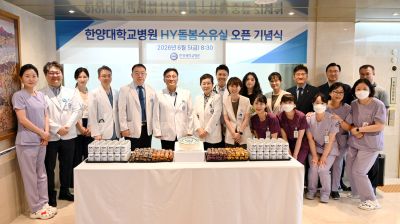
Opening Ceremony Held for ‘HY Care Nursing Room’
- A comfortable, cozy and private nursing room improves convenience for patients and guardians Hanyang University Hospital (President Lee Hyeongjoong) held an opening ceremony for the ‘HY Care Nursing Room’ in the third-floor lobby of the Main Building on June 5. The newly opened ‘HY Care Nursing Room’ is a space designed so that patients and guardians accompanied by infants and toddlers can breastfeed and provide care in a more comfortable and safe environment. The ceremony was attended by key executives and faculty and staff, including President Lee Hyeongjoong, Vice President Lee Hanglak, Director of the Department of Nursing Yang Hyun, and Head of the Department of Pediatrics Adolescent Yang Seung, who celebrated the opening of the nursing room. The HY Care Nursing Room is located on the third floor of the new building, which offers excellent accessibility, and is designed as an independent single-occupancy nursing room to protect users’ privacy. It also has its own heating, cooling and ventilation facilities, as well as a hand-washing area, a diaper-changing table and a small convenience space, providing a comfortable environment for users. In his congratulatory speech, President Lee Hyeongjoong said, “I hope the HY Care Nursing Room will be a space that is of real help to patients and guardians accompanied by infants and toddlers,” adding, “We will continue to strive to create a patient-centered medical environment and improve the patient experience.” Meanwhile, the name of the nursing room was chosen through a naming contest held for faculty and staff, and it was named the ‘HY Care Nursing Room’ to reflect Hanyang University Hospital’s value of warm care (End).
2026-06-08
-
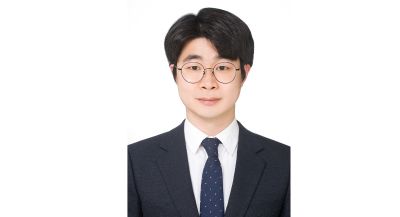
Resident Choi Jaewon Receives Academic Award from the Korean Society of Urological Ultrasound
Resident Choi Jaewon (first year) of the Department of Urology at Hanyang University Hospital received an academic award at the ‘2026 Korean Society of Urological Ultrasound 19th Scientific Meeting,’ held on May 17 at CHA Bio Complex in Gyeonggi Province. His supervising professor is Professor Jo Jungki of the Department of Urology. The presentation, titled ‘Public Urologic Ultrasound Open Datasets and Recent Evidence on AI-based Hydronephrosis Detection and Tissue Harmonic Imaging Performance: A Structured Evidence Summary,’ was recognized for the excellence of its research abstract. Based on publicly available urologic ultrasound datasets, the study systematically analyzed the performance of AI-based hydronephrosis detection and tissue harmonic imaging. It was highly praised for presenting the potential of AI technology to improve the diagnostic accuracy of urologic diseases and support clinical decision-making, as well as directions for future development. Resident Choi Jaewon said, “This study systematically organized the latest trends in open data and AI diagnostic technology in the field of urologic ultrasound and presented directions for their future use in clinical settings,” adding, “I will continue to actively participate in diagnostic and treatment research incorporating artificial intelligence technology so that we can provide more precise and faster medical services to patients.” The Korean Society of Urological Ultrasound is Korea’s leading academic organization driving the advancement of ultrasound diagnostic and treatment technologies in urology. Each year, through its scientific meeting, it shares the latest research achievements and presents ‘academic awards’ to studies selected for their contribution to the development of urologic ultrasound and their outstanding academic value and excellence (End).
2026-06-04
-
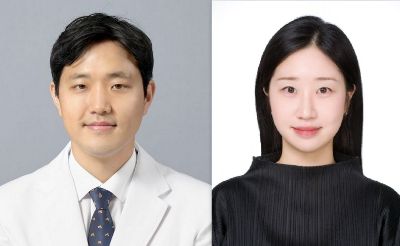
Professor Yoon Choseok Wins Excellent Poster Award from Korean Society for Healthcare-associated Infection Control and Prevention
The team of Professor Yoon Choseok of the Department of Infectious Diseases at Hanyang University Hospital (first author: Supervisor Ha Youngjoo) won the Excellent Poster Award at the ‘2026 31st Annual Scientific Meeting and Training Course of the Korean Society for Healthcare-associated Infection Control and Prevention,’ held on May 29 at the Swiss Grand Hotel in Seoul. Professor Yoon’s team presented a study titled ‘Analysis of Quality Indicator Improvement Following Changes in Blood Culture Specimen Collection Personnel,’ and was recognized for its academic excellence and clinical applicability. The study analyzed the effect of changes in specimen collection personnel during blood culture testing on test quality control indicators, presenting meaningful results in terms of improving test accuracy through dedicated phlebotomy staff. In particular, it was highly praised for proposing operational strategies in actual clinical settings to reduce blood culture contamination rates and improve test reliability. Professor Yoon Choseok said, “Blood culture testing is a very important test for the accurate diagnosis of infectious diseases and for determining the direction of antibiotic treatment,” adding, “I hope the results of this study will be of practical help in improving the quality of testing at medical institutions and improving patient prognosis, and I would like to express my deep gratitude to everyone on the Infection Control Team who dedicated themselves to the study.” Professor Yoon Choseok specializes in antibiotic-resistant bacteria, adult vaccination, various infectious diseases and fever of unknown origin at the Department of Infectious Diseases of Hanyang University Hospital. He received his master’s degree from Kyung Hee University School of Medicine. He has received the Excellent Poster Award from the Asia Pacific Society of Clinical Microbiology and Infection in 2023 and the Excellent Presentation Award from the Korean Society for Antimicrobial Therapy in 2026, among others. He is currently active as a regular member of the Korean Association of Internal Medicine, the Korean Society of Infectious Diseases, the Korean Society for Antimicrobial Therapy, the Korean Society for AIDS and the Korean Society for Healthcare-associated Infection Control and Prevention.
2026-06-02