|
Hanyang University Hospital for Rheumatic Diseases Identifies Lupus-Causing Genetic Variants
|
- Precise analysis of a large lupus cohort leads to first discovery of specific genetic variants - Two papers by Professor Bae Sangcheol’s team published simultaneously in the most authoritative journal on rheumatic diseasesSpecific genetic variants involved in the onset of lupus, which has been increasing every year and has a high proportion of young female patients, have been newly identified, taking lupus treatment a step forward. Lupus, a representative autoimmune disease in which an abnormal immune system attacks the body itself, is known to arise from a complex combination of environmental factors and multiple genetic variants, but many genetic variants have yet to be identified.
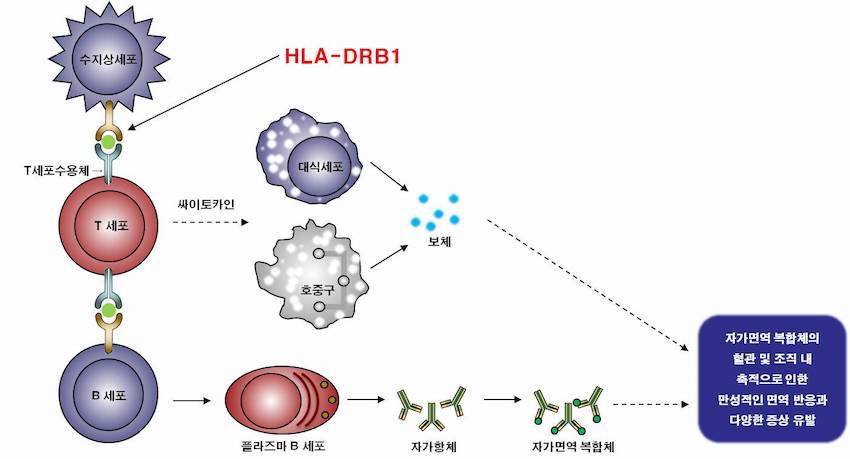
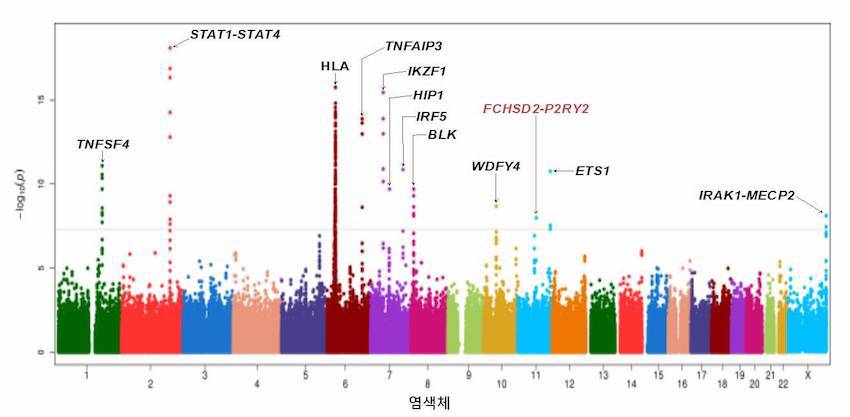
The first paper identified various allelic variants of the HLA-DRB1 gene, which most increases the risk of onset, in order to uncover the causes of lupus based on a large Korean lupus cohort; the research team precisely analyzed the HLA-DRB1 genes of 1,089 Korean lupus patients and 2,161 controls. As a result, the team revealed the new finding that in Koreans, the HLA-DRB115:01, *09:01, *08:03 and *07:01 allelic variants increase the risk of lupus onset, while the *12:02 and *11:01 allelic variants decrease it. The team further found that these four risk alleles (HLA-DRB115:01, *09:01, *08:03, *07:01) induce the production of autoantibodies important to lupus onset and cause various clinical symptoms. Regarding this paper, Professor Bae said, “Because the HLA-DRB1 gene is the most variable and structurally complex in the human genome, it has been difficult to identify allelic variants associated with lupus onset, but now that the HLA-DRB1 variants involved in onset have been identified based on this large Korean lupus cohort, it will ultimately make a major contribution to the development of predictive medicine for lupus.” The second paper identified specific genetic variants for the first time through whole-genome variant analysis of 8,000 people; the research team, which led the project together with U.S. researchers, analyzed single nucleotide polymorphisms (SNPs) in DNA at the whole-genome level in a total of 5,500 Korean lupus patients and non-patients. As a result, the team found that multiple genetic variants in three genes (ATG16L2, FCHSD2, P2RY2) at position q14 of chromosome 11 are associated with lupus onset, and that the same results were replicated in a separate lupus cohort of 2,500 Koreans and Chinese. The team further found that 10 previously known lupus-causing genes, including HLA genes, show the same influence in Korean lupus patients. Professor Bae, one of the corresponding authors of this paper, said, “The new genes identified through this large-scale whole-genome analysis are highly reliable genetic variants for lupus onset and will enable more accurate prediction of onset in the future,” adding, “Subsequent functional studies will help provide a broader understanding of the pathogenic mechanism of lupus.” Both studies were conducted with support from the Health and Medical Research and Development Program (Researcher-Driven Convergence Basic Research - Basic Technology for the Clinical Application of Genomes).(End) [Reference 1] What is systemic lupus erythematosus? ‘Systemic lupus erythematosus’ is one of the representative rheumatic diseases that occurs mainly in young women in their 20s and 30s; although its exact cause is not well known, it is known to be an autoimmune disease caused by abnormalities in the immune system resulting from the combined action of genetic, environmental and hormonal factors. Lupus is one of the autoimmune diseases in which an abnormal immune system destroys one’s own body, and because it can occur in any part of the body, including the skin, joints, brain, kidneys, heart and lungs, its symptoms are extremely diverse. For this reason, it is called ‘the disease with a thousand faces.’ Inflammation and tissue damage occur through the formation of various autoantibodies and immune complexes. [Reference 2] What is HLA-DRB1? HLA (human leukocyte antigen)-DRB1 is a protein that binds to the initial epitope, one of the most important factors in the process from autoantigen recognition to autoantibody production in lupus, and plays a pivotal role in triggering the immune response to autoantigens. The HLA-DRB1 protein on the surface of antigen-presenting cells interacts with T cells to trigger innate and adaptive immune responses simultaneously. Lupus is an autoimmune disease in which autoantibodies against autoantigens are produced, and the resulting autoantibody-antigen complexes accumulate in blood vessels and organs, causing inflammatory reactions and producing various clinical symptoms throughout the body. *Attachments, [Figure 1] Role of HLA-DRB1 in the pathogenic mechanism of lupus [Figure 2] Results of lupus whole-genome association analysis
|
News
Hanyang University International Hospital
 Two lupus-related papers by Professor Bae Sangcheol’s team of the Department of Rheumatology at Hanyang University Hospital for Rheumatic Diseases were published simultaneously on December 14, 2015, in the American journal