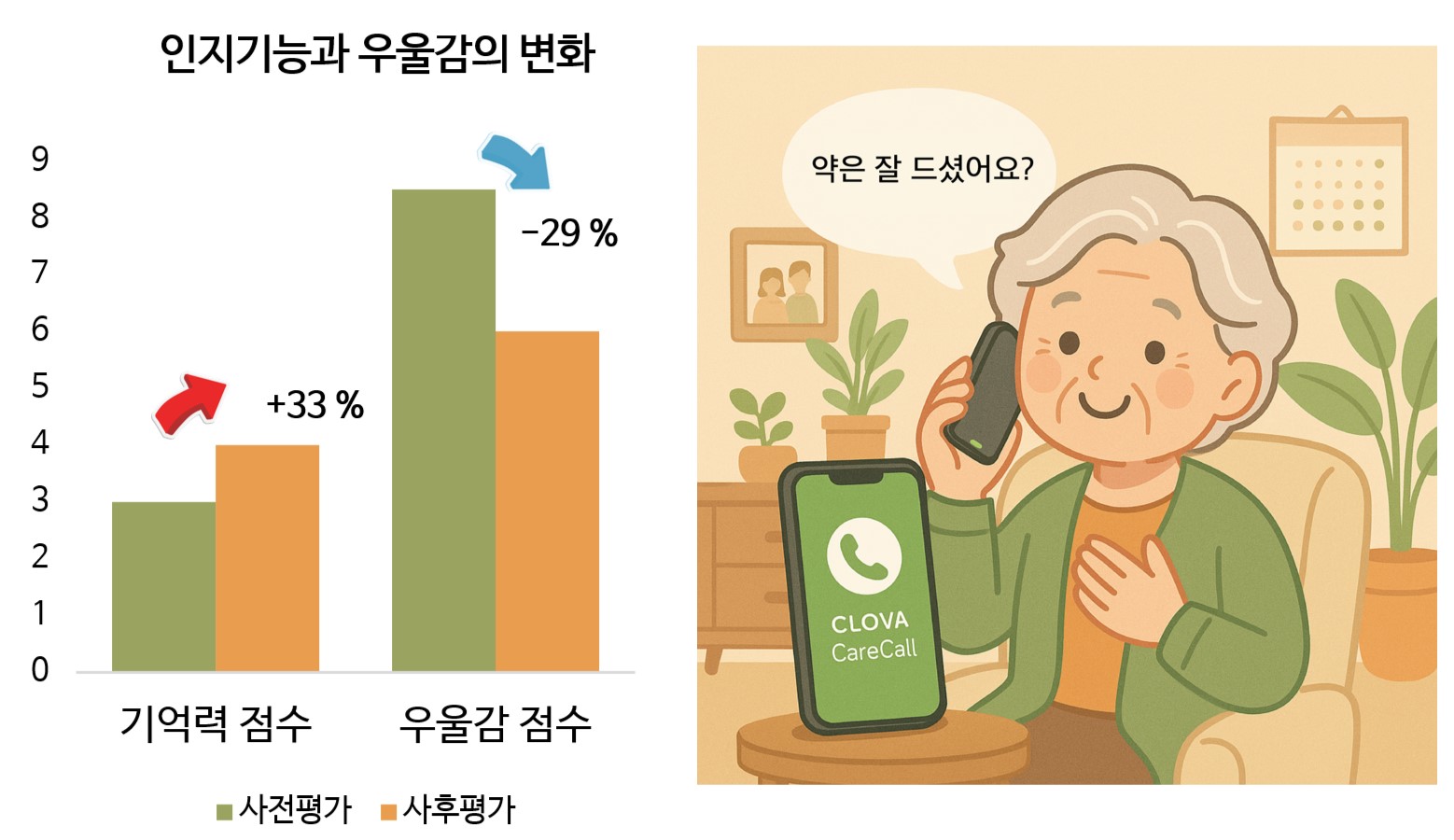
AI looks after memory and lowers depression
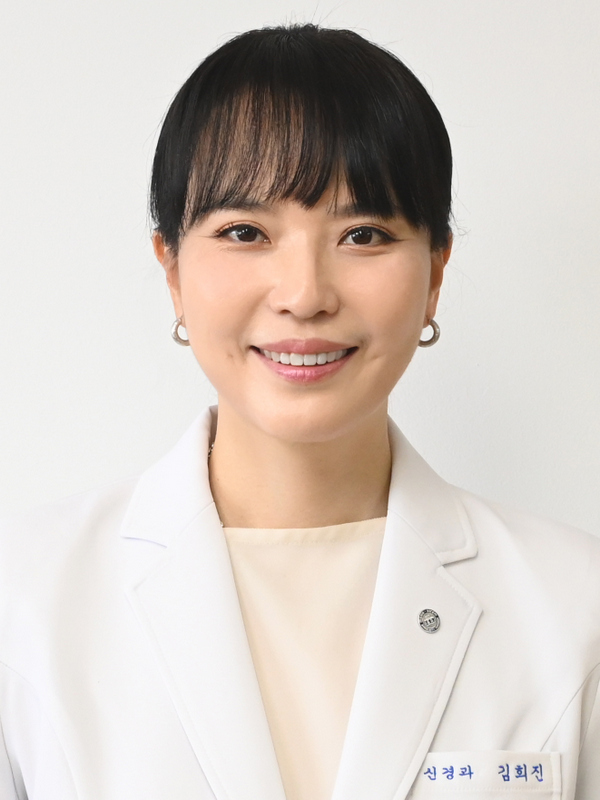 In a recently published study, the research team of Professor Kim Hee-Jin of the Department of Neurology at Hanyang University Hospital (Professor Kang Sungwoo and Dr. Lee Yoonjin) proved that the AI-based ‘Care Call’ service is effective in improving memory and relieving depressive symptoms in dementia patients.
The findings were published in the July 2025 online edition of “Scientific Reports” (IF 3.9), a sister journal of the top international journal “Nature (Natire).”
[Paper title: Beneficial effect of artificial intelligence care call on memory and depression in community dwelling individuals with dementia]
Existing dementia prevention programs have been criticized for their limited accessibility and the difficulty of continuous monitoring. To overcome this, the research team introduced the *CLOVA CareCall system, which uses a large language model (LLM) based on Naver’s HyperCLOVA. Through voice calls, this AI provided conversations to 80 dementia patients living alone who were registered with the Seongdong-gu Dementia Relief Center (average age about 80, 78% women) twice a week for seven months, a total of 63 times, delivering emotional support and cognitive stimulation.
The study found that the median Geriatric Depression Scale (GDS) score of dementia patients who received the Care Call service decreased significantly from 8.5 before the intervention to 6.0 after the intervention, and their memory scores improved markedly. The analysis also confirmed interaction effects by gender and education level.
In particular, female patients showed greater effects in terms of memory improvement and maintenance of attention, while male patients showed a slight decrease in attention but no major change in memory. In addition, the group of patients with higher education tended to show relatively less worsening of depression and decline in attention regardless of gender, suggesting that education level may act as a protective factor in maintaining cognition and emotion.
Professor Kim Hee-Jin said, “In addition to medication, continuous emotional and cognitive stimulation is essential in treating dementia patients,” adding, “CLOVA CareCall is a non-pharmacological intervention based on AI conversation that is accessible at any time and can be a new approach to improving patients’ quality of life.” She continued, “In the future, by developing customized intervention strategies tailored to various patient characteristics, we will slow the rate of cognitive decline and also contribute to reducing the caregiving burden on families.”
The research team plans to increase the clinical usefulness of AI Care Call through ▲large-scale long-term follow-up studies ▲development of customized AI conversation content by patient characteristics ▲strengthening of support functions for caregivers and families. It is also exploring ways to expand the scope of the service to patients in areas lacking medical infrastructure or with limited mobility. (End)

