- Precision·Innovation -based future treatment strategies for prostate diseases shared
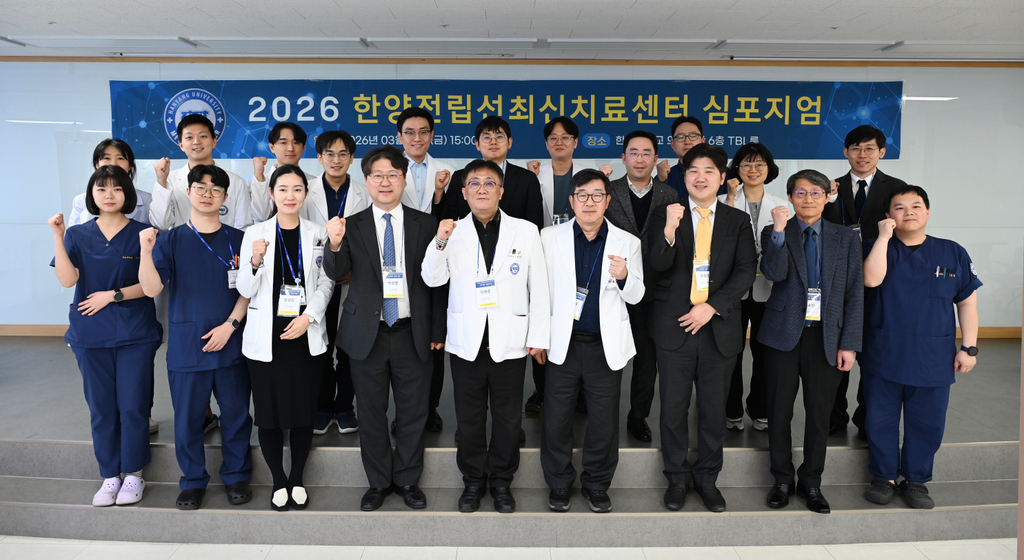
Hanyang University Hospital (President Lee Hyeongjoong) held the ‘2026 Hanyang Prostate Emerging Remedy Symposium (HYPER Center Symposium)’ in the TBL Room on the 6th floor of the Main Building of Hanyang University College of Medicine on March 27.
Organized by the HanYang Prostate Emerging Remedy (HYPER) Center of Hanyang University Hospital, the symposium was held on the theme of ‘Precision·Innovation·Future of Prostate Care’ to share the latest treatment insights and future treatment strategies for prostate diseases.
Prostate cancer is a representative cancer that has recently ranked first in incidence among male cancers in Korea, and the number of patients is increasing rapidly along with the growth of the elderly population. In particular, as Korea enters a super-aged society, prostate diseases such as benign prostatic hyperplasia and prostate cancer are considered representative male diseases expected to increase most rapidly in the future. To respond to these changes, Hanyang University Hospital has built a multidisciplinary care system centered on the HYPER Center, which specializes in prostate diseases.
The event began with greetings from Park Sung Yul, Chair of the Department of Urology, and President Lee Hyeongjoong, and proceeded with a focus on integrated treatment strategies covering benign prostatic hyperplasia and prostate cancer.
In Session 1, ‘Benign Prostatic Hyperplasia,’ chaired by Professor Kim Yongtae of the Department of Urology at Hanyang University Hospital and Professor Moon Hongsang of the Department of Urology at Hanyang University Guri Hospital, Professor Song Byungdo of the Department of Urology at Hanyang University Guri Hospital presented on ‘Latest Insights into Drug Treatment of Benign Prostatic Hyperplasia’ and Professor Yoon Sungkoo of the Department of Urology at Hanyang University Hospital on ‘Latest Insights into Minimally Invasive Surgical Therapy (MIST) for Benign Prostatic Hyperplasia,’ covering the latest guidelines, patient-tailored prescription strategies and the direction of development of surgical treatment.
In Session 2, ‘Prostate Cancer,’ chaired by Professor Park Sung Yul of the Department of Urology at Hanyang University Hospital and Professor Sim Myungsun of the Department of Urology at Hanyang University Guri Hospital, Professor Lee Chulmin of the Department of Radiology at Hanyang University Hospital presented on ‘Latest Insights into Multiparametric MRI (mpMRI) and MR target boipsy in Prostate Cancer,’ Professor Lim Sungwon of the Department of Hematology & Oncology at Hanyang University Hospital on ‘Latest Insights into HSPC and CSPC Treatment: ARPI, Taxane chemo, PARPi, AKTi, etc.,’ Professor Lee Soojin of the Department of Nuclear Medicine at Hanyang University Hospital on ‘Latest Insights into PSMA PET & Lutetium-Based Prostate Cancer Treatment (Lutetium therapy in prostate cancer),’ and Professor Jung Joohyun of the Department of Radiation Oncology at Hanyang University Hospital on ‘MDT (metastasis-directed therapy) in oligo-metastatic prostate cancer,’ presenting precision diagnosis and the latest treatment paradigms for prostate cancer.
Department Chair Park Sung Yul said, “Prostate disease is a field in which multidisciplinary diagnosis and treatment involving not only urology but also radiology, nuclear medicine, radiation oncology, and hematology and oncology is essential,” adding, “I hope the HYPER Center of Hanyang University Hospital will play a leading role in the field of prostate disease treatment in Korea based on this collaborative care system.”
Jo Jungki, Director of the HYPER Center, said, “Prostate cancer is commonly known as a ‘turtle cancer,’ but it is actually a disease with varied prognoses, so accurate diagnosis, staging and patient-tailored treatment strategies are most important,” adding, “I hope this symposium will be a meaningful forum for academic exchange that shares the latest treatment trends and presents the future direction of prostate care.” (End)

