

|
Professor Kim Hee-Jin’s Team Selected for ‘2023 Bio∙Medical Technology Development Program’
|
Promoting dementia research by building an open-source dementia big data platform
Professor Kim Hee-Jin’s team was selected for the Bio∙Medical Technology Development Program with the research project ‘Demonstration of an Open DB Platform Service and an AI-Based Early Dementia Prediction System’ and will receive 9.5 billion won in government funding.
The research period runs from April 1, 2023 to December 31, 2027. Professor Kim Hee-Jin of the Department of Neurology at Hanyang University Hospital serves as principal investigator, with Professor Jeon Jinyong of Hanyang University, Professor Kim Joonsik of Seoul National University and Professor Jin Heekyung of Kyungpook National University participating as co-researchers in the cohort standardization team, and Professor Yoon Kijoong of Hanyang University and Team Leader Park Kwonil of HicareNet participating in the AI dementia prediction system and DB platform development team. The regional cohort team includes Professor Lee Kunsuk of the Department of Neuropsychiatry at Hanyang University Hospital for the Gyeonggi region and Director Jeon Byungtae for the Eumseong region of Chungbuk.
Principal investigator Professor Kim Hee-Jin said, “The existing biomarker data accumulated so far are difficult to use because of different protocols,” adding, “Through this research, we plan to secure reliability and validity by standardizing brain imaging, neuropsychological behavior, and blood & nasal fluid & saliva and through AI-based multi-model deep learning, and we will do our best to develop a cohort information-based early dementia prediction system using the open DB to be built.”
The research team plans to develop a low-cost, high-efficiency AI-based dementia prediction system by building a large-scale biomedical database platform, creating a process for early diagnosis and intensive management of asymptomatic or prodromal dementia patients, and, through a cohort operation management headquarters, to quality-control all databases and provide them to researchers as open source (End). |
|
News
Hanyang University International Hospital
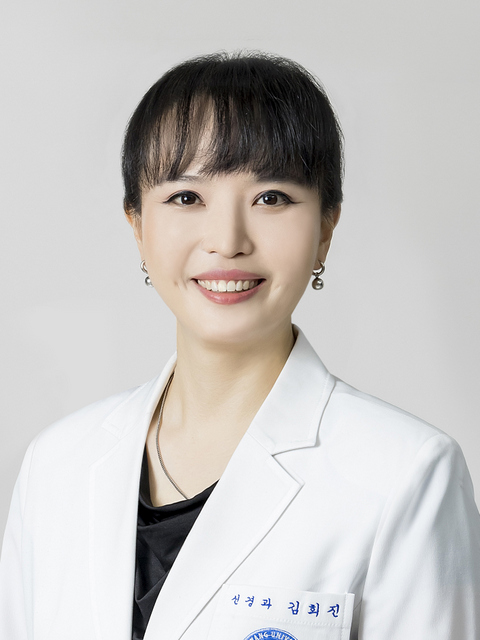 The team of Professor Kim Hee-Jin of the Department of Neurology at Hanyang University Hospital has been selected as the lead research team in the field of building and commercializing big data for tracking high-risk dementia groups in the ‘2023 Bio∙Medical Technology Development Program’ promoted by the Ministry of Science and ICT and the National Research Foundation of Korea.