|
Professor Kim Younhwan Reaches 1,000 Free Flap Surgeries
|
|
- High-difficulty reconstructive surgery connecting 1–2 mm microvessels under a microscope… 1,011 cases by a single surgeon - Helps restore bodily function in patients at risk of amputation due to diabetic foot, osteomyelitis, pressure ulcers and other conditions - Shortens the time for lower-limb reconstruction using free flaps to around two hours

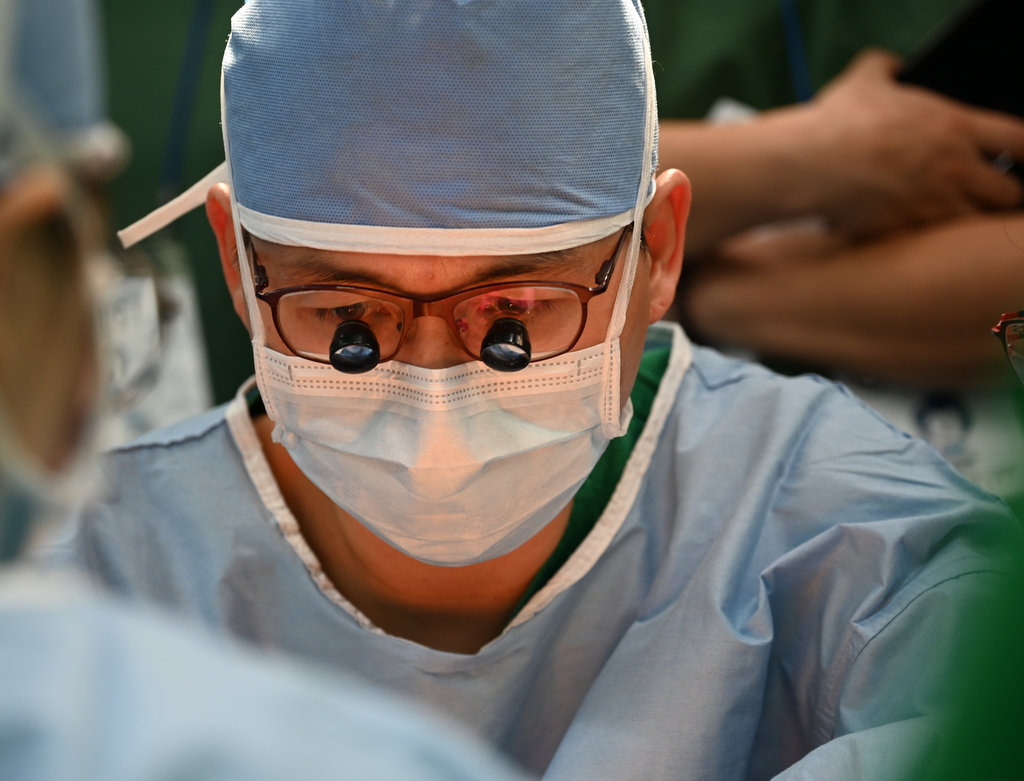
Professor Kim Younhwan of the Department of Plastic Surgery at Hanyang University Hospital (Director of the Reconstruction and Restoration Center) has reached 1,000 cases of ‘free flap’ surgery, a highly difficult microsurgical reconstruction. As of October 2026, the cumulative number of surgeries is 1,011.
Free flap surgery is an operation that reconstructs a defect when tissue such as skin, soft tissue, muscle or bone has been lost due to trauma, burns, cancer resection or infection, by transferring tissue from another part of the body together with its blood vessels. Microvessels about 1–2 mm in diameter must be connected under a surgical microscope so that blood is supplied to the transplanted tissue, and because the transplanted tissue can become necrotic if the vessels are blocked, a high degree of precision and skill is required.
The surgery is used for patients whose bones, tendons or blood vessels are exposed and who have difficulty recovering with general wound care or skin grafts alone. In particular, it is used to preserve the feet of patients at risk of amputation due to diabetic foot or chronic osteomyelitis and to restore tissue loss caused by severe pressure ulcers and burns. After cancer resection, such as for head and neck cancer, it reconstructs the defect to help restore appearance and functions such as swallowing and breathing.
By improving the surgical workflow and the collaboration system among medical staff, Professor Kim performs lower-limb reconstruction using free flaps for conditions such as diabetic foot and osteomyelitis in around two hours. By shortening the operating time of free flap surgery, which usually takes six to eight hours or more, to around two hours, he reduces the burden on patients from general anesthesia and bleeding, contributing to patients’ rapid recovery. However, operating time may vary depending on the extent of the defect and the surgical site.
In addition, since 2008 Professor Kim has introduced and applied latissimus dorsi and thoracodorsal artery perforator free flap surgery, which uses the skin of the flank below the armpit, for the reconstruction of lower-limb defects related to trauma, cancer, burns and diabetes.
Reaching 1,000 cases is the result of expanding the scope of treatment for patients with intractable tissue defects based on accumulated surgical experience, microvascular anastomosis and intensive postoperative care capabilities.
Professor Kim said, “I feel the greatest reward when patients who came to me after being told that there was no option other than amputation despite receiving various treatments walk out of the hospital on their own feet,” adding, “The 1,000 cases are a record made together by the patients who trusted us with their surgery and by all the medical staff in the operating room, the wards and the entire hospital.” He went on to say, “Centered on the Reconstruction and Restoration Center, we will work closely with related departments so that more patients can preserve their arms and legs and return to their daily lives.”
Professor Kim, who serves as Director of the Reconstruction and Restoration Center at Hanyang University Hospital, graduated from Hanyang University College of Medicine and received his master’s and doctoral degrees from the same graduate school. He served as chairman of the scientific committee of the Korean Society for Microsurgery and is currently active as chairman of the scientific committee of the Korean Wound Management Society and an editorial board member of the Korean Society of Plastic and Reconstructive Surgeons (End). |
News
Hanyang University International Hospital