|
Ceremony Held to Mark 300 ‘da Vinci SP’ Robotic Surgeries
|
|
- Single-port robotic surgery quickly established… robotic surgery expertise and capabilities strengthened
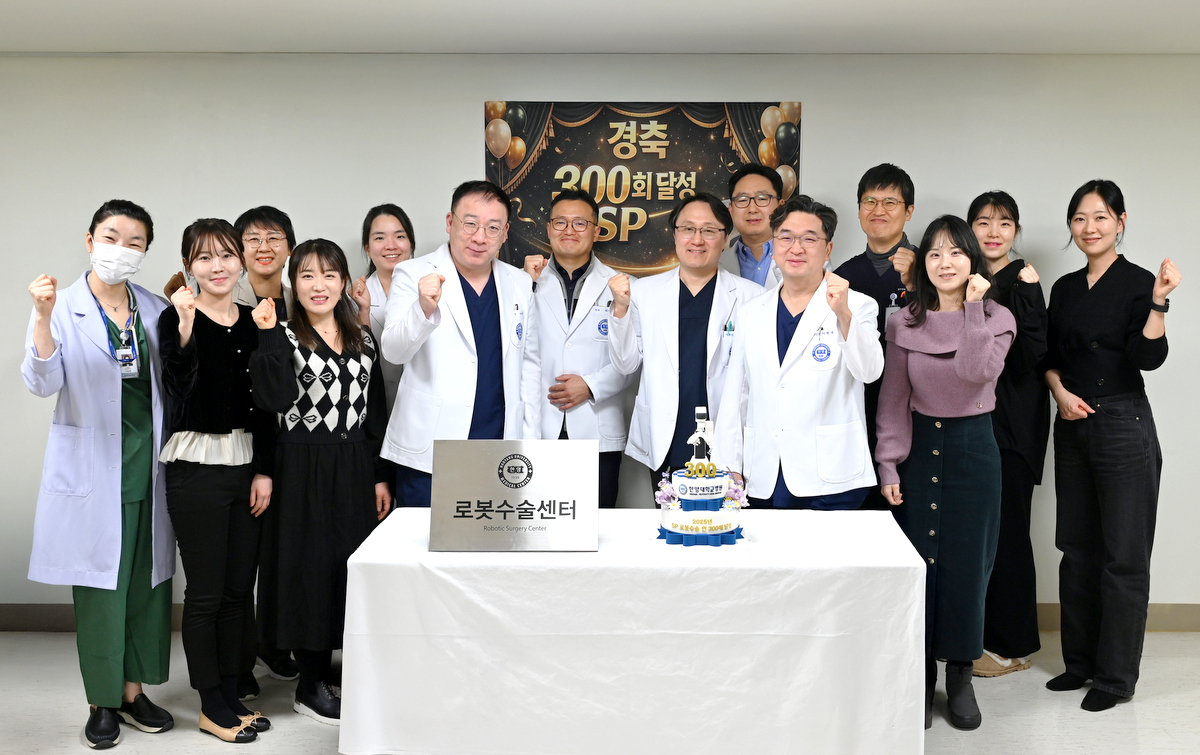
Hanyang University Hospital (President Lee Hyeongjoong) held a ceremony marking 300 ‘da Vinci SP’ single-port robotic surgeries in the 5th-floor conference room of the East Building on January 12.
Since introducing the ‘da Vinci SP,’ a state-of-the-art single-port robotic surgery system, in December 2024, Hanyang University Hospital has reached 300 cases in a short period through stable operation, continuing to achieve meaningful results in the field of robotic surgery.
At the ceremony, Vice President Lee Hanglak said, “Since the introduction of the da Vinci SP, robotic surgery has quickly become established and is producing visible results,” adding, “We will continue to provide support so that safer and more precise surgery can be offered to patients based on our excellent medical staff and systematic collaborative care system.”
Bae Jaeman, Director of the Robotic Surgery Center, said, “Reaching 300 da Vinci SP surgeries is the result of close cooperation among medical staff from various departments, the nursing team and related departments,” adding, “We will continue to expand the scope of clinical application of robotic surgery and further improve the quality of surgery.”
The Robotic Surgery Center of Hanyang University Hospital recorded 181 robotic surgeries in the fourth quarter of 2025, the highest number on a quarterly basis, showing steady growth. It also plans to further strengthen the safety and efficiency of surgery by introducing the latest SP-dedicated staplers and upgrading the system in the near future (End).
[Reference] da Vinci SP (Single Port) robotic surgery system
The da Vinci SP is a state-of-the-art single-port robotic surgery system that performs surgery through a single incision of about 2.5 cm. A 3D HD high-resolution camera and articulated surgical instruments are inserted through a single channel, enabling precise surgery even in deep or narrow areas of the body. Its advantages are that the small incision reduces pain, bleeding and the risk of complications and shortens the recovery period.
Main areas of application - Urology: prostate cancer, kidney cancer, bladder cancer, etc. (Professor Park Sung Yul, Professor Yoon Youngeun) - Obstetrics & Gynecology: uterine fibroids, uterine cancer, ovarian tumors, pelvic organ prolapse, etc. (Professor Bae Jaeman, Professor Lee Wonmoo) - General Surgery: thyroid cancer, colorectal cancer, stomach cancer, gallbladder disease, breast cancer, etc. (Professor Ha Taekyung, Professor Jung Yoonkyung) - Otolaryngology: head and neck cancer, salivary gland tumors, etc. (Professor Tae Kyung, Professor Song Changmyeon) - Thoracic & Cardiovascular Surgery: lung cancer, esophageal cancer, mediastinal tumors, etc. (Professor Kim Yeonsu) |
|
News
Hanyang University International Hospital