

Total posts : 1394
-
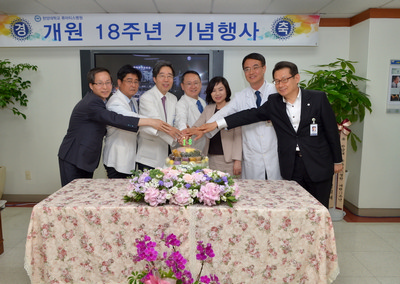
Hanyang University Hospital for Rheumatic Diseases Holds 18th Anniversary Ceremony and 6th Mesenchymal Stem Cell Symposium
[Hanyang University Hospital for Rheumatic Diseases] ‘18th Anniversary Ceremony’ and ‘6th Mesenchymal Stem Cell Symposium’ held Hanyang University Hospital for Rheumatic Diseases (President Bae Sangcheol) held its ‘18th Anniversary Ceremony’ in the first-floor lobby of the Hospital for Rheumatic Diseases on May 27. The event was attended by key officials including Hanyang University Hospital President Lee Kwanghyun and Director of the Office of Management Support Hwang Sungwoo, as well as many faculty and staff members. In his congratulatory address, President Lee Kwanghyun said, “Most of the footsteps of Hanyang University Hospital for Rheumatic Diseases, such as the opening of the rheumatism center and the opening of the rheumatology hospital, are firsts in Korea,” adding, “Recently, past efforts have been bearing excellent fruit, such as the publication of a paper in the world-renowned Nature Genetics, and I look forward to an even better future for Hanyang University Hospital for Rheumatic Diseases.” In his commemorative address, President Bae Sangcheol said, “Until now, all members have worked hard to put Hanyang University Hospital for Rheumatic Diseases at the top level,” adding, “In addition to providing the best patient care, we will train talented young researchers and strive to maintain and further develop the reputation of Hanyang University Hospital for Rheumatic Diseases through patient care, research and social contribution.” At the event, the mission, three major visions and core values of Hanyang University Hospital for Rheumatic Diseases were introduced, and a video showing the year’s achievements was screened. In addition, the ‘Hallyuin Award’ was presented to exemplary employees. Meanwhile, ahead of the event, the ‘6th Hospital for Rheumatic Diseases Symposium’ was held on the sixth floor of the Hanyang Institute of Technology (HIT) on the theme of ‘Treatment of Rheumatic Diseases Using Mesenchymal Stem Cells.’ In the first session, under the theme ‘Exploring the Mechanisms of Mesenchymal Stem Cell Effects on Rheumatic Diseases,’ Professor Lee Choongeun of Brown University School of Medicine in the United States presented on ‘Clinical Application of Mesenchymal Stem Cells and Microvesicles/Exosomes,’ Professor Yoon Jihee of Hanyang University College of Medicine on ‘Regulation of Humoral Autoimmune Responses by Mesenchymal Stem Cells,’ Professor Han Sangbae of Chungbuk National University on ‘Contact Dynamics of Mesenchymal Stem Cells and Immune Cells,’ and Professor Yoo Daehyun of Hanyang University College of Medicine on ‘Effects of Mesenchymal Stem Cells on Cells and Cytokines in Rheumatic Diseases.’In the second session, under the theme ‘Clinical Application of Mesenchymal Stem Cells in the Treatment of Rheumatic Diseases,’ Professor Kim Seunghyun of Hanyang University College of Medicine presented on ‘The Regulatory Role of Mesenchymal Stem Cells in Immunity and Inflammation: Lessons from Clinical Research on Lou Gehrig’s Disease,’ Professor Choi Chanbum of Hanyang University College of Medicine on ‘Global Status of the Application of Mesenchymal Stem Cells for the Treatment of Rheumatic Diseases,’ and CEO Kim Kyungsook of Corestem Inc. on ‘Current Trends in the Development of Cell Therapy and Quality Improvement Guidelines.’
2016-05-28
-
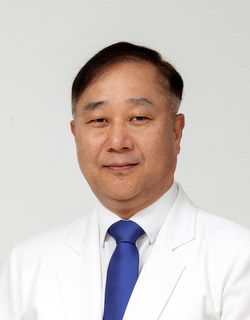
Professor Kim Dongsun of the Department of Endocrinology & Metabolism Elected Next Chairman of the Korean Endocrine Society
Professor Kim Dongsun Elected Next Chairman of the Korean Endocrine Society Professor Kim Dongsun of the Department of Endocrinology Metabolism at Hanyang University Hospital has been elected the next Chairman of the Korean Endocrine Society. Professor Kim was elected at the general assembly of the ‘Korean Endocrine Society Scientific Congress’ held on April 28 at the Sheraton Walkerhill, and his term runs from January 2017 to December 2019. Professor Kim Dongsun said, “The Korean Endocrine Society is a society with a long history and tradition, and until now the chairman had been chosen by nominating a single candidate, but this time the chairman was elected through a contested election for the first time,” adding, “I will strive to make the Korean Endocrine Society a central forum for promoting research and academic activities in endocrinology and metabolism.” Professor Kim Dongsun graduated from Hanyang University College of Medicine and received his master’s and doctoral degrees from the same graduate school. He has been active in academic societies, having served as Vice Dean of Hanyang University College of Medicine, Director and Auditor of the Korean Diabetes Association, Director of the Korean Endocrine Society, and General Affairs Director of the Korean Neuroendocrine Research Society.
2016-05-18
-
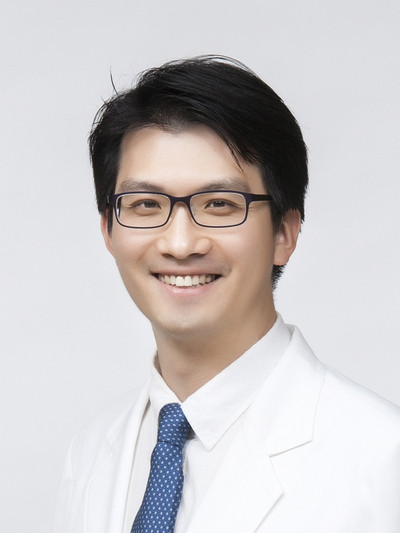
Professor Lim Hanwoong of the Department of Ophthalmology Selected for Outstanding Technology in Creative Asset Commercialization Support Project
Professor Lim Hanwoong of the Department of Ophthalmology Selected for ‘Outstanding Technology’ in Creative Asset Commercialization Support Project A patent invented by Professor Lim Hanwoong of the Department of Ophthalmology at Hanyang University Hospital has been selected as an ‘Outstanding Technology’ in the ‘University Creative Asset Commercialization Support Project (BRIDGE Project).’ The BRIDGE Project, organized by the Ministry of Education and the National Research Foundation of Korea, discovers universities’ creative assets and promotes commercialization and technology start-ups. Professor Lim’s patent selected as an ‘Outstanding Technology’ is the ‘nasolacrimal duct tube including a tear passage part’ technology. In this regard, Professor Lim said, “The nasolacrimal duct tube is an ophthalmic medical device widely used for patients with tearing from various causes, and the newly developed ‘nasolacrimal duct tube including a tear passage part’ technology improves the tear drainage effect of existing nasolacrimal duct tubes and is expected to greatly help relieve symptoms and treat patients with tear duct obstruction,” adding, “It has already been registered as a patent in Korea, and patent applications have been filed in major countries overseas.” He also said, “We are planning technology transfer and prototype development together with the Industry-Academic Cooperation Foundation to commercialize the original technology,” adding, “In addition, a technology called ‘method and device for measuring the range of eye movement’ has been patented, and we are developing a strabismus testing device and software together with the College of Engineering.” Professor Lim Hanwoong, who specializes in strabismus and oculoplastic surgery, graduated from Hanyang University College of Medicine, received his master’s and doctoral degrees from the same graduate school, and trained at the Jules Stein Eye Institute of the University of California, Los Angeles (UCLA). He is active in the Korean Association for Pediatric Ophthalmology and Strabismus, the Korean Neuro-Ophthalmology Society, the Korean Society of Ophthalmic Plastic and Reconstructive Surgery, and the Association for Research in Vision and Ophthalmology (ARVO), and has received the Oral and Video Presentation Academic Award of the Korean Ophthalmological Society, the Medical Award of the Korean Ophthalmological Society, and the ARVO Travel Grant.
2016-05-13
-
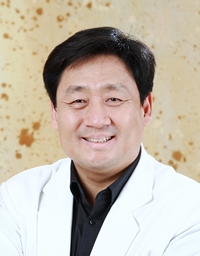
Professor Kim Jungtae of the Department of Plastic Surgery Gives Invited Lecture at the European Federation of Societies for Microsurgery
Professor Kim Jungtae of the Department of Plastic Surgery gives invited lecture at the ‘13th European Federation of Societies for Microsurgery Congress’ Professor Kim Jungtae of the Department of Plastic Surgery at Hanyang University Hospital was invited to the ‘13th European Federation of Societies for Microsurgery Congress’ held in Antalya, Turkey, from April 21 to 24, where he gave special lectures on two topics in microvascular reconstructive surgery. Professor Kim, an authority on reconstructive plastic surgery and microsurgery, said, “The European Federation of Societies for Microsurgery is an international society in which most advanced European countries participate, and it was an opportunity to introduce Korea’s excellent reconstructive plastic surgery.” Professor Kim Jungtae graduated from Hanyang University College of Medicine and received his master’s and doctoral degrees from the same graduate school. He trained at Kawasaki Medical School in Japan, Baylor University in the United States, Chang Gung Memorial Hospital in Taiwan and MD Anderson Cancer Center in the United States, and has served as Editor-in-Chief of Archives of Plastic Surgery, Editorial Director of the Korean Society of Plastic and Reconstructive Surgeons, Director of the Korean Society for Aesthetic Plastic Surgery, Academic Director of the Korean Society for Microsurgery and Editorial Director of the Korean Society for Surgery of the Hand.
2016-05-12
-
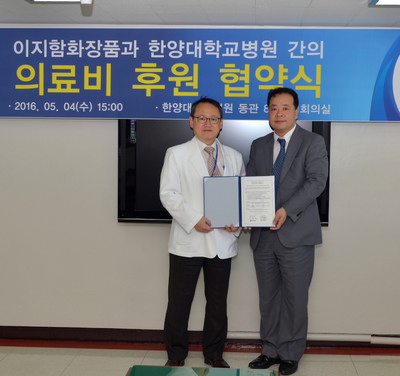
Health Support Agreement Signed With Leejiham Cosmetics for Underprivileged Children
Hanyang University Hospital holds health support agreement ceremony for children in medically underserved groups Leejiham Cosmetics pledged on the 4th to provide annual support to pediatric patients of the hospital [Pictured from left: Hanyang University Hospital President Lee Kwanghyun and Leejiham Cosmetics CEO Choi Hyungseok] Hanyang University Hospital (President Lee Kwanghyun) and Leejiham Cosmetics held a sponsorship agreement ceremony for the healthy lives of children in medically underserved groups in Conference Room 1 on the 8th floor of the East Building on May 4. The event was attended by key executives and officials, including Hanyang University Hospital President Lee Kwanghyun, Director of the Operations Support Division Cho Youngwan, Leejiham Cosmetics CEO Choi Hyungseok and Director Kim Younghoon. Under the agreement, the two institutions will cooperate so that children can lead happy and healthy lives, with Leejiham Cosmetics regularly supporting the medical expenses of children in medically underserved groups and Hanyang University Hospital using the support for children in difficult circumstances who are undergoing treatment. President Lee Kwanghyun said, “This agreement ceremony is a good example of a company returning its profits and talents to society and actively practicing sharing,” adding, “We will make active use of it for children who are in difficult circumstances and in the blind spots of medical care.”
2016-05-09
-
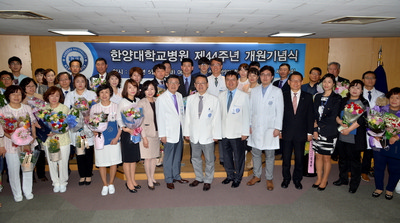
44th Anniversary Ceremony Held
Let this be the first year of putting customer delight into practice ‘Hanyang University Hospital 44th Anniversary Ceremony’ held on the 3rd Marking its 44th anniversary, Hanyang University Hospital pledged to make this the first year of putting customer delight into practice. The anniversary ceremony, held on May 3 in the seminar room on the 6th floor of the New Building, was attended by about 200 key officials and faculty and staff, including Kim Kyunghun, Executive Vice President for Medical Affairs and President of Hanyang University Medical Center; Lee Kwanghyun, President of Hanyang University Hospital; and Hwang Sungwoo, Director of the Office of Management Support. In his congratulatory speech, Kim Kyunghun, Executive Vice President for Medical Affairs and President of Hanyang University Medical Center, said, “Over its 44-year history, Hanyang University Hospital has achieved great development both qualitatively and quantitatively,” adding, “I hope Hanyang University Hospital will continue to make an even more powerful leap based on the understanding and cooperation of all faculty and staff.” In his commemorative address, President Lee Kwanghyun said, “The efforts and dedication of all faculty and staff made Hanyang University Hospital what it is today,” adding, “Going forward, I hope all faculty and staff will make their best efforts toward the goal of customer delight.” At the event, the ‘Model Employee Award’ was presented to 21 faculty and staff members who faithfully carried out their duties and contributed to the hospital’s development. Supervisor Song Hojung of the Department of Nursing and two others received the ‘Chairman’s Award,’ Supervisor Kim Youngho of the Facilities Team received the ‘University President’s Award,’ Supervisor Yoon Ina of the Department of Emergency Medicine and one other received the ‘Executive Vice President for Medical Affairs and President of the Medical Center Award,’ and Supervisor Kim Sunjoo of the Department of Nursing and 14 others received the ‘Hospital President’s Award.’ In addition, the ‘Hanyang Professor Media Award,’ given to professors who carried out the most media and public relations activities during the year, went to Professor Hwang Hwansik of the Department of Family Medicine, Professor Lee Hyeongjoong of the Department of Neurosurgery, and Professor Kim Jeongeun of the Department of Dermatology. Resident Yoo Hyunseung of Internal Medicine and three others received the ‘Medical Records Award,’ resident Lee Jaehyun of Plastic Surgery and three others received the ‘Kind Employee Award,’ Supervisor Kim Kira of the Human Resources and General Affairs Team and two others received the ‘Patient Care King’ award, the Operating Room received the ‘Outstanding Department Award,’ and Senior Pastor Hwa Jongboo of Namseoul Church and one other received the ‘Merit Award.’
2016-05-04
-
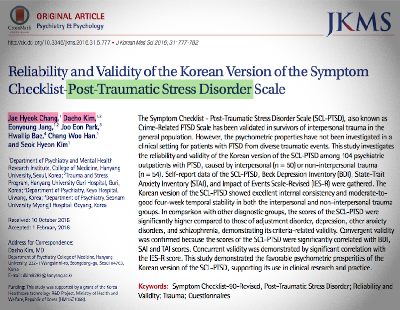
First Korean Post-Traumatic Stress Disorder Screening Tool Developed
First ‘Korean Post-Traumatic Stress Disorder Screening Tool’ Developed - Enables fast, standardized diagnosis of ‘post-traumatic stress disorder’ patients in Korea - Professor Kim Daeho’s team at Hanyang University Hospital proves it an accurate screening tool based on diagnoses of 104 patients - Published in the May issue of the ‘Journal of Korean Medical Science (JKMS),’ a prestigious international journal (SCI) With the development of the ‘Korean Post-Traumatic Stress Disorder Screening Tool,’ fast and standardized diagnosis of patients with ‘post-traumatic stress disorder’ in Korea is expected to become possible. ‘Post-traumatic stress disorder,’ a psychiatric disorder that can occur after experiencing a shocking event such as a disaster or accident, takes a long time to recover from and tends to become chronic, so early and rapid diagnosis is important. However, existing internationally standardized psychiatric screening tests, with their 90 or so repetitive and overlapping questions, made it difficult to diagnose ‘post-traumatic stress disorder’ because patients avoided the event itself or their mental distress increased, so they did not answer accurately. In addition, because the test tools were in foreign languages, there were considerable difficulties in accurately screening the symptoms of Korean patients. However, the ‘Korean Post-Traumatic Stress Disorder Screening Tool’ newly developed by the team of Professor Kim Daeho of the Department of Neuropsychiatry at Hanyang University Hospital (first author resident Jang Jaehyuk, Professor Kim Seokhyun, Jang Eunyoung of Honam University, Park Jooeon of Keyo Hospital, Bae Hwallip of Kangbuk Samsung Hospital, and Professor Han Changwoo of Eulji University) selects only 28 items related to ‘post-traumatic stress disorder’ from the 90 items of the existing internationally standardized psychiatric screening test and interprets them to suit Korea, so that ‘post-traumatic stress disorder’ can be accurately diagnosed by checking patients’ uncomfortable physical and mental symptoms. The research team measured 104 patients who had been diagnosed with ‘post-traumatic stress disorder’ at Hanyang University Hospital and had been receiving outpatient treatment over the past two years using the ‘Korean Post-Traumatic Stress Disorder Screening Tool,’ and after re-measuring four weeks later, confirmed that the results were the same, demonstrating its validity and reliability. In particular, patients who have experienced psychological trauma may present with other conditions such as adjustment disorder or depressive symptoms rather than ‘post-traumatic stress disorder,’ and the team proved that the ‘Korean Post-Traumatic Stress Disorder Screening Tool’ is a screening tool that can accurately diagnose only ‘post-traumatic stress disorder.’ Professor Kim Daeho said, “As a result of this study, the ‘Korean Post-Traumatic Stress Disorder Screening Tool’ can be usefully used in various clinical and disaster situations as a standard screening tool for post-traumatic stress disorder patients in Korea in the future.” These results were published in the May issue of the Journal of Korean Medical Science (JKMS), a prestigious international journal (SCI), under the title ‘Validity and Reliability of the Korean Post-Traumatic Stress Disorder Screening Tool.’ This study was conducted with support from the Ministry of Health and Welfare’s Mental Health Technology Development Project, and Korean diagnostic tools and treatment technologies are expected to be further developed through disaster research over the next four years. [Reference 1] What is post-traumatic stress disorder? ‘Post-traumatic stress disorder’ is a condition in which, after experiencing a serious event such as a natural disaster, accident, war or torture, a person feels fear of the event, suffers through continued re-experiencing even after the event, and expends energy trying to escape it; it negatively affects normal social life. ‘Post-traumatic stress disorder is diagnosed’ when symptoms such as re-experiencing the event, avoidance of stimuli and emotional numbing, and a hyperaroused state appear for more than one month after the incident and seriously interfere with daily life.Treatment of ‘post-traumatic stress disorder’ includes emotional support from psychiatrists, drug therapy, psychotherapy, cognitive therapy, and EMDR (Eye Movement Desensitization and Reprocessing).
2016-05-02
-
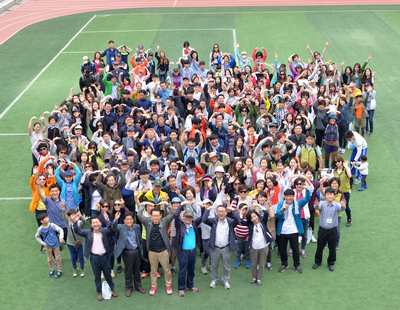
‘One Heart Walking Event’ Held to Mark 44th Anniversary
[Hanyang University Hospital] ‘One Heart Walking Event’ held on the 30th to mark the 44th anniversary Hanyang University Hospital (President Lee Kwanghyun) held the ‘One Heart Walking Event’ to mark its 44th anniversary on April 30 at the Hanyang Women’s University sports ground, in order to create a workplace culture filled with happiness through an occasion for faculty and staff harmony. The event was a great success, attended by about 300 people, including key officials such as Kim Kyunghun, Executive Vice President for Medical Affairs and President of Hanyang University Medical Center; Lee Kwanghyun, President of Hanyang University Hospital; and Lee Ohyoung, Director of the Office of Planning and Coordination, as well as faculty and staff from all job categories, including medical, health, administrative and technical staff, and their families. At the event, President Lee Kwanghyun said, “Usually we work with one heart and one mind at our workplace, Hanyang University Hospital, but today is a day when we walk outdoors toward the same destination,” adding, “I hope this will be an occasion where faculty and staff of all job categories and their families can escape from their busy daily lives, interact with each other and feel happiness.” The ‘One Heart Walking Event’ followed a 7 km course starting from the Hanyang Women’s University sports ground, passing Muhak Bridge, and returning to the starting point. After the walk, a tea party was held for harmony and exchange among faculty and staff, along with a generous prize giveaway.
2016-05-02