

Total posts : 1394
-
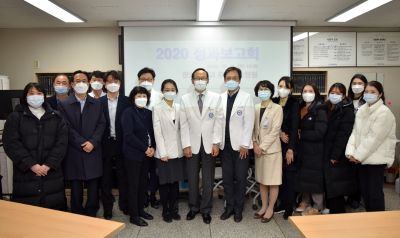
Hospital for Rheumatic Diseases Holds 2020 Performance Report Meeting
Hanyang University Hospital for Rheumatic Diseases (President Yoo Daehyun) held its ‘2020 Performance Report Meeting’ in the hospital’s 2nd-floor conference room on December 11. The event, held online, began with Professor Cho Sukyung as host, followed by a greeting from President Yoo Daehyun, a screening of videos of the various events held at the Hospital for Rheumatic Diseases throughout 2020 despite the COVID-19 pandemic, a performance report by Sung Yoonkyoung, Chairman of the Planning Subcommittee, and a lecture on the theme ‘HUHRD IN 2030: Hanyang University Hospital for Rheumatic Diseases as We Hope It Will Be 10 Years from Now.’ “This year, despite the difficult situation caused by COVID-19, all faculty and staff strictly followed quarantine guidelines and worked hard, so we are safely wrapping up the year,” and “Next year, please continue to do your best in your respective fields, and we will strive to become a safe and trustworthy quaternary hospital for rheumatism treatment.” - Greeting by President Yoo Daehyun “The outbreak of a large-scale infectious disease brought many changes to the medical environment, and it also forced the Hospital for Rheumatic Diseases to halt many events and activities that had been scheduled for this year,” and “However, we have faithfully carried out research, academic activities and events suited to the changed contactless and online environment, and proved our excellence in all areas, including numerous paper publications and awards.” - Professor Sung Yoonkyoung of the Department of Rheumatology, Chairman of the Planning Subcommittee “Please do not forget that the Hospital for Rheumatic Diseases has achieved numerous accomplishments and is recognized in name and reality as the frontrunner in rheumatism treatment, and please strive to exchange and cooperate with many researchers through 2030 so that advanced research results can contribute to the lives of suffering patients.” - Special lecture by President Yoo Daehyun
2020-12-15
-
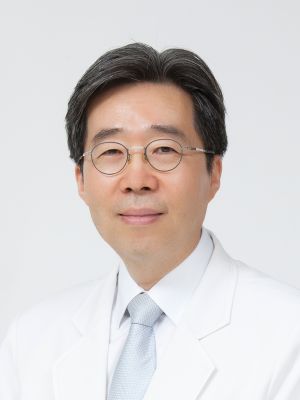
46 New Causal Genes for Lupus Onset Identified for the First Time in the World
Precise analysis of genomic variants of 208,370 East Asians…to be used to predict and prevent the onset of lupus Led by Professor Bae Sangcheol of Hanyang University Hospital for Rheumatic Diseases in joint research with 65 institutions worldwide Published in the world-renowned journal “Annals of the Rheumatic Diseases” A large-scale genetic epidemiological study of East Asians, including Koreans, has discovered for the first time in the world 46 new causal genes associated with the onset of systemic lupus erythematosus (hereinafter lupus), a representative intractable autoimmune disease. Lupus has a higher prevalence and more severe symptoms in East Asians than in Europeans, but because research has mainly targeted white populations, there have been limits to understanding the specific genetic heterogeneity of East Asians. This study identified the causal genetic variants of lupus in East Asians, who are genetically highly similar to Koreans, and is expected to contribute greatly to the development of precision medicine for Korean lupus patients in the future. These findings were revealed in a paper titled ‘Identification of 113 Genomic Regions Associated with Susceptibility to Systemic Lupus Erythematosus through Genome Analysis of 200,000 East Asians (Meta-analysis of 208,370 East Asians identifies 113 susceptibility loci for systemic lupus erythematosus),’ led by Professor Bae Sangcheol of the Department of Rheumatology at Hanyang University Hospital for Rheumatic Diseases, with Professor Kim Kwangwoo of the Department of Biology at Kyung Hee University participating as first author. The paper was published online on December 3 in “Annals of the Rheumatic Diseases (impact factor=16.102),” the most authoritative journal in the field of rheumatology. This study is a large-scale international collaborative project involving a total of 102 co-researchers from 65 institutions worldwide, including in Korea, China and Japan. It is the largest lupus genetic study conducted to date, carried out by precisely analyzing the genomic variants of a total of 208,370 people, including 13,377 Korean, Chinese and Japanese lupus patients and 194,993 members of the general population. As a result, the team discovered a total of 113 genes, including 46 new genes harboring genetic variants associated with the onset of lupus. Considering that fewer than about 100 causal genes for lupus had been identified over a long period in the past, the new identification of these 46 genes is highly significant. The genetic variants of these newly identified causal genes for lupus included many functional variants that alter the strength of expression of important genes and cause changes in the amino acids that make up proteins, and through precise statistical analysis the team identified for the first time that, in nine new genes, multiple genetic variants act on the disease simultaneously and in combination. The team also used a Bayesian approach to narrow down and present 110 candidate genetic variants predicted to be directly involved in the disease. This is expected to promote future research on the molecular and cellular links between genetic variants and lupus onset and to contribute greatly to understanding the disease mechanism. “With the new discovery of 46 lupus-associated genes that had not been found before, we have come to better understand the mechanism of lupus onset, and based on this we can use it to predict and prevent the onset of lupus in East Asians and contribute to precision medicine for lupus.” He added, "Follow-up research on the disease mechanism is currently under way by integrating the lupus genes discovered in this study with immune cell-based big data, and we are pursuing joint research with lupus biomedical scientists around the world for large-scale multi-ethnic lupus genome research.” - Bae Sangcheol, Director of the Institute for Rheumatology Research, Hanyang University
2020-12-14
-
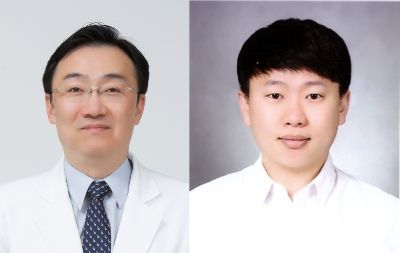
Dr. Kim Yohan Receives S-OIL Outstanding Dissertation Award
Dr. Kim Yohan of the Department of Surgery at Hanyang University College of Medicine received the ‘Excellence Award’ in the life sciences category at the ‘10th S-OIL Outstanding Dissertation Awards’ for his dissertation titled ‘Chemical reprogramming of human hepatocytes into liver progenitor cells.’ His advisor is Professor Choi Dongho. The award ceremony was held on December 10 in the main auditorium of S-OIL’s headquarters, and Dr. Kim’s dissertation was highly regarded for presenting a method to develop progenitor and stem cells with high potential for actual clinical application by inducing reprogramming with small-molecule compounds. Regarding the award, Dr. Kim said, “Existing progenitor and stem cells were mostly produced by delivering external factors into cells via viruses, which made clinical application difficult,” adding, “To solve this problem, this study induced reprogramming into progenitor and stem cells using small-molecule compounds, presenting a method to develop cell therapy products that could be applied in actual clinical practice based on regenerative medicine.” He also said, “Going forward, under the guidance of Professor Choi Dongho, I will do my best in in-depth research and development of progenitor and stem cells beyond human hepatocytes.” Dr. Kim earned his master’s and doctoral degrees from Hanyang University and currently works as a researcher in the Department of Surgery at Hanyang University College of Medicine. He has received the Young Scientist Award from the Korean Society for Molecular and Cellular Biology, the Excellent Presentation Award from the Korean Association of Hepato-Biliary-Pancreatic Surgery, the Young Scientist Award from the Korean Society for Stem Cell Research, and the Excellent Poster Award from the Korean Society for Transplantation (End).
2020-12-11
-
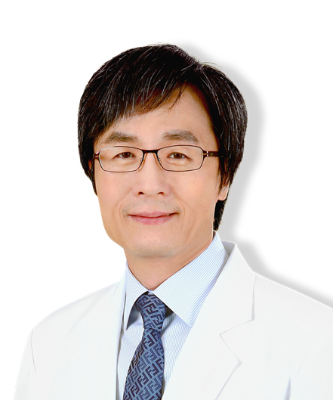
Transoral Robotic Thyroid Cancer Surgery Leaves No Scar and Preserves Voice
It has been found that transoral robotic thyroid cancer resection, which leaves no postoperative scar and thus offers high cosmetic satisfaction, also leaves no voice impairment. Professor Tae Kyung of the Department of Otolaryngology at Hanyang University Hospital demonstrated this in the study “Voice Outcomes After Robotic Thyroidectomy: Comparison with Conventional Cervical Thyroidectomy (Voice outcomes of transoral robotic thyroidectomy: Comparison with conventional trans-cervical thyroidectomy),” published in the August 2020 issue of the oral oncology journal “Oral Oncology, impact factor=3.979.” Thyroid cancer, the most common cancer in women, has a survival rate approaching 100%, so there is great interest in quality of life after surgery, but the conventional surgical method of making an incision in the front of the neck leaves a scar, resulting in low cosmetic satisfaction, and also carries a high risk of postoperative voice impairment. Professor Tae measured voice changes before and after surgery in 47 female patients who underwent transcervical thyroidectomy for thyroid cancer and 42 female patients who underwent transoral robotic thyroidectomy, proving that the transoral robotic thyroid surgery method is superior not only in terms of scarring but also in preserving voice function. In the study, voice changes were measured in both comparison groups the day before surgery and 1 week, 1 month and 3 months after surgery. In the subjective Voice Handicap Index (VHI-10) measurement, there was no change over the pre- and postoperative periods in the transoral robotic thyroid surgery group, but in the transcervical thyroidectomy group, scores at 1 week, 1 month and 3 months after surgery increased significantly compared with preoperative scores. In addition, in acoustic analysis data, the transoral robotic surgery group showed no change over the pre- and postoperative periods, but the transcervical thyroidectomy group showed a decrease of about 20% in the high-pitch range (F-high) at 1 week, 1 month and 3 months after surgery compared with before surgery. Professor Tae Kyung said, “In the treatment of thyroid cancer, the conventional surgical method through a neck incision is sometimes accompanied by scarring and voice impairment, so robotic or endoscopic thyroidectomy through the ear or armpit has long been widely performed,” adding, “However, scars remained in the ear or armpit area, reducing satisfaction,” and “This study has proven that the recently performed transoral robotic thyroidectomy is an excellent surgical method that leaves neither scars nor voice impairment and even preserves the voice after surgery.” Professor Tae Kyung is a world-renowned authority in thyroid cancer/head and neck cancer and has gained an international reputation particularly as a robotic surgery expert; he has served as Chairman of the Korean Society of Otorhinolaryngology-Head and Neck Surgery and Vice President of the Korean Thyroid Association, and currently serves as Secretary General of the Asia-Pacific Thyroid Surgery Association and Director of the Cancer Center at Hanyang University Hospital.
2020-12-11
-
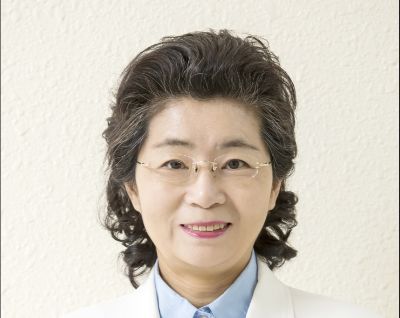
Professor Kim Yongjoo Receives Korean Society of Pediatric Gastroenterology, Hepatology and Nutrition Academic Award
Professor Kim Yongjoo of the Department of Pediatrics Adolescent at Hanyang University Hospital received the ‘Academic Award’ at the ‘2020 Annual Meeting of the Korean Society of Pediatric Gastroenterology, Hepatology and Nutrition’ held online on November 28. The award-winning paper, ‘Analysis of Somatostatin-Secreting D Cells in the Gastric Mucosa of Pediatric Patients with Upper Gastrointestinal Symptoms and Helicobacter pylori Gastric Infection,’ was recognized for providing a clue for the future development of treatments for pediatric gastrointestinal diseases by observing changes in D cells in the gastric mucosa by upper gastrointestinal symptom and with Helicobacter pylori infection. Professor Kim Yongjoo said, “Although it is very difficult to perform gastric endoscopy and collect gastric tissue in children, we obtained meaningful results by performing endoscopy on children with upper gastrointestinal symptoms,” adding, “This is the first study in Korea on D cells, the somatostatin-secreting cells, in the pediatric gastric mucosa, and it can be used for the development of treatments for pediatric gastrointestinal diseases in the future.” Professor Kim Yongjoo graduated from Hanyang University College of Medicine in 1986, received his master’s and doctoral degrees from the same graduate school, and trained at Harvard Medical school and the University of British Columbia. He has served as a member of the Legislation Committee, Information and Communication Committee and Nutrition Committee of the Korean Pediatric Society, auditor and reviewer of the Korean Society of Pediatric Gastroenterology, Hepatology and Nutrition, President of the Korean Academy of Breastfeeding Medicine, and a member of UNICEF Korea’s ‘Baby-Friendly Hospital Initiative (BFHI) Committee,’ among others, and currently serves as President of the Korean Society of Pediatric Gastroenterology, Hepatology and Nutrition. He has written numerous books, including “Textbook of Pediatrics,” “Breastfeeding Counseling in the Clinic,” “Nutrition in Children” (all co-authored), “Pediatric Parenteral Nutrition,” “A Guide for Pediatric Patients with Inflammatory Bowel Disease and Their Parents” and “Nutritional Management of Inflammatory Bowel Disease” (End).
2020-12-01
-
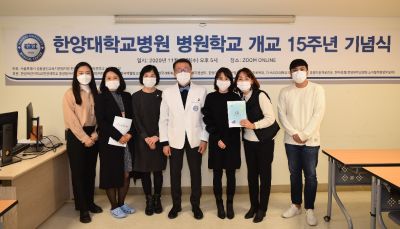
Hospital School Nuribom Classroom Holds 15th Anniversary Ceremony
Nuribom Classroom, the hospital school of Hanyang University Hospital (President Yoon Hojoo), held a ‘15th Founding Anniversary Ceremony’ in the conference room on the fifth floor of the East Building on November 25. Opened on November 25, 2005, Nuribom Classroom, the hospital school of Hanyang University Hospital, was the first in Korea to receive accreditation from the Office of Education, and various volunteers, including current teachers, university students and companies, provide diverse educational programs to children who need long-term treatment for leukemia and childhood cancer so that they can maintain academic continuity and peer relationships. To date, more than 150 graduates have returned to school or entered society and established themselves as members of our society. At the event, held online that day, complete recovery medals were awarded to two students who had overcome leukemia and childhood cancer and been fully cured, model student awards were presented to students who are working hard at their treatment and studies, and certificates of appreciation were given to current teachers who have volunteered. In a welcoming address, Professor Lee Youngho of the Department of Pediatrics Adolescent, principal of the hospital school, said, “This year, the COVID-19 pandemic caused many difficulties for hospital school classes as well,” adding, “Thanks to the great efforts of the volunteers, we developed and advanced a video class program for non-face-to-face classes, which gave children with leukemia and childhood cancer new experiences and hope, and it became an opportunity for us to grow one step further based on these experiences.” In a congratulatory speech, President Yoon Hojoo said, “I thank the current teachers and university student teachers, officials of the Seongdong Gwangjin District Office of Education and the many volunteers for their hard work for the patients' treatment, learning activities and the formation of healthy relationships with their peers,” adding, “I hope that childhood cancer patients will continue to pursue their dreams and hopes through the hospital school and be reborn as talented people we can be proud of, and I wish Nuribom Classroom boundless growth.”
2020-11-26
-
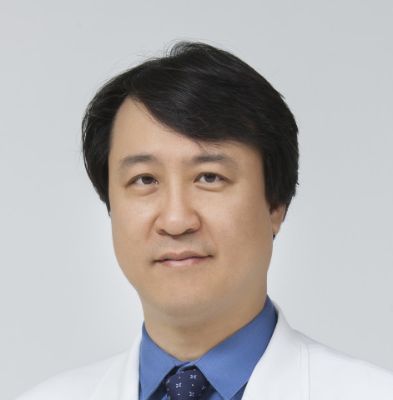
Professor Lim Taeho Receives Minister of Science and ICT Award
Professor Lim Taeho of the Department of Emergency Medicine at Hanyang University Hospital was honored with the ‘Minister of Science and ICT Award’ at the ‘Minister of Science and ICT Commendation Ceremony,’ held on November 19 at the Culture Plaza of the Seoul Metropolitan Police Agency, in recognition of contributions to promoting the field of public life research. Professor Lim Taeho is conducting a variety of public life research projects organized by the Ministry of Science and ICT. In particular, Professor Lim was highly praised for continuous efforts to invigorate public life research, a new field of research, by carrying out diverse studies actually needed in Korea’s health care settings and by the public through various research and development projects applying medicine and biomedical engineering, such as the development of a Korean-style manual ventilator, an artificial intelligence video laryngoscope and a space and surface sterilizer, and by launching a laboratory startup to disseminate the research results. “Public life research is a new field of research that, together with on-site users, uses science and technology to solve problems that actually arise in people’s daily lives or in medical settings,” Professor Lim said. “Public life research is a research approach suited to the era of the Fourth Industrial Revolution and its two-way communication, and continued interest and support from the nation and society for this field will be needed.” Professor Lim Taeho graduated from Hanyang University College of Medicine and received a master’s degree and a doctorate from the same university’s graduate school. Professor Lim has served as President of the Korean Emergency Airway Management Society, President of the Korean Society for Simulation in Healthcare, Chair of the Finance Committee of the Asia Pacific Society for Disaster Medicine, Director of Finance of the Korean Disaster Emergency Medical Association, Director of Finance, Public Relations, Policy and Training of the Korean Society of Emergency Medicine, and Chair of the Korean Triage and Acuity Scale (KTAS) Committee, among other positions, and currently serves as Director of Planning of the Korean Shock Society, Vice Dean of Academic Affairs and Vice Director of the Industry-University Cooperation Foundation at Hanyang University, Director of the Clinical Skills Center (MESH) of the College of Medicine, Director of the Convergence Technology Research Center for Disaster Response, and Disaster Medical Officer of Hanyang University Hospital. (End)
2020-11-25
-
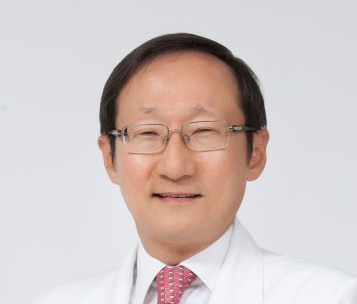
Professor Yoo Daehyun Receives Korean Rheumatology Academic Award from Korean College of Rheumatology
Hanyang University Hospital for Rheumatic Diseases' Professor Yoo Daehyun of the Department of Rheumatology had the honor of receiving the ‘Korean Rheumatology Academic Award’ at the ‘40th Annual Meeting of the Korean College of Rheumatology and the 14th International Symposium,’ held at Dragon City in Seoul on October 22. The ‘Korean Rheumatology Academic Award’ is presented by the Korean College of Rheumatology to the one person selected as having contributed the most to the development of the society over the past three years through academic research achievements in the field of rheumatology and activities in domestic and international academic societies. Professor Yoo Daehyun has made significant contributions to the development of rheumatology in Korea, including publishing numerous research papers on rheumatoid arthritis and systemic lupus erythematosus. In particular, since 2009, Professor Yoo has led many clinical studies as a principal investigator in the field of biosimilars and has played a part in making Korea a global powerhouse in the biosimilar field. Since 2013, Professor Yoo has published about 20 biosimilar research papers in prestigious domestic and international journals. Professor Yoo Daehyun graduated from Hanyang University College of Medicine in 1982 and received master's and doctoral degrees from the same university's graduate school. Professor Yoo has served as President of Hanyang University Hospital for Rheumatic Diseases since 2019 and has served as Vice President of the Asia Pacific League of Associations for Rheumatology, President and Chairman of the Korean College of Rheumatology and Chairman of the Korean Rheumatology Research Foundation, among other positions. Professor Yoo is engaged in active academic work as Editor-in-Chief of the International Journal of Rheumatic Diseases, Editor-in-Chief for rheumatology of the Korean Journal of Internal Medicine and an editorial board member of Expert Reviews of Clinical Immunology, among other roles. Professor Yoo has received the Best Paper Award from the European League Against Rheumatism and the HYU Academic Award from Hanyang University, among other honors.
2020-11-24
-
Grilling Habits Worsen Lung Function in Patients with Severe Asthma
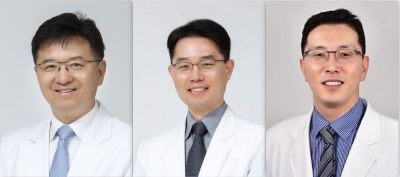
Grilling at least once a week reduces lung capacity in asthma patients Professor Yoon Hojoo’s team publishes in “AAIR(Allergy, AsthmaImmunology Research)” A study has found that grilling fish or meat at home at least once a week can affect the respiratory health of adult asthma patients, and can have an even greater effect on patients with severe asthma. Professor Yoon Hojoo’s team of the Department of Pulmonology Allergy at Hanyang University Hospital (Professors Son Changwon, Kim Sangheon, Park Dongwon and Lee Hyun) demonstrated this in ‘The Effect of Grilling Meat or Fish at Home on Peak Expiratory Flow in Adult Asthma Patients,’ published in the July 2020 online edition of “AAIR(Allergy, AsthmaImmunology Research), impact factor=4.157),” one of Korea’s top journals in the field of asthma and allergy. Professor Yoon’s team compared and analyzed 91 adult asthma patients, divided into a group that grilled meat or fish using a grill at least once a week (39 patients) and a group that did so once a week or less (52 patients). For the study, all participants measured their lung capacity twice a day, morning and evening, using a peak expiratory flow meter for two months, and an Airguard system capable of managing the indoor environment was installed in their homes to measure indoor fine dust and observe changes in the patients’ respiratory condition. The study found that peak expiratory flow was lower in the group that grilled meat or fish at least once a week than in the group that did so once a week or less. In particular, in the group of patients with severe asthma receiving step 4–5 treatment, peak expiratory flow was about 25% lower (297.8L/min) than in the group of patients with mild-to-moderate asthma at steps 1–3 (396.1L/min). Professor Yoon Hojoo said, “Cooking with a grill is commonly used in homes, but little research has been done on its relationship with lung function in asthma patients,” adding, “This study shows that ordinary indoor cooking habits such as grilling meat or fish can have a significant impact on the respiratory health of patients with severe asthma.” He also said, “By identifying correctable risk factors for patients with uncontrolled severe asthma, the study presents various approaches for asthma-related research and treatment planning.”
2020-11-20