

Total posts : 1394
-
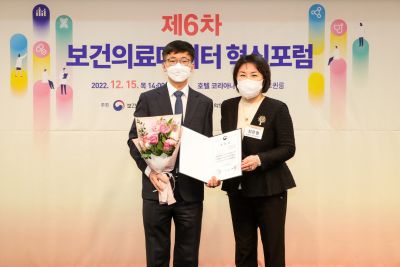
Director of Medical Informatics Kim Yeesuk Receives ‘Minister of Health and Welfare Commendation’
Kim Yeesuk, Director of the Medical Informatics Office at Hanyang University Medical Center, was honored with the ‘Minister of Health and Welfare Commendation’ at the ‘6th Health and Medical Data Innovation Forum’ held at Hotel Koreana in Jung-gu, Seoul, on December 15, in recognition of his contribution to the development of health care and the promotion of public health through active participation in information and communication technology-based medical policy projects. Professor Kim, who has served as Vice President for Information Management at Hanyang University Hospital since 2020, oversaw the strengthening of the institution’s own research capabilities and support for data use by establishing data governance, information security and a utilization foundation for the medical data-centered hospital support project, and since 2021, as Director of the Medical Informatics Office, he has helped build the standardization-based next-generation electronic medical record system of Hanyang University Medical Center to make the leap to a research-driven hospital, and was recognized for contributing to securing interoperability through the verification of national standards and conformity of medical data. Professor Kim Yeesuk said, “Medical data generated in clinical settings can be used for the development of new drugs, medical devices and artificial intelligence, for strengthening the research capabilities of medical institutions, and for big data research environments,” adding, “Hanyang University Medical Center has built and is successfully operating a next-generation electronic medical record system, and we will play a leading role in the development and research of medical data standardization through the high-quality medical data generated at the hospital.” Professor Kim Yeesuk, who specializes in the hip clinic and hip sports injuries at the Department of Orthopedic Surgery of Hanyang University Hospital, graduated from Hanyang University College of Medicine and received his master’s and doctoral degrees from the same graduate school. He is active as an academic committee member and reviewer of the Korean Hip Society, an academic committee member of the Korean Sports Society, an academic committee member of the Korean Society for Bone and Soft Tissue Transplantation, and a regular member of the Korean Orthopaedic Association, the Korean Society for Bone and Mineral Research and the American Academy of Orthopaedic Surgeons, among others, and has received numerous academic awards, including the Korean Hip Society Academic Award and the Korean Orthopaedic Association Academic Award (End).
2022-12-16
-
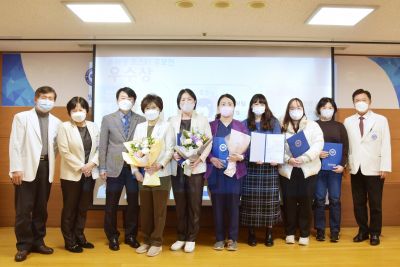
‘11th Infection Control Week Event’ Held
Hanyang University Hospital (President Yoon Hojoo) held the ‘11th Infection Control Week Event’ on December 14 in the auditorium on the 3rd floor of the Main Building to promote the importance of infection control and create a safe hospital culture. The event featured an ‘Infection Control Quiz’ for all faculty and staff evaluating their knowledge of infection control and response measures, a ‘Hand Hygiene Poster Contest’ promoting the importance and practice of infection control, the presentation of the ‘Best Clean Hands’ award to staff who have set an example in hand hygiene and the ‘Infection Control Special Award’ to staff whose special infection control activities serve as a model, and giveaways including a lucky draw. President Yoon Hojoo said, “Going through the large-scale infectious disease of COVID-19, we learned how great a role masks and hand hygiene alone can play in preventing infection,” adding, “Since there are many patients with weakened immunity in a hospital, I hope all faculty and staff will stay true to the basics and comply with the infection control manual and behavioral guidelines so that we can continue to provide safe medical services.” Prior to this, in the morning, a hand hygiene experience booth was operated in the lobby on the 1st floor of the Main Building, and various hands-on events such as an infection control quiz and hand hygiene posters were held to promote the importance of infection control (End).
2022-12-15
-
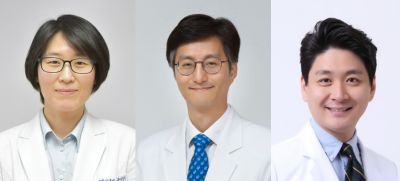
Only 40% Visit a Hospital After Diagnosis of ‘Nonalcoholic Fatty Liver Disease,’ Which Has a High Cardiovascular and Cerebrovascular Mortality Rate
Hanyang University Hospital and Nowon Eulji University Hospital research team, online survey of 1,000 members of the general public “Need for effective, systematic lifestyle modification education by medical staff” A survey found that while awareness of nonalcoholic fatty liver disease among Koreans is generally high, only 40% visit a medical institution to manage fatty liver after diagnosis, and that they are not receiving education on ‘lifestyle modification,’ the most important element of treatment, suggesting a need for systematic prevention and management by medical staff. Nonalcoholic fatty liver disease refers to a condition in which there is fatty liver without other causes such as significant alcohol consumption, drugs or viral hepatitis. The prevalence of nonalcoholic fatty liver disease among Koreans is known to be 25–30%, and patients with nonalcoholic fatty liver disease are characterized not only by a high risk of chronic hepatitis, cirrhosis and liver cancer but also by a high risk of cardiovascular and cerebrovascular disease. The team of Professors Yoon Ailin and Jun Daewon (principal investigator) of the Department of Gastroenterology at Hanyang University Hospital and Professor Lee Joonhyuk of the Department of Family Medicine at Nowon Eulji University Hospital announced these results from a large-scale online survey of 1,000 members of the general public on ‘Awareness and Needs Regarding Nonalcoholic Fatty Liver Disease,’ conducted with support from an academic research service project of the Korea National Institute of Health under the Korea Disease Control and Prevention Agency (KDCA). Professor Yoon Ailin of the Department of Gastroenterology at Hanyang University Hospital said, “For nonalcoholic fatty liver disease, in which one in three patients is known to die from cardiovascular or cerebrovascular disease, the most recommended measure is lifestyle modification,” adding, “Along with this, having an accurate awareness of nonalcoholic fatty liver disease is necessary for successful lifestyle modification.” The survey was commissioned by Hanyang University Hospital to the survey agency Macromill Embrain Co., Ltd. and conducted from September 7 to 14, 2022, with a gender ratio of 51% men and 49% women, and was designed according to regional and age distribution in Korea. The sampling error is ±3.1 percentage points at the 95% confidence level. As a result, the following key findings related to nonalcoholic fatty liver disease were obtained. Awareness of fatty liver disease among the Korean general public is relatively high Of the survey respondents, 72.8% said they had heard of nonalcoholic fatty liver disease through various channels (Figure 1). Of the respondents, 85.7% were aware that fatty liver can develop even without drinking alcohol, and 82.5% recognized nonalcoholic fatty liver as a disease requiring treatment. Figure 1. Channels of awareness of the term nonalcoholic fatty liver disease Only 40% of those diagnosed with nonalcoholic fatty liver visit a medical institution Of the respondents, 13.2% said they had been diagnosed with nonalcoholic fatty liver disease. Only 40.2% of those diagnosed with nonalcoholic fatty liver visited a medical institution to manage it. Reasons for not visiting a medical institution differed somewhat between men and women. The most common response among men was ‘because I lack time to visit the hospital,’ and among women ‘because I think I can manage my lifestyle on my own.’ By age group, those in their 40s and younger said they did not visit the hospital ‘because I lack time to visit the hospital,’ those in their 50s ‘because I think I can manage my lifestyle on my own,’ and those in their 60s and older ‘because I don't think fatty liver itself is a serious disease,’ suggesting a need for individualized awareness improvement by gender and age group. Only 44.7% had received lifestyle recommendations when diagnosed with fatty liver. Among those advised by medical staff to modify their lifestyle, 59.3% visited a hospital, while among those not advised, 24.7% visited a hospital, identifying advice from medical staff as a key factor in deciding to seek hospital care. Of the respondents, 32.9% answered that their reason for not visiting a hospital for care after diagnosis of nonalcoholic fatty liver was ‘because I was not told by medical staff that I needed management’ (Figure 2). Figure 2. Medical institution visits after diagnosis of nonalcoholic fatty liver Need for diet and exercise education programs for nonalcoholic fatty liver As the lifestyle modification for the prevention and management of nonalcoholic fatty liver disease, men ranked ‘increasing exercise’ first and women ranked ‘weight loss’ first. By age group, those in their 20s, 50s and 60s ranked ‘increasing exercise’ first, and those in their 30s and 40s ranked ‘weight loss’ first. Of the respondents, 66.5% said that education on appropriate diet or exercise therapy through medical staff is needed to manage fatty liver. In particular, the proportion was higher among women and those in their 40s and older, confirming the general public's desire for the management of nonalcoholic fatty liver disease to be run systematically through medical staff. In addition, the demand for management through mobile phone applications, easily accessible according to each individual's time and availability, was also high at 60.2%, and the demand for such mobile app-based management was higher among older people and those living in metropolitan cities or small and medium-sized cities. Management through visits to public health centers was desired by 47.3%, with higher demand among older people. Figure 3. What is needed to manage nonalcoholic fatty liver disease Professor Lee Joonhyuk of Nowon Eulji University Hospital suggested, ”For Koreans, nonalcoholic fatty liver disease is as common a disease as hypertension, but awareness of its long-term complications is relatively lacking. The reality is that lifestyle improvement, the most important element in managing nonalcoholic fatty liver disease, is also carried out only at the individual level, making effective management difficult.“ He added, ”Above all, systematic management by medical staff is needed to reduce the burden of complications and medical costs caused by nonalcoholic fatty liver disease, and since health management behaviors differ by gender and age group, tailored management strategies are required.”
2022-12-14
-
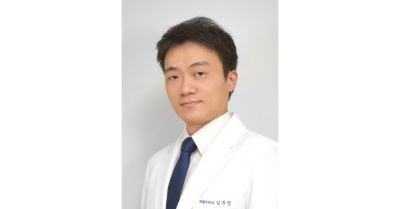
‘Dysphagia’ in Parkinson’s Disease Found to Be Caused by Dopamine Changes in the Striatum
Professor Kim Joonyeob publishes in international journal “Clinical Nuclear Medicine” A study has found that the cause of dysphagia, known as a major factor in increased mortality and reduced quality of life in patients with Parkinson’s disease, is associated with the degeneration of dopaminergic neurons in the *striatum, which plays an important role in initiating and controlling voluntary movement in the brain. Based on these results, striatal dopamine transporter uptake in Parkinson’s disease can be used as a biological marker to predict the occurrence of dysphagia and the severity of its symptoms, and it may provide a clue to finding the anatomical location for neuromodulation treatment specific to dysphagia symptoms. These results, from joint research by Professor Kim Joonyeob of the Department of Physical Medicine Rehabilitation at Hanyang University Hospital and the Veterans Medical Research Institute and the Departments of Rehabilitation Medicine, Neurology and Nuclear Medicine of VHS Medical Center, were revealed in a paper titled “Striatal Dopaminergic Loss and Dysphagia in Parkinson Disease” in the latest issue of the international journal . Gastrointestinal disorders are common symptoms in patients with Parkinson’s disease, and among them, dysphagia can cause malnutrition and aspiration pneumonia, contributing to increased mortality; depending on the report, up to about 90% of patients with Parkinson’s disease are known to eventually develop dysphagia. Previously, several studies had been conducted on brain activation during swallowing in healthy people or on structural brain changes related to dysphagia in stroke patients, but there had been almost no research on the relationship between the striatal distribution of neurotransmitters in patients with Parkinson’s disease and dysphagia. Professor Kim Joonyeob studied 65 patients who met the study’s selection criteria among 581 patients diagnosed with Parkinson’s disease at VHS Medical Center from 2015 to 2021, evaluating impairments in each stage of swallowing food, such as chewing function, transit time and residue, through 14 sub-items in the oral and pharyngeal phases, the two main stages of swallowing. Differences in the degree of striatal neuron degeneration according to impairment in each stage were calculated from dopamine transporter uptake obtained through positron emission tomography (PET) scans. This study revealed for the first time clear differences in the distribution of reduced striatal dopamine transporter availability by stage of dysphagia in Parkinson’s disease (figure). Figure. Striatal distribution of reduced dopamine transporter uptake according to the number of dysphagia sub-items judged abnormal. The association between dysphagia and each striatal region is shown from red (overlap of the fewest sub-items) to white (overlap of the most sub-items). R: right side, L: left side, A: anterior side, P: posterior side, I: inferior side, S: superior side. Professor Kim said, “The pleasure of eating delicious food by mouth is a great joy and a basic desire for most people, but when a disease makes it impossible to chew and swallow food by mouth, it seriously reduces quality of life and even becomes a major obstacle to prolonging life,” adding, “Research on dysphagia is very important in that it is research that enables people to live as human beings, and I will continue to do my utmost to study the neurological pathophysiology of dysphagia in various diseases and to develop treatments accordingly.” Professor Kim Joonyeob completed his undergraduate studies at Yonsei University College of Medicine and received his master’s degree from the same graduate school, and he currently combines clinical practice and research at the Department of Physical Medicine Rehabilitation at Hanyang University Hospital, specializing in rehabilitation for degenerative brain diseases including brain injury, ALS, Parkinson’s disease and movement disorders, as well as dysphagia rehabilitation. * Striatum: A region forming the basal ganglia deep in the cerebrum that mediates functions such as reward, cognition, reinforcement, motivation, movement, inhibitory control, impulsivity and stimulus-response cognition. Degeneration of dopaminergic neurons in this region is closely related to movement disorders such as Parkinson’s disease and Huntington’s disease. It is a central nervous system structure that is also associated with substance dependence, bipolar disorder, autism spectrum disorder and more.
2022-12-13
-
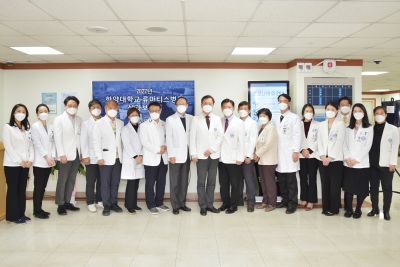
‘2022 Performance Report Meeting’ Held
Hanyang University Hospital for Rheumatic Diseases (President Kim Taehwan) held its ‘2022 Performance Report Meeting’ in the hospital’s 1st-floor lobby on December 9. The event began with Professor Choi Chanbum of the Department of Rheumatology as host, followed by a greeting from President Kim Taehwan and a report by Sung Yoonkyoung, Chairman of the Planning Subcommittee, on the various achievements made throughout 2022. In his greeting, President Kim Taehwan said, “Our hospital maintains world-class standards in the treatment and clinical research of rheumatic diseases in Korea and plays a leading role in research and clinical practice in the field of patient-tailored precision medicine,” adding, “Based on the treatment philosophy we have upheld so far, we will expand our scope internally and externally to build the foundation of a research-driven hospital and achieve innovation for future medicine.” In the performance report by Professor Sung Yoonkyoung of the Department of Rheumatology, Chairman of the Planning Subcommittee, major achievements were presented, including 2022 events such as the international symposium, the continuing education course for practitioners and the anniversary ceremony, as well as the reorganization of the Hospital for Rheumatic Diseases, the revitalization of the Rheumatism Prevention Center, the systematization of clinical trials and clinical research, and awards and academic society activities (End).
2022-12-12
-
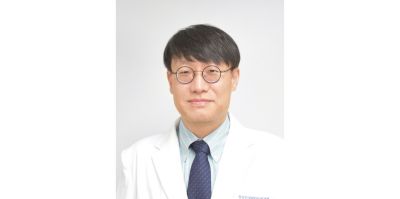
Professor Lee Kunsuk Receives ‘Commendation from Director of National Center for Mental Health’
Professor Lee Kunsuk of the Department of Neuropsychiatry at Hanyang University Hospital received the ‘Director of the National Center for Mental Health Award’ at the ‘Plenary Meeting of the Admission Appropriateness Review Committee’ hosted by the National Center for Mental Health on December 1 at the Korea Press Center. Professor Lee was recognized for his dedication to protecting the rights and interests of people with mental illness who undergo involuntary admission, having been selected as a member of the Admission Appropriateness Review Committee, launched in 2017 under the Act on the Improvement of Mental Health and the Support for Welfare Services for Mental Patients, which was fully revised to promote the rights and interests of people with mental illness, and serving as a subcommittee chair to date. Professor Lee Kunsuk said, “In the process of involuntary admission of people with mental illness, problems of communication between medical institutions and patients, protection of rights and interests, and therapeutic approach can arise, and it was difficult to strike the right balance among them,” adding, “I will continue to work toward creating an appropriate treatment environment for patients receiving treatment for mental illness and toward institutional improvements.” Professor Lee, who serves as Deputy Director of the Life Love Center of Hanyang University Hospital, graduated from Hanyang University College of Medicine and received his master’s and doctoral degrees from the same graduate school. He is active as a member of the Medical Review Committee and the Examination Committee of the Korean Neuropsychiatric Association, finance director of the Korean Society for Schizophrenia Research, finance director of the Korean Society of Digital Therapeutics, a board member of the Korean Society of Psychosomatic Medicine and an advisory member of the COVID-19 Vaccine Safety Committee of the National Academy of Medicine of Korea, and has received numerous academic awards, including the Minister of Health and Welfare Award, the Kongju National University President’s Award, the World Congress of Psychiatric Genetics (WCPG) Travel Award and the Admission Appropriateness Review Committee Award of the National Center for Mental Health (End).
2022-12-07
-
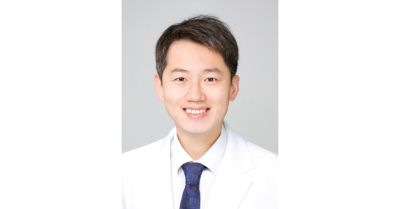
Elderly Breast Cancer Patients May Not Need Axillary Surgery If Metastasis Is Not Suspected
Professor Cha Chihwan’s team publishes in leading international journal “European Journal of Surgical Oncology” A study has found that among breast cancer patients aged 70 or older in whom metastasis is not clinically suspected, there is no difference in survival rates between patients who do not undergo axillary lymph node surgery, which is regarded as a standard procedure, and those who do. These results were revealed by the team of Professor Cha Chihwan of the Department of General Surgery at Hanyang University Hospital (corresponding author: Professor Chung Minsung) in a paper titled “Survival benefit from axillary surgery in patients aged 70 years or older with clinically node-negative breast cancer: A population-based propensity-score matched analysis,” published in the latest issue of the leading international journal . In the past, many patients diagnosed with breast cancer underwent ‘lymph node dissection,’ which removes a large portion of the axillary lymph nodes, at the same time as breast surgery. However, since the American College of Surgeons Oncology Group’s ‘Z0011’ trial was published in 2010, even when one or two cancer metastases are found in the axillary lymph nodes, performing ‘sentinel lymph node biopsy,’ which determines whether metastasis has occurred through biopsy of about one to three lymph nodes via a small incision, instead of ‘lymph node dissection,’ has been regarded as one of the standard procedures. However, ‘sentinel lymph node biopsy’ can also cause complications in some patients, such as surgical wound infection, seroma or bleeding, and the biopsy requires an additional incision in the axillary area. Using big data from the Registration Committee of the Korean Breast Cancer Society, Professor Cha’s team analyzed survival rates according to axillary lymph node surgery in about 3,000 breast cancer surgery patients aged 70 or older in Korea from 2005 to 2014. They compared 708 patients in whom axillary lymph node metastasis was not clinically suspected at the time of diagnosis using 3:1 propensity score matching, and found no statistical difference between the survival rate of the 531 patients who underwent axillary lymph node surgery (lymph node dissection and sentinel lymph node biopsy) and that of the 177 patients who did not. They also confirmed that the five-year mortality rate of breast cancer patients who did not undergo axillary lymph node surgery was very low at 3.3%. Professor Cha Chihwan said, “About 30% of all breast cancer patients in Korea are elderly patients aged 70 or older, but there are few clinical studies on reducing complications from breast cancer surgery in elderly patients,” adding, “This study confirmed that among breast cancer patients aged 70 or older in whom metastasis is not clinically suspected, there is no change in the five-year survival rate even if axillary ‘sentinel lymph node biopsy’ is selectively not performed,” and “The results of this study can serve as clinical evidence for establishing a ‘tailored surgical strategy’ that omits axillary surgery itself to improve the quality of life of some elderly breast cancer patients” (End). * Sentinel lymph node biopsy: Before surgery, a radioisotope is injected near the nipple, and the location of the sentinel lymph node where the isotope is most visible is found and sent for biopsy. A small incision is made in the axillary area, through which usually one to three lymph nodes are removed and at the same time biopsied to determine whether metastasis has occurred. * Propensity Score matching: One of the methods of estimating causal relationships in a quasi-experiment design situation where the subjects of the two groups being compared (the experimental group and the control group) cannot be assigned randomly, in which matching is performed by calculating propensity scores (Kim Baek, 2016). Cases with the same or similar characteristics in covariates that can affect the dependent variable, other than the treatment variable, among the variables of the two groups are selected as pairs, and then the cases in each pair are divided and assigned to the experimental group and the control group. By resolving the problem of selection bias between the two groups through matching, the effect of a program treatment can be validly estimated (Guo Fraser, 2010).
2022-12-06
-
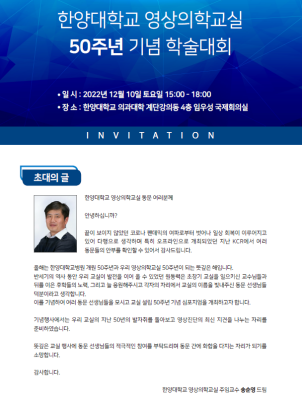
Department of Radiology Holds ‘50th Anniversary Academic Conference’
The Department of Radiology of Hanyang University Medical Center will hold a ‘50th Anniversary Academic Conference’ on December 10 at the Lim Woosung International Conference Room on the 4th floor of the Lecture Hall Building of Hanyang University College of Medicine. Song Soonyoung, Chairman of the Department of Radiology, said, “Today’s Department of Radiology exists thanks to the efforts of the many professors and alumni who have devoted themselves to the department’s development since its early days, and of the juniors who followed them,” adding, “I hope this conference will be an occasion to look back on the footsteps of the past 50 years and share the latest knowledge in the field of diagnostic imaging.” The symposium consists of two sessions. The first session will be chaired by Professor Moon Wonjin of Konkuk University School of Medicine and Professor Song Hotaek of Yonsei University College of Medicine, with lectures by Professor Lee Seunghoon (Department of Radiology, Hanyang University Hospital) on ‘Imaging Findings of Rheumatic Diseases,’ Professor Kim Yeojoo (Department of Radiology, Hanyang University Hospital) on ‘HIVD,’ and Professor Oh Sewon of The Catholic University of Korea College of Medicine on ‘Tips for Neuro Head and Neck CTA and MRA.’ The second session will be chaired by Sung Jinyong, Vice President of Daerim St. Mary’s Hospital, and Lee Kwangwoo, Director of Gangnam Radiology Clinic, with lectures by Professor Yoo Seungjin (Department of Radiology, Hanyang University Hospital) on ‘Coronary CT angiography,’ Professor Kim Eungtae (Department of Radiology, Hanyang University Guri Hospital) on ‘Central Venous Catheter, How Are You?,’ and Professor Baek Junghwan of University of Ulsan College of Medicine on ‘20 Years of Experience with Thyroid Radiofrequency Ablation’ (End).
2022-12-05
-
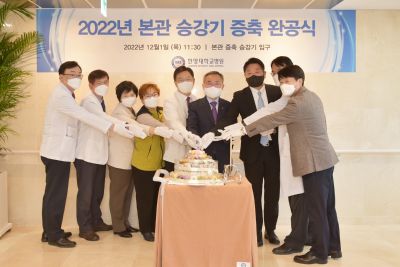
‘Main Building Elevator Extension Completion Ceremony’ Held
“We Will Do Our Best to Increase Patient Convenience and Provide Safe Medical Services” Hanyang University Hospital (President Yoon Hojoo) held the ‘Main Building Elevator Extension Completion Ceremony’ on December 1 at the entrance of the newly added elevators on the 3rd floor of the Main Building. The event was attended by key officials and related personnel, including Hanyang University President Kim Woo-seung, Hospital President Yoon Hojoo and Director of the Operations Support Division Kim Daesung. The event featured a congratulatory speech by President Kim Woo-seung and greetings from Hospital President Yoon Hojoo, followed by a cake cutting and a tour of the elevator facilities. The elevator extension consists of three 24-passenger elevators running from the 2nd to the 21st floor of the Main Building at the point where the Main Building and T Building are connected, along with 24 spare rooms. In normal times, the elevators will be operated for the convenience of inpatients and for surgeries and tests, and in the event of a large-scale national infectious disease outbreak such as COVID-19, a dedicated transfer system with completely separated routes will be applied for admission to the ‘emergency treatment beds for critically ill patients’ on the 18th floor of the Main Building. In addition, the spare rooms on each floor will be operated as convenience spaces for patients in the future. President Yoon Hojoo said, “I thank the patients and faculty and staff who endured the inconvenience caused by construction during the difficult COVID-19 pandemic,” adding, “We expect this elevator extension to increase patients' convenience in using the hospital, and we will continue to transform ourselves into a ‘trustworthy hospital’ that provides safe medical services” (End).
2022-12-02