

Total posts : 1394
-
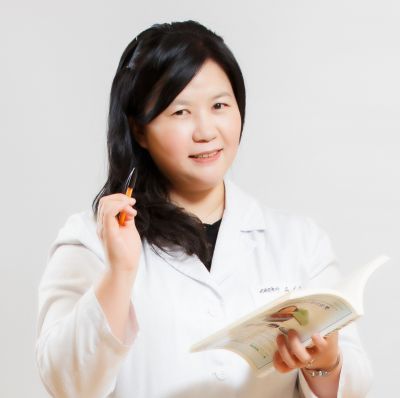
Audiologist Ko Miryoung Wins Grand Prize at the ‘32nd National Park In-hwan Writing Contest’
Audiologist Ko Miryoung of the Department of Otolaryngology at Hanyang University Hospital was honored with the grand prize at the ‘32nd National Park In-hwan Writing Contest,’ held as part of the ‘2024 Park In-hwan Literary Festival’ from September 12 to 29. At the writing contest held in Inje-gun, Gangwon-do, on September 28 to honor the literary spirit of Park In-hwan, a representative poet in Korean literary history, audiologist Ko Miryoung was selected for the grand prize, awarded to the best work across prose and poetry, on the theme of ‘Alleyway.’ Meanwhile, starting with an honorable mention in the essay contest of the 1993 Sinchon Literary Festival, audiologist Ko Miryoung has a record of more than 70 awards, including the Industrial Complex Workers’ Culture and Arts Grand Prize (2012), the gold prize at the Workers’ Culture and Arts Festival (2013), the grand prize at the Sille Village Story Contest (2014), the top prize at the Jongno-gu Happiness Story contest (2017), and the grand prize in the Kyobo Education Foundation True Person Essay contest (2021). This year alone, she has already won the silver prize at the Ansan Writers’ Association National Byeolmangseong Writing Contest and the silver prize in the essay category of the 12th Munhyang National Women’s Literature Contest hosted by Chungju Munhyanghoe, and won the grand prize for recitation at the Wolsan National Poetry Recitation Contest held in June. (End)
2024-10-18
-

Tinnitus in Patients with Mild Cognitive Impairment May Serve as an Indicator of Degenerative Brain Changes
Joint research team of Hanyang University Hospital and Boramae Medical Center identifies association between tinnitus, temporal lobe degeneration depression A study has found that when patients with mild cognitive impairment also have tinnitus, more beta-amyloid accumulates in the temporal lobe and the auditory cortex of the brain, suggesting that tinnitus could be used as a biomarker of degenerative changes in the temporal lobe.. The study also found that changes in brain metabolism and activity accompanying tinnitus are highly likely to be associated with depression. The study, involving the team of Professor Han Sangyoon of the Department of Otolaryngology at Hanyang University Hospital and the research team of Professor Kim Youngho of Seoul National University Boramae Medical Center (co-authors Dr. Kim Heejung, Professor Lee Minjae of Seoul National University College of Medicine, researcher Yoon Yejin, and Professors Lee Joonyoung, Park Sunwon and Kim Yookyung of Seoul Metropolitan Government Boramae Medical Center), was published in the September online edition of the international journal “Frontiers in Aging Neuroscience (impact factor 4.774)” under the title ‘Comparative study on structural and functional brain differences in mild cognitive impairment patients with tinnitus.’ Mild cognitive impairment (MCI, Mild Cognitive Impairment) is a pre-dementia stage in which cognitive functions such as memory are lower than in others of the same age, and about 10% are known to progress to Alzheimer’s disease or other dementias. In addition, beta-amyloid protein, when abnormally accumulated in the brain, forms deposits called plaques and is considered a major cause of Alzheimer’s disease. The research team studied 30 adults aged 60 to 80 with mild cognitive impairment and hearing levels of 40 decibels (dB) or less, dividing them into seven with tinnitus for the past six months or more and 23 without, and analyzed activated brain regions, amyloid deposition and metabolic activity using magnetic resonance imaging (MRI) and positron emission tomography (PET). Hearing in normal adults averages 0–20 decibels, and a lower value means that one can hear quieter sounds corresponding to that level. The study found that the group of patients with mild cognitive impairment and tinnitus had more beta-amyloid accumulated in the cerebral temporal lobe, particularly in the superior temporal gyrus and temporal pole, than the group without tinnitus. In addition, metabolic activity increased in the inferior frontal lobe, insula and anterior cingulate cortex in the group with tinnitus, and the severity of tinnitus was also found to be closely associated with the volume of these brain regions (superior frontal·insula·anterior cingulate cortex). Furthermore, in the group with tinnitus, metabolic activity was more active in the default mode network (DMN, Default Mode Network), which is associated with the resting state, and relatively lower in the executive control network (ECN, Executive Control Network), which is associated with goal-directed behavior and problem solving. Professor Han Sangyoon of Hanyang University Hospital said, “This study is significant in that it confirms that when tinnitus accompanies mild cognitive impairment, beta-amyloid accumulation in the temporal lobe increases and changes in brain metabolic activity can be seen,” adding, “I hope these results can be used as biomarkers indicating tinnitus-related degenerative brain changes and changes in brain network dynamics in patients with mild cognitive impairment.” Professor Kim Youngho said, “This study suggests that tinnitus can play an important role as an early indicator of temporal lobe degeneration or the development of depression in patients with mild cognitive impairment,” adding, “It could contribute to the prevention and early diagnosis of temporal lobe degeneration and depression in the future" (End).
2024-10-18
-
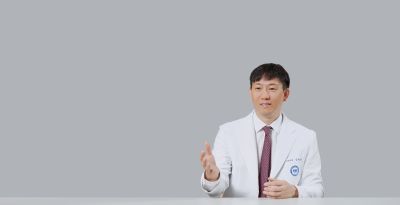
Korea’s First BASILICA Procedure in a Native Valve Performed Successfully
- Professor Kook Hyungdon’s team opens new horizons in the treatment of structural heart disease Professor Kook Hyungdon’s team of the Department of Cardiology at Hanyang University Hospital successfully performed Korea’s first BASILICA procedure in a native valve, making important progress in the field of structural heart disease treatment. The procedure is an innovative technique for preventing coronary artery obstruction that can occur during transcatheter aortic valve implantation (Transcatheter Aortic Valve Implantation, hereinafter TAVI), and Professor Kook’s team successfully performed a BASILICA procedure in a native valve, which had never before been successfully performed in Korea. TAVI is widely used as an effective method of treating aortic valve stenosis. However, during the procedure, there is a risk that the valve leaflets will be pushed back and block the coronary artery openings, causing vascular obstruction. Although such obstruction occurs rarely, at around 1%, it can lead to fatal outcomes, with 40–50% of cases resulting in death. The BASILICA procedure is a technique that electrically lacerates the valve leaflets so that the existing valve does not block the coronary artery openings during TAVI. However, because of its high technical difficulty and rare indications, the procedure had rarely been performed in Korea. In particular, this success by Professor Kook’s team, which in 2019 performed Asia’s first successful BASILICA procedure in a prosthetic valve, presents new possibilities for structural heart disease treatment in that it is Korea’s first BASILICA procedure in a native valve. The patient was an 80-year-old woman who had been diagnosed with severe aortic valve stenosis and visited Hanyang University Hospital to undergo TAVI. CT findings obtained in preparation for TAVI showed that, due to anatomical characteristics in which the existing native valve leaflets were long and the structures within the aortic valve were narrow, she was judged to be in a high-risk group with a high risk of coronary artery obstruction. Professor Kook Hyungdon’s team performed a native valve BASILICA procedure on the patient, successfully preventing coronary artery obstruction, and safely completed TAVI. The patient was discharged two days after the procedure and returned to daily life, showing a successful treatment outcome. Professor Kook Hyungdon of the Department of Cardiology, who holds the title of Korea’s youngest TAVI proctor (Proctor, supervising instructor), said, "The BASILICA procedure is one of the most effective but most difficult procedures for preventing coronary artery obstruction and is a suitable treatment for high-risk patients," adding, "BASILICA procedures in artificial valves have been performed a few times in Korea, but the native valve BASILICA procedure performed this time is the first in Korea, and it has laid the groundwork for applying the BASILICA procedure to more patients in the future,” and “We will continue to refine this procedure so that complications in patients undergoing TAVI can be minimized." Meanwhile, the Paiknam Heart Center at Hanyang University Hospital, based on state-of-the-art medical equipment and an excellent medical staff, provides accurate, prompt and patient-centered medical services in specialized fields including coronary artery disease such as myocardial infarction, aortic and peripheral vascular disease, hypertension and arrhythmia, heart failure, and structural heart disease including valve disease (End).
2024-10-15
-
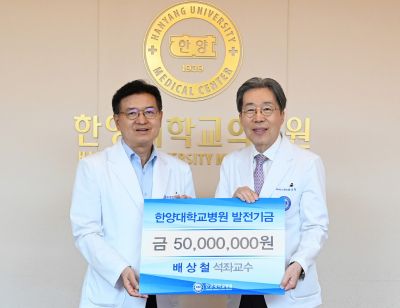
Professor Bae Sangcheol Donates 50 Million Won to ‘Hospital Development Fund’
Hanyang University Medical Center (Executive Vice President for Medical Affairs and President Yoon Hojoo) received a donation of 30 million won to the ‘Hanyang University Hospital Development Fund’ from Distinguished Professor Bae Sangcheol (Department of Rheumatology, Hanyang University Hospital for Rheumatic Diseases), who asked that it be used for the hospital’s development and the training of junior doctors. To mark his cumulative donations reaching 50 million won, Hanyang University Medical Center held a development fund presentation ceremony on October 4 in Conference Room 1 on the 8th floor of the East Building to express its gratitude to Distinguished Professor Bae Sangcheol. At the ceremony, Distinguished Professor Bae said, “For about 30 years, I have devoted myself to treating patients striving to overcome rheumatism, lupus and other diseases, and have constantly researched new treatments,” adding, “I made this donation in the hope that it will lead to the development of my alma mater’s hospital and the promotion of giving.” Yoon Hojoo, Executive Vice President for Medical Affairs and President of Hanyang University Medical Center, said, “I deeply thank Professor Bae Sangcheol, who as our university’s first Distinguished Professor of Medicine has shown many achievements in research and patient care,” adding, “We will preciously use the development fund donated for the development of his alma mater’s hospital for patient care, research and the training of junior doctors.” Having served as President of Hanyang University Hospital for Rheumatic Diseases and Director of the Clinical Research Center for Rheumatoid Arthritis designated by the Ministry of Health and Welfare, Professor Bae currently serves as Distinguished Professor of Hanyang University and Hanyang University Hospital, Director of the Institute for Rheumatology Research and of the Ministry of Education-designated priority research institute, and Director of the Hanyang University Institute of Bioscience and Biotechnology, and is active as a full member of the Systemic Lupus International Collaborating Clinics (SLICC) and the Asia Pacific Lupus Collaboration (APLC), and a fellow and board member of the National Academy of Medicine of Korea and the Korean Academy of Science and Technology. In addition, while serving as President of the Korean College of Rheumatology and President of the International Society of Lupus, he successfully hosted the LUPUS KCR2023 international congress, and has published a total of 773 research papers, including 203 domestic papers and 570 international papers listed in SCIE in journals such as Nature, New England Journal of Medicine, Cell, Nature Genetics, Annals of the Rheumatic Diseases, Arthritis and Rheumatology and Lancet Rheumatology. Meanwhile, Distinguished Professor Bae’s cumulative donations to Hanyang University are also known to have exceeded 100 million won (End).
2024-10-07
-
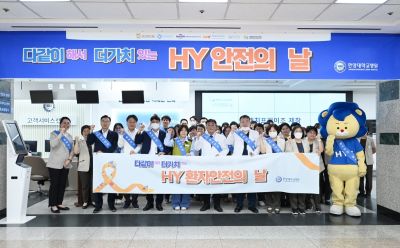
‘2024 HY Safety Day’ Held for Patient Safety
Hanyang University Hospital (President Lee Hyeongjoong) held the ‘HY Safety Day’ event on September 27 in the first-floor lobby of the Main Building to foster a culture of patient safety. The event was attended by key hospital executives, including President Lee Hyeongjoong, Vice President Lee Hanglak and Director of the QI Office Choi Chanbum, as well as many faculty and staff, and various events were held, including ▲the Patient Safety Declaration Ceremony ▲Patient Safety Rounding ▲the ‘All Together, More Value’ campaign. At the Patient Safety Declaration Ceremony, President Lee Hyeongjoong’s congratulatory address was followed by the appointment and oath of QPS (Quality Improvement Patient safety) managers. QPS managers serve as hubs that share and implement the hospital’s patient safety policies in patient-facing departments to improve medical services and the patient safety environment. A prize drawing for the patient safety certification quiz was also held. At the Patient Safety Rounding event that followed the declaration ceremony, key executives personally visited departments with excellent patient safety records and the departments of winners of the ‘Patient Safety Four-Line Acrostic Poem I Make’ event to encourage faculty and staff, and met patients to raise safety awareness. At the ‘All Together, More Value Campaign’ held on the first floor of the Main Building, campaign activities such as ▲Growing a Safety Tree ▲Taking Safety Pledge Photos ▲hand sanitizing and safe medication use, and employee safety (emotional labor, no smoking/no drinking) were conducted for patients, caregivers and faculty and staff. President Lee Hyeongjoong said, “Patient safety is a value that every faculty and staff member must prioritize above all,” adding, “Let us make every effort so that everyone carries out patient safety activities with a sense of responsibility to build a trustworthy and safe hospital.” Meanwhile, Hanyang University Hospital commemorates ‘Patient Safety Day’ on September 17, designated by the WHO and Korea, and continues patient safety activities to foster a patient safety culture and establish a safety-centered awareness through ‘HY Safety Day,’ in which patients and caregivers also participate. (End)
2024-09-30
-
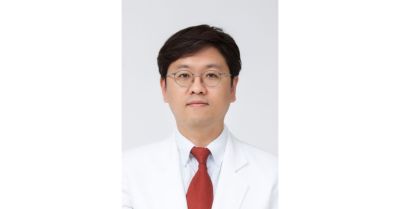
Professor Lee Seunghoon Receives ‘Best Poster Award’ from International Skeletal Society
Professor Lee Seunghoon of the Department of Radiology at Hanyang University Hospital received the ‘Best Poster Award’ at the ‘50th Annual Meeting of the International Skeletal Society’ held from September 15 to 20 at Le Centre Sheraton Hotel in Montreal, Canada. The presentation, titled ‘Imaging of Postoperative Changes in the Shoulder; An Overview,’ was highly praised for comparing and analyzing the postoperative course of orthopedic surgery in patients with rheumatic diseases using CT and MRI images, precisely analyzing imaging findings before and after shoulder surgery and deriving meaningful results. Regarding the award, Professor Lee Seunghoon said, “This study was possible thanks to collaboration with many experts in the Departments of Rheumatology and Orthopedic Surgery at Hanyang University Hospital, which are achieving excellent treatment outcomes and unrivaled research results in rheumatic diseases,” adding, “I hope the research results will lead to advances in imaging examination and interpretation and serve as an opportunity to seek better treatment methods for patients with rheumatic diseases who may go on to orthopedic surgery.” Meanwhile, Professor Lee Seunghoon specializes in musculoskeletal and spine imaging, pain intervention procedures and rheumatology imaging at the Department of Radiology of Hanyang University Hospital and the Department of Rheumato-Radiology of Hanyang University Hospital for Rheumatic Diseases. He is active in academic societies as general affairs director of the Korean Society of Musculoskeletal Radiology, an arbitration member of the Korea Medical Dispute Mediation and Arbitration Agency, a non-standing government member of the Veterans Review Committee, and a regular member of the Korean Society of Radiology and the Korean College of Rheumatology, and has received awards including Korea’s Outstanding Researcher from the National Research Foundation of Korea in 2020 and the Excellent Oral Presentation Award from the Korean College of Rheumatology in 2022 (End).
2024-09-25
-
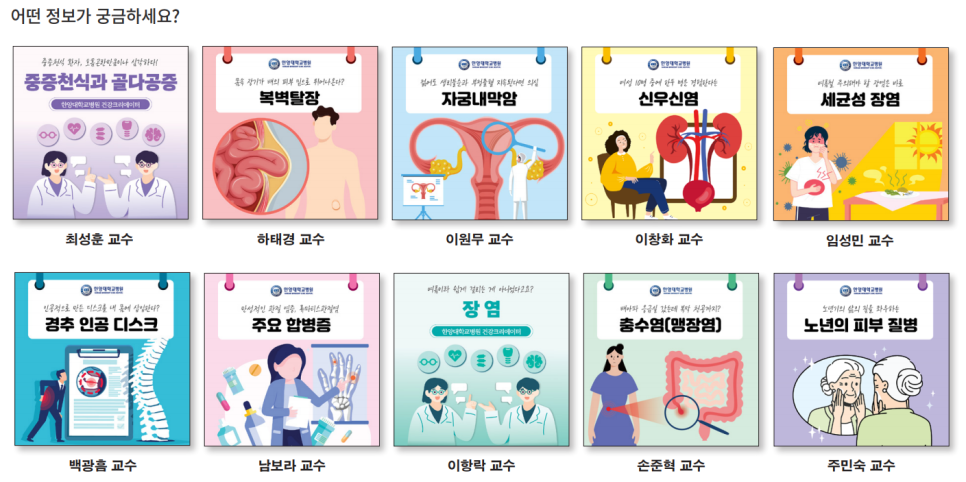
Hanyang University Hospital’s Post Answers Your Questions!
[Go to Hanyang University Hospital’s Official Naver Post] Digging into the Rumor Mill Are those ‘they say’ rumors that everyone has heard at least once really true? Hanyang University Hospital specialists give clear answers to health-related questions that you can easily come across in everyday life. Health Creator We change your health through your everyday life. This is a section where you can hear specialists’ advice on matters closely tied to your daily life, such as behavior patterns and eating habits. Health Tips in Cards Short and impactful! We deliver health information that you will never forget once you see it, together with intuitive images. Getting Health Information Right Curious about your health? Come on in! This is a section where you can ask specialists directly for more in-depth health information on symptoms, diseases, causes, treatments and more. Everything About Robotic Surgery! RoboDoc Robotic surgery treats a variety of diseases more delicately and safely! This section explains in detail which diseases in each field are treated with robotic surgery.
2024-09-20
-
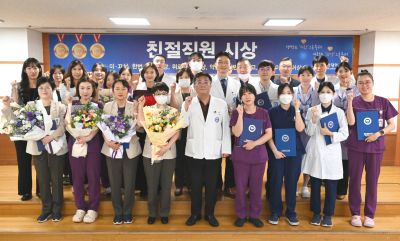
100th Kind Employee Awards Ceremony Held
Hanyang University Hospital (President Lee Hyeongjoong) held the ‘100th Kind Employee Awards Ceremony’ on September 12 in the third-floor auditorium of the Main Building. The event was held to commemorate the 100th edition since the awards began in March 2008 to spread a culture of kindness at the hospital. At the event, awards were given to a total of nine people, three each in three categories, ▲the Eye-Smile-Nod (smile and nod when you just make eye contact) Practice Award ▲the One More Explanation Award ▲the Comfort and Empathy Award, and special awards were additionally presented to six faculty and staff members to commemorate the 100th ceremony. In addition to the Kind Employee Awards, awards were also presented to departments and reporters excelling in adverse drug reaction reporting and for the Patient-Centered STAR Idea Award. President Lee Hyeongjoong said, “I thank today’s award winners for always treating patients and caregivers with a positive attitude,” adding, “I hope everyone will do their best in customer service with one heart until the day comes when every member receives the Kind Employee Award.” The winners of the individual and group awards are as follows. ▲Eye-Smile-Nod Practice Award = Professor Kim Inhyang of the Department of Neuropsychiatry, Supervisor Lee Hansol of Main Building 20th Floor, medical technologist Jang Boyeon of the Department of Laboratory Medicine ▲One More Explanation Award = Professor Lim Sungmin of the Department of Pediatrics Adolescent, nurse Lee Yuri of Main Building 7th Floor, Supervisor Yoon Boram of the Department of Otolaryngology ▲Comfort and Empathy Award = Professor Son Jungsik of the Department of Internal Medicine, ward nurses of the Emergency Ward, Supervisor Kim Kiduk of the Patient Transport Team ▲Special Award = Professor Lee Hyun of the Department of Pulmonology Allergy, Professor Choi Kyusun of the Department of Neurosurgery, Supervisor Lee Hyunjin of the Department of Orthopedic Surgery, ward nurses of Main Building 11th Floor, the ECG Room of Paiknam Heart Center, and the ECG Room and Echocardiography Room of Paiknam Heart Center. (End)
2024-09-20
-
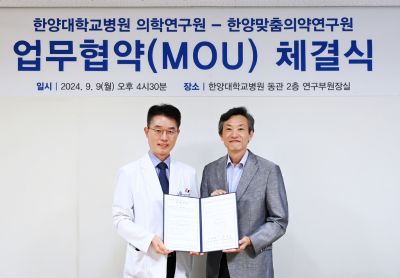
Medical Research Institute Signs Agreement with Hanyang Institute of Precision Medicine
The Medical Research Institute of Hanyang University Hospital (Director Kim Sangheon) signed a business agreement with the Hanyang Institute of Precision Medicine (Director Ryu Jongseok) on September 9. Under the agreement, the two institutions will promote mutual cooperation, including cooperation in human resources, and build an organic cooperation system, including the mutual use of research and education information. Kim Sangheon, Director of the Medical Research Institute, said, “The Medical Research Institute is working to develop innovative diagnostic technologies through clinical and basic research and to create advanced research results in cooperation with specialized organizations in various fields,” adding, “Through this agreement with the Hanyang Institute of Precision Medicine, which leads basic and convergence fields of life science, the two institutions will build efficient and systematic research processes and strengthen cooperation.” Director Ryu Jongseok said, “The Hanyang Institute of Precision Medicine was established to contribute to advanced precision medicine, next-generation life science research and the development of the bio-health industry, and is doing its best to create a bio-convergence ecosystem cluster, including research on smart disease diagnosis and treatment convergence technologies,” adding, “Through this agreement with the Medical Research Institute, we will maximize research synergy and lay the groundwork for realizing organic and sustainable value” (End).
2024-09-13