

Total posts : 1394
-
Grade 1 in ‘Diagnostic Imaging Quality Assessment’
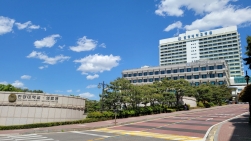
Hanyang University Hospital (President Lee Hyeongjoong) received a perfect total score of 100 in the “Diagnostic Imaging Quality Assessment” recently announced by the Health Insurance Review and Assessment Service (HIRA), earning the top Grade 1. The assessment was based on imaging examinations performed from July to September 2023, and Hanyang University Hospital recorded a perfect score of 100, exceeding the tertiary general hospital average of 98 points and the average for all medical institutions of 67.6 points, demonstrating the quality of its diagnostic imaging and its level of patient safety management. Among the main assessment items, it received perfect scores on all indicators, including ▲rate of patient assessment before contrast-enhanced examinations ▲rate of patient assessment before MRI examinations ▲rate of PET interpretation by nuclear medicine specialists ▲rate of PET radiopharmaceutical administration at or below diagnostic reference levels, and was also rated excellent on the item of whether a dose reduction program is used. President Lee Hyeongjoong said, “This result is a valuable outcome reflecting our medical staff's efforts for accurate and safe imaging examinations and our patient-centered care system,” adding, “We will continue to realize precision medicine based on a precise and reliable imaging examination system” (End).
2025-07-30
-

Social Worker Jung Suna Dramatically Rescues Suicide Attempter on Mapo Bridge
“My professional experience managing people at high risk of suicide made me react instinctively” Social worker Jung Suna of the Life Love Crisis Response Center at Hanyang University Hospital has moved many people by saving a life at the scene of a suicide attempt. At dawn on July 11, while crossing Mapo Bridge with a friend, she happened to spot a person attempting to take their own life, immediately ran to the scene, grabbed the person’s body and pulled them away, successfully rescuing them. In addition, social worker Jung and her friend held back the person, who was struggling on the bridge railing and trying to attempt suicide again, with their whole bodies for about 10 minutes until the rescue team arrived, never letting go, and thanks to this a precious life was saved. Social worker Jung Suna recalled, “At the time, I thought two people were talking and looking at the railing, but when I got close, one suddenly put a foot on the bridge railing and tried to jump,” adding, “I instantly sensed it was a suicide attempt, and the only thought was, ‘I must stop this no matter what,’” and “I think my professional experience of facing suicide attempters every day made me react instinctively.” The Life Love Crisis Response Center at Hanyang University Hospital, where social worker Jung works, is the only institution in Seoul with a 24-hour emergency response system, and since its opening in 2017 it has provided follow-up care to more than 500 suicide attempters a year. Because suicide attempters who visit the emergency room are usually at the highest risk of a repeat attempt within the first four weeks, the center intensively manages this period and establishes customized long-term recovery support systems suited to each attempter through psychiatric care and links with community institutions. In addition, the center continues to carry out suicide prevention campaigns, case analyses and related research, taking the lead in proactive response to and prevention efforts for people at high risk of suicide. As a result of these efforts, the rate of repeat suicide attempts has decreased noticeably since the center opened, and in 2021 it received a commendation from the Minister of Health and Welfare in recognition of its contribution to suicide prevention. Social worker Jung Suna said, “In this work I meet many patients, and at times I regain strength thanks to those who express their gratitude,” adding, “Through this incident, I realized once again how important a role my work plays in protecting someone’s life, and I want to continue sincerely helping so that someone’s life can lead to hope.” Through the activities of the Life Love Crisis Response Center, Hanyang University Hospital continues to provide active intervention and support so that patients at high risk of suicide who come to the emergency room can return to life, and it plans to continue faithfully fulfilling its public health care responsibility of suicide prevention (End).
2025-07-29
-
‘2025 Second-Half Retirement Ceremony’ Held
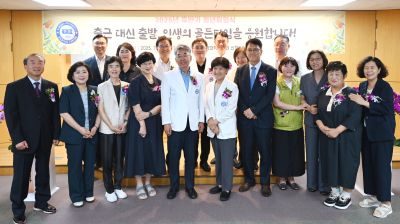
Hanyang University Hospital (President Lee Hyeongjoong) held the ‘2025 Second-Half Retirement Ceremony’ on July 25 in the sixth-floor seminar room of the New Building, celebrating the retirees and expressing gratitude for their dedication and hard work. The event was attended by about 110 people, including key hospital executives such as Yoon Hojoo, Executive Vice President for Medical Affairs and President of Hanyang University Medical Center, President Lee Hyeongjoong and Vice President Lee Hanglak, as well as faculty and staff, who warmly congratulated the retirees. In his words of encouragement, Yoon Hojoo, Executive Vice President for Medical Affairs and President of Hanyang University Medical Center, said, “Hanyang University Hospital has been able to grow continuously because you retirees quietly stood your ground amid the hospital’s changes and challenges,” adding, “The footprints you have left over the years will become a path for your juniors and a lamp lighting the hospital’s future.” President Lee Hyeongjoong also expressed his gratitude in his greeting, saying, “Thanks to your efforts and service, the hospital has been able to develop into today’s state-of-the-art medical institution,” adding, “Although today is a moment to pause, I hope health and happiness will always be with you on the new journey ahead, and I ask that you support the hospital as members of the Hanyang family.” Meanwhile, at the event, plaques of merit were presented to all 17 retirees in recognition of their service at the hospital. * List of 2025 second-half retirees: Professor Choi Yowon of the Department of Radiology, Professor Tae Kyung of the Department of Otolaryngology, Professor Hwang Junghye of the Department of Obstetrics Gynecology, Professor Song Jaechul of the Department of Occupational Environmental Medicine, Director Son Yookyung of the Department of Nursing, Director Lee Changmoo of the Logistics Team, Manager Lee Yongsook of the Department of Nursing, Supervisor Myung Youngsook of the International Administrative Support Team, Supervisors Jung Miyoung, Park Kyungsook, Kim Kiduk and Lee Sangha of the Department of Nursing, and Supervisors Kim Sunhwa, Ahn Mikyung, Kim Chunae, Shin Eunsoon and Sim Mansook of the Nutrition Team
2025-07-28
-
Professor Roh Sungwon Receives Commendation from the Commissioner of the Korea Disease Control and Prevention Agency
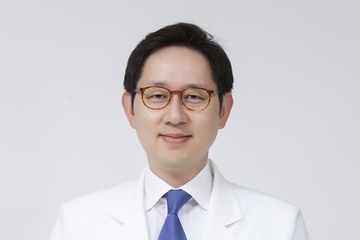
Contributed to raising awareness of the harms of smoking and laying the groundwork for policy Hanyang University Hospital Professor Roh Sungwon of the Department of Neuropsychiatry received a commendation from the Commissioner of the Korea Disease Control and Prevention Agency in recognition of his contributions to raising awareness of the addictiveness of smoking and laying the groundwork for smoking policy. The commendation was presented at the ‘2025 Tobacco Harm Prevention Survey and Research Results Report’ held on July 25. Over 17 years of work in the field of public mental health, Professor Roh Sungwon has made practical contributions to protecting the public’s right to health by conveying the value of tobacco harm prevention to society as a whole in various ways, including public policy advice, academic research, education for vulnerable groups and public outreach. In particular, through activities at various public institutions, including ▲advisory committee member for the National Health Insurance Service’s tobacco lawsuit ▲author of the Korea Disease Control and Prevention Agency’s ‘Integrated Report on Tobacco Harms’ ▲member of the advisory group for smoking harm survey research, Professor Roh academically demonstrated that smoking is not simply an individual problem but a mental illness called ‘nicotine addiction,’ and played a key role in strengthening the legitimacy of tobacco control policies. In addition, through related research such as ‘The Correlation Between Mental Illness and Smoking’ and ‘The Association Between Smoking and Insomnia,’ he showed that smoking is not simply an individual problem but a social and psychological public health challenge, laying the academic foundation for future addiction prevention and treatment policies. He has also developed and operated an integrated case management model for high-risk addiction groups in the community, providing practical help to smokers who had been in the blind spots of the system and earning a great response and high trust. Professor Roh said, “Smoking is a public health problem that must be approached as an addiction, and the state must actively intervene regarding the social costs it causes,” adding, “I will continue to do my best to establish a national tobacco control system and guarantee the right to health of the public, including vulnerable groups” (End).
2025-07-25
-
Environment Built for Intensive Care of Critically Ill Patients
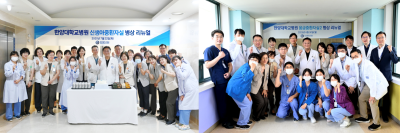
Emergency Intensive Care Unit and Neonatal Intensive Care Unit reopen one after another after renovation Hanyang University Hospital (President Lee Hyeongjoong) has completed the renovation of its Emergency Intensive Care Unit and Neonatal Intensive Care Unit, enhancing patient safety and treatment efficiency to provide medical services optimized for the critical care environment. Following a ceremony marking the completion of the renovation of Emergency Intensive Care Unit 2 on June 30, the renovation of the Neonatal Intensive Care Unit was completed on July 22, and a commemorative event was held on the 6th floor of the Main Building. Each ceremony was attended by about 30 people, including President Lee Hyeongjoong, Vice President Lee Hanglak and other key hospital executives and staff, who celebrated the opening of the newly renovated critical care spaces together. Emergency Intensive Care Unit 2 has been restructured to specialize in the treatment of critically ill neurological patients, creating optimized facilities and a pleasant and safe treatment environment that enables professional and efficient intensive care. The Neonatal Intensive Care Unit has been equipped with the latest equipment, including negative- and positive-pressure isolation rooms, ventilation facilities and monitoring systems for the intensive care of high-risk newborns, providing a more pleasant and safe treatment system. President Lee Hyeongjoong said, “The Emergency Intensive Care Unit and the Neonatal Intensive Care Unit are spaces where the safest and most precise treatment takes place,” adding, “With this renovation as an opportunity, we will further strengthen our treatment capabilities specialized in severe diseases.” Hanyang University Hospital operates specialized intensive care units in each field, including medical, surgical, emergency and neonatal intensive care units, and its dedicated critical care medical staff have a 24-hour response system in place to provide high-quality intensive care services (End).
2025-07-24
-
Grade 1 for 6th Consecutive Time in ‘Pneumonia Quality Assessment’
Hanyang University Hospital (President Lee Hyeongjoong) recorded a perfect score of 100 in the “6th Pneumonia Quality Assessment” recently announced by the Health Insurance Review and Assessment Service (HIRA), receiving Grade 1 for the sixth consecutive time and once again proving its excellence in pneumonia treatment. The assessment covered care provided from October 2023 to March 2024, and Hanyang University Hospital received a perfect total score of 100, showing top-level performance exceeding the overall average (82.9 points) and the tertiary general hospital average (99.2 points). In particular, it recorded perfect scores on all assessment indicators, including ▲rate of oxygen saturation testing (100%) ▲rate of use of severity assessment tools (100%) ▲rate of sputum culture test prescriptions (100%) ▲rate of blood culture testing before the first antibiotic administration (100%) ▲rate of appropriate antibiotic administration within 8 hours of hospital arrival (100%). President Lee Hyeongjoong said, “Pneumonia is a disease with a high mortality rate, especially among elderly patients, so early response and standardized treatment are very important,” adding, “Our hospital provides safe and highly reliable patient-centered treatment through multidisciplinary collaboration and a precise care system.” He added, “We will continue to work steadily to improve the quality of care and do our best to become a medical institution that patients trust even more” (End).
2025-07-21
-
Next-Generation Atrial Fibrillation Treatment ‘Pulsed Field Ablation (PFA)’ Successfully Introduced
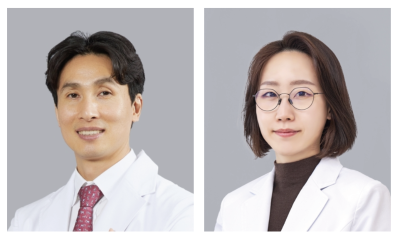
Shorter procedure time and minimal tissue damage…dramatically reducing the burden on patients Hanyang University Hospital (President Lee Hyeongjoong) has successfully introduced into clinical practice ‘Pulsed Field Ablation (Pulse Field Ablation, PFA),’ a next-generation atrial fibrillation treatment technology, and has performed a series of successful procedures. This new technology, distinct from existing radiofrequency or cryo methods, is drawing attention as a new standard for arrhythmia treatment as it improves both treatment efficiency and patient safety. ‘PFA’ is a technology that uses high-intensity electric fields to selectively destroy only cell membranes in heart tissue. Unlike existing high-temperature (radiofrequency) or ultra-low-temperature (cryo) methods, it can minimize damage to surrounding non-target tissues such as the esophagus, nerves and blood vessels, offering the advantages of high procedural safety and a shorter recovery period. ‘Atrial fibrillation’ is a type of arrhythmia in which the heart beats irregularly and rapidly, a condition in which the atria quiver instead of contracting properly. This increases the risk of serious complications such as stroke and heart failure, and in Korea its prevalence is rising rapidly, especially among the elderly aged 65 and older. Recently, the proportion of patients around their 50s has also been steadily increasing. The team of Professors Park Jinkyu and Park Jinseon of the Arrhythmia Clinic of the Department of Cardiology at Hanyang University Hospital recently successfully performed consecutive procedures on atrial fibrillation patients using the ‘PFA’ system. In particular, the patients included a man in his 60s whose condition recurred after a previous procedure and an elderly patient in their late 70s, demonstrating the safety and applicability of the technology. All procedures were completed without complications, and patients were quickly discharged within one to two days after the procedure. Professor Park Jinseon, who performed the procedures, said, “Pulsed field ablation has a significantly lower risk of damage to tissues outside the heart and a shorter procedure time, making it a technology that can improve both patient safety and quality of life,” adding, “It is highly likely to become the new standard for arrhythmia treatment in the future.” Meanwhile, the Department of Cardiology at Hanyang University Hospital is taking the lead in introducing customized treatment systems and the latest technologies based on its experience in highly complex arrhythmia treatment. Building on this achievement, the department plans to establish a more precise and safe arrhythmia treatment system and strengthen patient-centered treatment of heart disease (End).
2025-07-17
-
Professor Kim Mijung Receives Minister of Health and Welfare Commendation
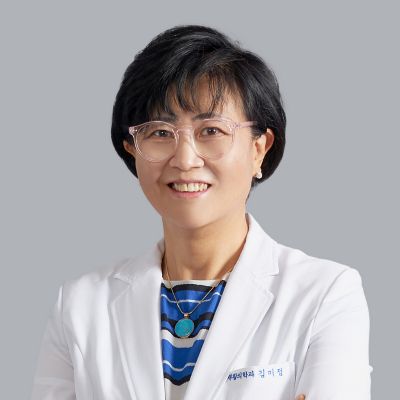
Dedicated to improving medical access and communication skills for people with developmental disabilities Professor Kim Mijung of the Department of Physical Medicine Rehabilitation at Hanyang University Hospital received a commendation from the Minister of Health and Welfare on July 7 in recognition of her contributions to improving the medical environment and communication skills of people with developmental disabilities. Professor Kim Mijung has devoted 27 years to the care and treatment of people with developmental disabilities, and has played a leading role in designing the initial operating model and building a cooperative system with related departments so that the Hanyang Developmental Medicine Center could establish itself as a hub hospital for people with developmental disabilities designated by the Ministry of Health and Welfare. In particular, she contributed to providing highly satisfactory medical services by strengthening coordination among medical staff and establishing a one-stop treatment system to minimize inconvenience for people with developmental disabilities when visiting the hospital. By conducting specialized language intervention programs for people with developmental disabilities experiencing language delays, she also greatly helped improve their communication skills and social adaptability. In addition, Professor Kim has led regular case conferences in cooperation with multidisciplinary experts such as medical staff, speech therapists, clinical psychologists and occupational therapists, developing a comprehensive treatment and support system to improve the quality of life of people with developmental disabilities. Professor Kim Mijung said, “I have tried to reduce, even a little, the many difficulties that people with developmental disabilities and their families face before coming to the hospital,” adding, “I will continue to work harder through ongoing research and improvements in patient care so that their lives can become even better” (End).
2025-07-10
-
Key Genetic Variants Behind Onset of Systemic Lupus Erythematosus Identified
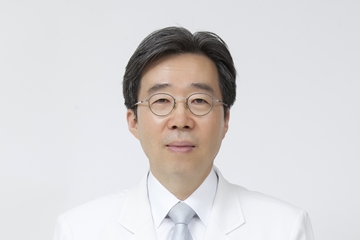
- Development of major histocompatibility complex (MHC) gene analysis tool expected to enable early diagnosis and personalized treatment of lupus - Joint research by Professor Bae Sangcheol’s team at Hanyang University Hospital for Rheumatic Diseases, Kyung Hee University and the Korea National Institute of Health Professor Bae Sangcheol’s team of the Department of Rheumatology at Hanyang University Hospital for Rheumatic Diseases, in joint research with Professor Kim Kwangwoo’s team of the Department of Biology at Kyung Hee University and the Division of Genome Science of the Korea National Institute of Health, developed a new gene analysis tool capable of precisely analyzing the MHC immune gene region and identified key genetic variants involved in the onset of systemic lupus erythematosus (SLE). The findings were recently published in “Annals of the Rheumatic Diseases” (IF 20.6), a top international journal in the field of rheumatic diseases. Systemic lupus erythematosus (SLE) is a representative autoimmune disease in which the immune system, in the process of defending against external invaders (bacteria, viruses, etc.), mistakes the body’s own normal cells or tissues for external threats and attacks them. It is known to occur when genetic, environmental, sex hormone and other factors act in combination to disrupt the immune system, but its mechanism, including the genetic factors, has not yet been clearly identified. The research focused on the MHC (Major Histocompatibility Complex) region, where immune genes are densely clustered. The MHC region is located on chromosome 6 and contains a concentration of key genes that regulate immune responses. In particular, the HLA gene family (Human Leukocyte Antigen) and the C4 gene (Complement Component 4) have long been considered important because of their strong association with autoimmune diseases. However, because the MHC region has a complex genetic structure and genetic variation differs widely from person to person, existing technologies were limited in effectively performing high-resolution, large-scale precision analysis, making it difficult to precisely identify the genetic causes of autoimmune diseases, including lupus. To overcome these limitations, the research team newly developed an immune gene analysis tool (MHC reference panel; MHC imputation reference panel) capable of analyzing genetic variants within the MHC region at high resolution. In particular, by implementing for the first time in the world an analysis system that can simultaneously and precisely predict genetic variant information of the HLA genes and the C4 gene, the team was able to identify the genetic risk factors of lupus in greater detail. Using this gene analysis tool, the research team precisely analyzed Korean genome data from about 70,000 people, including lupus patients and healthy controls. As a result, they newly found that specific amino acid changes within the HLA genes and differences in the number of C4 genes each independently affect the onset of lupus. According to the detailed analysis, modifications of specific amino acids within the HLA genes were found to change the way antigens are bound, causing structural changes that lead the body to misrecognize self-antigens as external invaders. In addition, it was confirmed that when the number of C4 genes is low or an abnormally long untranslated sequence is inserted, the production of complement proteins decreases, increasing the likelihood that the balance of the immune system will collapse. These results show that the abnormal immune responses seen in lupus patients are closely linked to genetic factors. Distinguished Professor of Medicine Bae Sangcheol explained, “Through this study, we identified genetic variants associated with the risk of developing lupus and came to understand the genetic basis of lupus more accurately,” adding, “By identifying an individual’s genetic characteristics, such as C4 gene deficiency or specific HLA genotypes, we can assess each patient’s disease risk more accurately and contribute to early diagnosis and the establishment of patient-tailored treatment strategies.” The immune gene analysis tool (MHC reference panel; MHC imputation reference panel) built by the research team will be released through the CODA system of the Korea National Institute of Health, and it is drawing attention as public genome infrastructure in that researchers in Korea and abroad can use it freely. As it can be widely used in research on a variety of diseases, including not only autoimmune diseases but also infectious diseases and chronic inflammatory diseases, it is expected to contribute greatly to strengthening international competitiveness in the field of immunogenetics. By enabling large-scale precision analysis of the MHC region, which had been limited by high costs and low efficiency, it is also expected to be an important turning point in accelerating precision medicine-based research such as disease prediction and biomarker discovery. Meanwhile, this study was conducted with support from the National Research Foundation of Korea. Distinguished Professor of Medicine Bae Sangcheol of the Department of Rheumatology at Hanyang University Hospital for Rheumatic Diseases, Professor Kim Kwangwoo of the Department of Biology at Kyung Hee University, and Division Director Kim Bongjo and Research Officer Kim Youngjin of the Korea National Institute of Health led the study as co-corresponding authors, while Kyung Hee University doctoral student Yoo Chaeyeon and Korea National Institute of Health researcher Shin Dongmoon participated as co-first authors (End).
2025-07-08