

Total posts : 1394
-
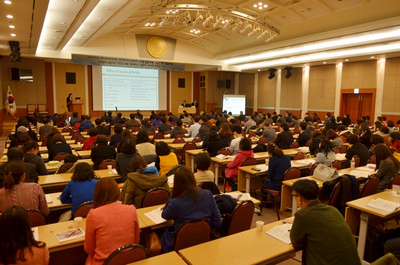
Hanyang University Hospital for Rheumatic Diseases Holds ‘2014 Continuing Education Course for Private Practitioners’
Hanyang University Hospital for Rheumatic Diseases held the ‘2014 Continuing Education Course for Private Practitioners’ in the main conference room on the sixth floor of the Hanyang Institute of Technology (HIT Building) at Hanyang University on February 16. Held under the theme ‘Management of Serious Complications of Rheumatic Diseases,’ the event drew many private practitioners and was a great success. In the opening address, President Bae Sangcheol said, “At a time when the medical environment is worsening day by day and even the moral and legal responsibility for medical accidents is growing heavier, this course was planned to present to physicians who treat various rheumatic diseases an understanding of the serious complications that can arise from these diseases, as well as how to prevent and manage them,” adding, “I hope this will be an occasion to share new experiences, knowledge and information amid the constantly changing medical practice environment.” In a congratulatory speech, Park Choongki, Executive Vice President for Medical Affairs and President of Hanyang University Medical Center, said, “In the fall of 2013, Hanyang University Hospital for Rheumatic Diseases opened a Clinical Research Center equipped with a clinical trial unit, a personalized medicine laboratory, a clinical epidemiology laboratory, a pharmacoepidemiology laboratory, a gene bank and other facilities for basic and clinical research, and is conducting systematic clinical research,” adding, “I expect Hanyang University Hospital for Rheumatic Diseases to produce many more good research results in the latest treatment and prevention of rheumatic diseases.” He also said, “I hope everyone attending today will exchange a great deal of information and have a beneficial time.” The course featured lectures including ‘Rheumatoid Arthritis; Cardiovascular Disease’ (Professor Sung Yoonkyoung, Hanyang University College of Medicine), ‘Osteoarthritis; Infectious Arthritis’ (Professor Cho Sukyung, Hanyang University College of Medicine), ‘Antiphospholipid Syndrome; Pulmonary Embolism’ (Professor Soyoung Bang, Hanyang University College of Medicine), ‘Systemic Sclerosis; Pulmonary Arterial Hypertension’ (Professor Sim Seungchul, Chungnam National University College of Medicine) and ‘Dermatomyositis; Cancer Development’ (Professor Cha Hoonseok, Sungkyunkwan University School of Medicine).
2014-02-17
-
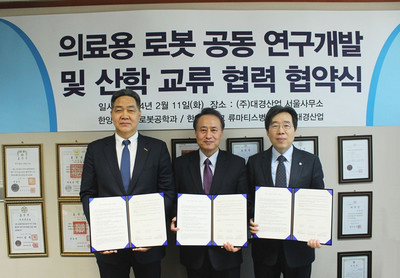
Hanyang University Hospital for Rheumatic Diseases Signs Agreement on Joint R&D of Medical Robots and Industry-Academia Exchange
Hanyang University Hospital for Rheumatic Diseases signed an ‘Agreement on Joint Research and Development of Medical Robots and Industry-Academia Exchange and Cooperation’ with the Department of Robot Engineering of Hanyang University and Daekyung Industry Co., Ltd. at the Seoul office of Daekyung Industry Co., Ltd. on February 11. Through the agreement, the three institutions will work to promote close industry-academia exchange and cooperation, including joint research and development of medical robots and training of talent in related fields. Under the agreement, the three institutions will cooperate comprehensively on ▲providing information on selecting research topics and deriving research projects for joint RD ▲activating mutual personnel exchanges among students, professors, industry researchers and experts ▲joint use of each other’s RD facilities and equipment ▲other areas where mutual exchange and cooperation are possible. Hanyang University Hospital for Rheumatic Diseases President Bae Sangcheol said, “I hope this agreement will produce results in developing medical robots that help with intractable diseases such as rheumatic diseases.”
2014-02-17
-
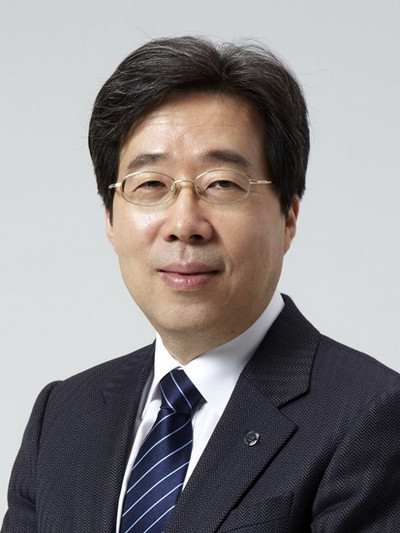
Hanyang University Hospital for Rheumatic Diseases: Lupus 8 to 10 Times More Common in Women Than Men
A team led by Professor Bae Sangcheol of Hanyang University Hospital for Rheumatic Diseases conducted Korea’s first nationwide epidemiological survey of patients with ‘systemic lupus erythematosus (hereinafter lupus)’ in Korea and found that the prevalence and incidence of lupus have increased every year over the past five years, with incidence 8 to 10 times higher in women than in men and occurring mainly in women around the age of 30. The findings are highly significant in that they provide an accurate statistical analysis of lupus patients in Korea, which until now had only been estimated, and were recently published in the online edition of the prestigious international journal ‘Rheumatology International.’ The study analyzed the prevalence and incidence of lupus over the past five years based on Health Insurance Review and Assessment Service data from 2006 to 2010. According to the results, the number of lupus patients increased slightly each year, from 10,080 in 2006 to 13,316 in 2010, and prevalence was 20.6 per 100,000 population in 2006 and 26.5 in 2010. In addition, the number of newly diagnosed lupus patients each year is estimated at more than about 1,000, increasing slightly from 1,260 in 2008 to 1,398 in 2009. Incidence was 2.5 per 100,000 population in 2008 and 2.8 in 2009. In particular, incidence differed by sex: the incidence among women was 4.6 per 100,000 population in 2008 and 5.1 in 2009, about 8 to 10 times higher than that among men in the same years, at 0.5 and 0.6 per 100,000 population. In addition, among women, the number of patients increased markedly up to their 30s, the childbearing years, and then gradually decreased, while among men, cases continued to occur at a similar rate even after their 30s. Professor Bae Sangcheol of the Department of Rheumatology at Hanyang University Hospital for Rheumatic Diseases said, “Through these findings, we were able to obtain clear results on the prevalence and incidence of lupus in Korea, which had not existed before.” Professor Bae also emphasized, “Lupus, a rare and intractable disease, is difficult to diagnose because its clinical symptoms vary greatly, and even after diagnosis it is a serious disease in which persistent inflammation can damage organs such as the kidneys, heart, lungs and nervous system,” adding, “As the number of patients with lupus, such a complex and difficult disease, increases every year, and considering the high medical costs imposed for its treatment, social awareness of lupus needs to be raised.” He added, “In particular, because it occurs mainly in women of childbearing age in their 20s and 30s, it also interferes with childbirth and social activities, causing enormous social losses.” ‘Systemic lupus erythematosus’ is a representative autoimmune disease that invades the whole body and causes inflammation and tissue damage; commonly known as ‘the disease with a thousand faces,’ it is a rare and intractable disease that is very difficult to treat. When an abnormal immune system is activated through the interaction of genetic susceptibility and environmental factors (infection, ultraviolet rays, female hormones, etc.), various autoantibodies are produced, and these immune complexes invade major organs such as the skin, kidneys, lungs and central nervous system, causing symptoms. It occurs mainly in women of childbearing age, and its clinical features and course of treatment vary greatly.
2014-02-17
-
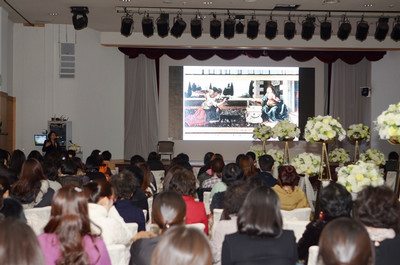
Humanities Lecture Held for Faculty and Staff
Hanyang University Hospital held a humanities lecture for all faculty and staff under the theme ‘Meeting God, Humans, Nature and Masterpieces’ in the main auditorium on the sixth floor of the Alumni Hall on February 13. At the event, Professor Ko Jonghee of the Department of Practical Arts at Hanyang Women's University gave the lecture, and participants had time to appreciate world-famous masterpieces with clear explanations covering perspectives for viewing the art of ancient Rome, the Middle Ages and the Renaissance, and the encounter between saints and nature in masterpieces. Hanyang University Hospital President Kwon Sungjoon said, “I hope this will be a time for all faculty and staff, who work hard to provide high-quality service to patients, to relax, even if only for a moment, and comfortably enjoy themselves.” Since last year, Hanyang University Hospital has been holding humanities lectures to boost the morale of faculty and staff and to cultivate their cultural literacy.
2014-02-14
-
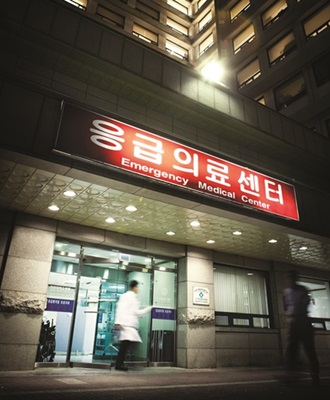
Hanyang University Medical Center Emergency Medical Centers Selected as ‘Top Emergency Medical Institutions’
The Emergency Medical Center of Hanyang University Hospital and the Emergency Medical Center of Hanyang University Guri Hospital received excellent ratings in the ‘2013 Emergency Medical Institution Evaluation’ recently conducted by the Ministry of Health and Welfare and were selected as top medical institutions. Following top ratings for three consecutive years from 2010 to 2012, the Emergency Medical Center of Hanyang University Hospital again remained among the top, earning recognition as a top emergency medical center for four consecutive years. The evaluation covered 430 emergency medical institutions nationwide and assessed the essential area, which evaluates compliance with legal standards for facilities, equipment and personnel, and the structure, process and public areas, which evaluate the quality of emergency medical services. Currently, Hanyang University Hospital is responsible for treating emergency patients, such as those with acute myocardial infarction, stroke and multiple trauma, mainly in northeastern Seoul, and Hanyang University Guri Hospital mainly in northern Gyeonggi Province.
2014-02-14
-
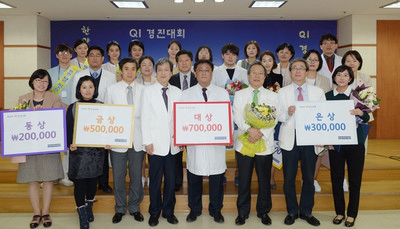
12th QI Competition Held
Hanyang University Hospital held the ‘12th QI Competition’ on the third floor of the Main Building on February 7. The event was a great success, with about 200 people in attendance, including Park Choongki, Executive Vice President for Medical Affairs and President of Hanyang University Medical Center, Hanyang University Hospital President Kwon Sungjoon, and key officials and faculty and staff members. In opening remarks, Park Choongki, Executive Vice President for Medical Affairs and President of Hanyang University Medical Center, said, “No matter how difficult things may be in the medical community now, at times like this we must be all the more faithful to the most basic thing, which is providing high-quality service to patients,” adding, “I hope that QI activities will be an opportunity to improve work and find efficient methods, contributing to the development of the Medical Center.” President Kwon Sungjoon said, “If faculty and staff always work hard for the development of the hospital with a sense of ownership, the future of Hanyang University Hospital cannot help but be bright,” adding, “The ideas of faculty and staff from these QI activities will be a driving force for the development of the hospital.” The competition was hosted by Jeon Jonghun, Director of the QI Office (Professor of the Department of Anesthesia Pain Medicine), and nine teams that have carried out various activities over the past year to improve the quality of medical care competed. The Neurosurgery/Main Building 15th Floor/Infectious Diseases/Infection Control Office/Operating Room team, which presented ‘Improvement Activities to Reduce Surgical Site Infections in the Neurosurgery Ward on the 15th Floor,’ won the grand prize; the Main Building 10th Floor/Plastic Surgery team, which presented ‘Quality Improvement through Improvement of the Plastic Surgery Treatment Room and Efficient Wound Management,’ won the gold prize; the Main Building 19th Floor team, which presented ‘Improvement Activities to Reduce the Omission Rate of Procedure Fees,’ won the silver prize; and the Otolaryngology/Main Building 9th Floor team, which presented ‘Creating a New Patient Guidance Manual for Syn(saving)er(very efficient improvement of understanding)gy(enormous resource savings),’ won the bronze prize. Hanyang University Hospital holds the QI (Quality Improvement) Competition every year to provide differentiated medical services, perform work efficiently and improve the quality of medical personnel.
2014-02-13
-
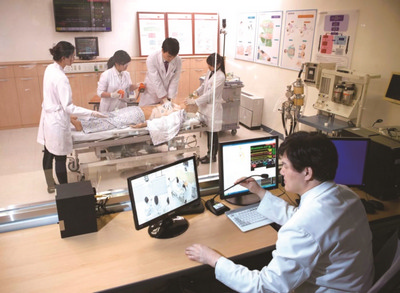
Hanyang University College of Medicine Ranks First in Pass Rate Among Seoul Metropolitan Area Universities on National Medical Licensing Examination
Hanyang University College of Medicine ranked first among universities in the Seoul metropolitan area with a pass rate of 98.3% on the ‘78th National Medical Licensing Examination of 2014,’ held over two days from January 9 to 10. The pass rate of Hanyang University College of Medicine was higher than the national average pass rate of 93.8% for the 78th National Medical Licensing Examination of 2014, and of the written and practical exams, it showed a 100% pass rate on the practical exam. Hanyang University College of Medicine achieved this result by opening Korea’s best clinical skills center in 2012 to raise the quality of practical training for medical students and to efficiently manage student practice instruction, and providing education there. According to the announcement by the Korea Health Personnel Licensing Examination Institute on the 22nd, among the 121 examinees from Hanyang University College of Medicine (114 current students and 7 repeat examinees), current students showed a 100% pass rate, once again confirming the college’s excellence. Dean of Hanyang University College of Medicine Roh Youngseok said, “This achievement is the result of all professors and faculty pouring their passion into the education of students, and it shows the ability and effort of Hanyang University College of Medicine students,” adding, “ I am grateful to the students who worked hard and to the professors who encouraged and supported them.”
2014-01-27
-
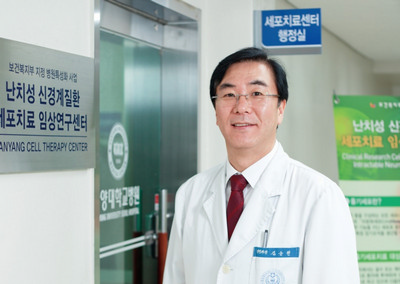
Cell Therapy Center for Intractable Neurological Diseases: Lou Gehrig's Disease Stem Cell Therapy Designated as Orphan Drug after Completing Clinical Trials, a World First
The Cell Therapy Center for Intractable Neurological Diseases at Hanyang University Hospital (Director Professor Kim Seunghyun) announced on January 6 that HYNR-CS Inj., a stem cell therapy for the treatment of Lou Gehrig's disease (amyotrophic lateral sclerosis) developed as part of a project to develop treatments for intractable neurological diseases carried out through the Ministry of Health and Welfare's Hospital Specialized Research Center Program, was designated as an orphan drug by the Ministry of Food and Drug Safety and announced as a new orphan drug. This is the world's first case of a cell therapy for the treatment of Lou Gehrig's disease being designated as an orphan drug after completing clinical trials. The project, one of the Ministry of Health and Welfare's support programs for developing cell therapies for intractable neurological diseases, has been under way for four years since 2010, and the achievement is the result of joint research by the general and first sub-project research team (Director Professor Kim Seunghyun) and the sixth sub-project research team (led by Kim Kyungsook, CEO of Corestem Inc.). ‘HYNR-CS Inj.’ is a stem cell therapy whose main ingredient is mesenchymal stem cells isolated and cultured from the bone marrow of the Lou Gehrig's disease patients themselves, and the participating company Corestem carried out its production and approval process. The stem cell therapy ‘HYNR-CS Inj.’ received approval from the Ministry of Food and Drug Safety in December 2010 and began clinical trials in February 2011; after completing Phase 1 (7 patients) and Phase 2 (33 in the treatment group and 31 in the control group) clinical trials in two years and three months, its results were evaluated for safety and efficacy. Director Kim Seunghyun said, “There have been various attempts to develop new treatments for patients with Lou Gehrig's disease, but none has shown notable effects, and there is currently no approved treatment other than a drug called riluzole,” adding, “The designation of ‘HYNR-CS Inj.’ as an orphan drug will be a first step in giving new hope to patients.” However, Director Kim also said, "The development of this treatment is only the first step in stem cell therapy, and it is even more necessary to continuously develop new drugs through further supplementary development; since this treatment is not a drug aimed at a complete cure, it is important to clearly understand its therapeutic purpose when using it." With the designation and announcement of the stem cell therapy ‘HYNR-CS Inj.’ as an orphan drug, its chances of product approval have increased, and after product approval, it will be marketed to patients in Korea and abroad, and additional clinical research will be conducted.
2014-01-20