

Total posts : 1394
-
Hanyang University Hospital for Rheumatic Diseases Identifies Lupus-Causing Genetic Variants
- Precise analysis of a large lupus cohort leads to first discovery of specific genetic variants - Two papers by Professor Bae Sangcheol’s team published simultaneously in the most authoritative journal on rheumatic diseases Specific genetic variants involved in the onset of lupus, which has been increasing every year and has a high proportion of young female patients, have been newly identified, taking lupus treatment a step forward. Lupus, a representative autoimmune disease in which an abnormal immune system attacks the body itself, is known to arise from a complex combination of environmental factors and multiple genetic variants, but many genetic variants have yet to be identified. Two lupus-related papers by Professor Bae Sangcheol’s team of the Department of Rheumatology at Hanyang University Hospital for Rheumatic Diseases were published simultaneously on December 14, 2015, in the American journal , the most authoritative journal on rheumatic diseases: ‘Influence of Susceptibility HLA-DRB1 alleles on the clinical subphenotypes of Systemic Lupus Erythematosus in Koreans(1)’ and ‘Identification of a systemic lupus erythematosus risk locus spanning ATG16L2, FCHSD2, and P2RY2 in Koreans’(2)’. The first paper identified various allelic variants of the HLA-DRB1 gene, which most increases the risk of onset, in order to uncover the causes of lupus based on a large Korean lupus cohort; the research team precisely analyzed the HLA-DRB1 genes of 1,089 Korean lupus patients and 2,161 controls. As a result, the team revealed the new finding that in Koreans, the HLA-DRB115:01, *09:01, *08:03 and *07:01 allelic variants increase the risk of lupus onset, while the *12:02 and *11:01 allelic variants decrease it. The team further found that these four risk alleles (HLA-DRB115:01, *09:01, *08:03, *07:01) induce the production of autoantibodies important to lupus onset and cause various clinical symptoms. Regarding this paper, Professor Bae said, “Because the HLA-DRB1 gene is the most variable and structurally complex in the human genome, it has been difficult to identify allelic variants associated with lupus onset, but now that the HLA-DRB1 variants involved in onset have been identified based on this large Korean lupus cohort, it will ultimately make a major contribution to the development of predictive medicine for lupus.” The second paper identified specific genetic variants for the first time through whole-genome variant analysis of 8,000 people; the research team, which led the project together with U.S. researchers, analyzed single nucleotide polymorphisms (SNPs) in DNA at the whole-genome level in a total of 5,500 Korean lupus patients and non-patients. As a result, the team found that multiple genetic variants in three genes (ATG16L2, FCHSD2, P2RY2) at position q14 of chromosome 11 are associated with lupus onset, and that the same results were replicated in a separate lupus cohort of 2,500 Koreans and Chinese. The team further found that 10 previously known lupus-causing genes, including HLA genes, show the same influence in Korean lupus patients. Professor Bae, one of the corresponding authors of this paper, said, “The new genes identified through this large-scale whole-genome analysis are highly reliable genetic variants for lupus onset and will enable more accurate prediction of onset in the future,” adding, “Subsequent functional studies will help provide a broader understanding of the pathogenic mechanism of lupus.” Both studies were conducted with support from the Health and Medical Research and Development Program (Researcher-Driven Convergence Basic Research - Basic Technology for the Clinical Application of Genomes).(End) [Reference 1] What is systemic lupus erythematosus? ‘Systemic lupus erythematosus’ is one of the representative rheumatic diseases that occurs mainly in young women in their 20s and 30s; although its exact cause is not well known, it is known to be an autoimmune disease caused by abnormalities in the immune system resulting from the combined action of genetic, environmental and hormonal factors. Lupus is one of the autoimmune diseases in which an abnormal immune system destroys one’s own body, and because it can occur in any part of the body, including the skin, joints, brain, kidneys, heart and lungs, its symptoms are extremely diverse. For this reason, it is called ‘the disease with a thousand faces.’ Inflammation and tissue damage occur through the formation of various autoantibodies and immune complexes. [Reference 2] What is HLA-DRB1? HLA (human leukocyte antigen)-DRB1 is a protein that binds to the initial epitope, one of the most important factors in the process from autoantigen recognition to autoantibody production in lupus, and plays a pivotal role in triggering the immune response to autoantigens. The HLA-DRB1 protein on the surface of antigen-presenting cells interacts with T cells to trigger innate and adaptive immune responses simultaneously. Lupus is an autoimmune disease in which autoantibodies against autoantigens are produced, and the resulting autoantibody-antigen complexes accumulate in blood vessels and organs, causing inflammatory reactions and producing various clinical symptoms throughout the body. *Attachments, [Figure 1] Role of HLA-DRB1 in the pathogenic mechanism of lupus [Figure 2] Results of lupus whole-genome association analysis
2015-12-29
-
Designated as the Only Regional Emergency Medical Center in Seoul’s Southeastern Region
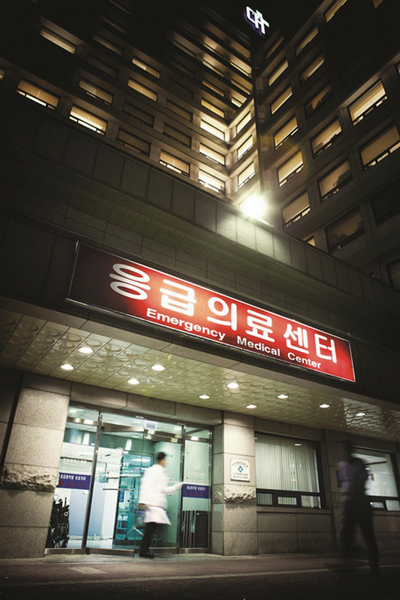
Hanyang University Hospital (President Lee Kwanghyun) was newly selected as a ‘Regional Emergency Medical Center’ announced by the Ministry of Health and Welfare on the 23rd, enabling it to provide high-quality emergency medical care to critically ill emergency patients in Seoul’s southeastern region. For this selection of Regional Emergency Medical Centers, the Ministry of Health and Welfare reorganized the regions from the existing administrative district-based system to living-area-based regions and made the final selection after evaluating the applicant institutions’ clinical performance, on-site evaluations and business plans for the future operation of a Regional Emergency Medical Center. With this selection, emergency medicine specialists will be stationed at the Hanyang University Hospital Regional Emergency Medical Center 24 hours a day to provide care, and it will provide intensive care unit-level patient monitoring and nursing services. In addition, reserve beds in the emergency intensive care unit and an on-call surgical team will operate 24 hours a day. To prevent infection in the emergency room, patients suspected of infection will be screened from the entrance, and isolation beds such as negative-pressure beds will be operated and isolation care for general patients will also be provided. The Department of Emergency Medicine at Hanyang University Hospital has actively participated in the ‘Korean Triage and Acuity Scale (KTAS)’ promoted by the Ministry of Health and Welfare since its development in 2012, and has led emergency medical education so that it is now established at all emergency medical centers nationwide. President Lee Kwanghyun said, “Hanyang University Hospital will expand its facilities, equipment and personnel to establish an emergency medical system that provides high-quality medical services to critically ill emergency patients in Seoul’s southeastern region.”
2015-12-28
-
Hanyang University Hospital for Rheumatic Diseases Holds Health Lecture on Understanding Ankylosing Spondylitis
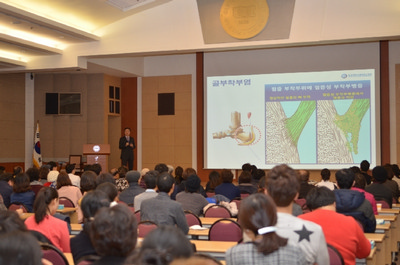
Hanyang University Hospital for Rheumatic Diseases (President Bae Sangcheol) held a free health lecture for the public on the theme ‘Understanding Ankylosing Spondylitis’ in the main conference room on the 6th floor of the Hanyang Institute of Technology (HIT building) at Hanyang University on December 11. At the event, which was a great success with many attendees including ankylosing spondylitis patients and their families, Professor Kim Taehwan of the Department of Rheumatology gave lectures on ‘Understanding Ankylosing Spondylitis Part 1’ and ‘Treatment Including Biologics: Efficacy, Effects and Side Effects,’ Professor Choi Chanbum of the Department of Rheumatology on ‘Understanding Ankylosing Spondylitis Part 2,’ and Professor Lee Kyuhoon of the Department of Joint Rehabilitation Medicine on ‘Exercise Therapy and Exercise Experience for Ankylosing Spondylitis.’ In addition, a patient who successfully overcame ankylosing spondylitis presented a story of overcoming the disease under the theme ‘I Am Legend (A Patient’s Life Story).’ In his lecture, Professor Kim Taehwan said, “Ankylosing spondylitis can be mistaken for a disease that occurs only in the spine, but more than half of patients also develop arthritis in the arms and legs,” adding, “It mainly occurs in young men in their teens and 20s, but recently the age of onset has been getting younger and the proportion of women has been increasing, so early detection and prompt treatment are more important than anything.” After the lectures, a QA session under the theme ‘Stories Left Untold in the Consultation Room’ was held to answer questions about the disease, resolving the questions of many attendees.
2015-12-16
-
Professor Kim Jungtae of Plastic Surgery Gives Invited Lecture at International Microsurgery Conference in China
Professor Kim Jungtae of the Department of Plastic Surgery at Hanyang University Hospital was invited as a featured speaker to the ‘1st Oriental International Microsurgery Conference’ held in Shanghai, China, from November 27 to 29, and gave a special lecture on ‘Supermicrosurgery in emergent cases.’ Professor Kim, an authority on reconstructive plastic surgery and microsurgery, said, “It was reconfirmed that Northeast Asia is the mecca of microsurgery, and Korean medicine will play a leading role in the field of microsurgery in the future.” Meanwhile, Professor Kim was also invited to Malaysia as an examiner in 2005, and last year he widely promoted Korean reconstructive plastic surgery through many invited lectures abroad, including at the Indian Society for Microsurgery, the Turkish Society for Microsurgery, the Singapore ASEAN conference, the British Association of Aesthetic Plastic Surgeons and the Chinese Society for Microsurgery. Professor Kim Jungtae graduated from Hanyang University College of Medicine and received his master’s and doctoral degrees from the same graduate school. He trained at Kawasaki Medical School in Japan, Baylor University in the United States, Chang Gung Memorial Hospital in Taiwan and the MD Anderson Cancer Center in the United States, and has served as Editor-in-Chief of Archives of Plastic Surgery, Director of Publications of the Korean Society of Plastic and Reconstructive Surgeons, a director of the Korean Society for Aesthetic Plastic Surgery, Director of Academic Affairs of the Korean Society for Microsurgery and Director of Publications of the Korean Society for Surgery of the Hand, among others.
2015-12-16
-
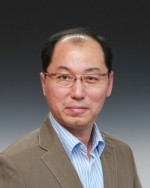
Professor Kim Youngsoo of Neurosurgery Gives Invited Lecture at 'BLETS Launch Symposium' in Hong Kong
Professor Kim Youngsoo of the Department of Neurosurgery at Hanyang University Hospital was invited as a speaker at the ‘Brain LAB Exac Trac System (hereinafter BLETS) Launch Symposium’ held at St. Teresa's Hospital in Hong Kong on December 3 and delivered a lecture on the topic of ‘The Latest Insights into Radiosurgery and Radiotherapy.’ Professor Kim, an authority on brain tumors, Parkinson's disease and radiosurgery, said, “St. Teresa's Hospital in Hong Kong is a hospital renowned for radiation oncology treatment, and it recently newly installed Varian's TrueBeam linac,” adding, “To help them begin radiosurgery, I gave a lecture on precise positioning tailored to the additional installation of Brainlab's precision positioning guidance system and on the related radiosurgical techniques.” Meanwhile, in May, Professor Kim welcomed medical staff from St. Teresa's Hospital in Hong Kong who oversee radiosurgery and its equipment and passed on the latest Novalis Tx radiosurgery and radiotherapy techniques, which led to this invited lecture, successfully concluded. Professor Kim Youngsoo graduated from Yonsei University College of Medicine and received master's and doctoral degrees from the same graduate school. Currently specializing in stereotactic and functional neurosurgery, Professor Kim is actively engaged as Director of the Hanyang University Institute for Creative Surgical Technology, President of the Asian Society for Computer Aided Surgery, former Chairman of the Korean Society of Medical Robotics, and a regular member of the Korean Neurosurgical Society and the World Federation of Neurosurgical Societies.
2015-12-16
-
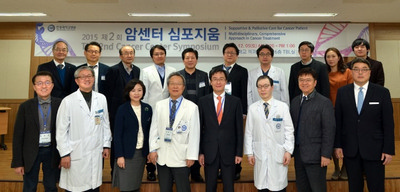
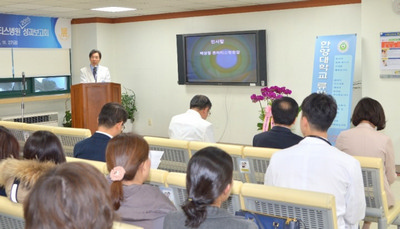
2nd Cancer Center Symposium Held
On December 5, Hanyang University Hospital (President Lee Kwanghyun) held the ‘2nd Cancer Center Symposium’ in the TBL room on the 6th floor of the main building of Hanyang University College of Medicine to share experiences of multidisciplinary collaborative care for cancer patients and to discuss symptomatic and palliative treatment. The symposium was attended by key executives and many officials, including Kim Kyunghun, Executive Vice President for Medical Affairs and President of Hanyang University Medical Center, Hanyang University Hospital President Lee Kwanghyun and Director of the Office of Management Support Hwang Sungwoo. In his congratulatory speech, Executive Vice President for Medical Affairs and President of the Medical Center Kim Kyunghun said, “Cancer is not a disease of any one clinical department but a complex disease that requires several departments to work together in treatment, so specialists from various departments must provide efficient and effective treatment through a multidisciplinary collaborative care system.” In his greeting, President Lee Kwanghyun said, “Since treatment outcomes can be better when patients undergoing cancer surgery or chemotherapy think positively, medical staff should strive to help patients have positive thoughts.” In his opening address, Cancer Center Director Tae Kyung said, “The Cancer Center of Hanyang University Hospital established a multidisciplinary collaborative care system and began providing care in September 2014, and it is currently producing positive effects in the treatment and satisfaction of cancer patients,” adding, “The Cancer Center of Hanyang University Hospital will continue to do its best in the care and healing of cancer patients, and we will strive to make it a cancer center that develops every year.” The symposium was divided into two sessions. The first session, on the theme ‘Supportive Palliative Care for Cancer Patient,’ was chaired by Professor Kwon Sungjoon of General Surgery and Professor Lee Youngyeol of Hematology Oncology, with lectures by Oncology Nurse Specialist Kang Hyeryung of the Cancer Center and Dietitian Kim Minsun of the Nutrition Team on ‘Effective education for cancer patient,’ Professor Kim Seokhyun of Neuropsychiatry on ‘Mind-body interaction,’ Professor Kim Taegon of Physical Medicine Rehabilitation on ‘Physical rehabilitation of cancer patients,’ Professor Park Haejin of Radiation Oncology on ‘Role of palliative radiotherapy,’ and Professor Uhm Jieun of Hematology Oncology on ‘Management of cancer pain.’ The second session, on the theme ‘Multidisciplinary, Comprehensive Approach in Cancer Treatment,’ was chaired by Professor Jung Wonsang of Thoracic Cardiovascular Surgery and Professor Lee Youngho of Pediatrics Adolescent, with lectures by Professor Lee Daeho of the Department of Oncology at Asan Medical Center in Seoul on ‘Multidisciplinary approach,’ Professor Tae Kyung of Otolaryngology on ‘Multidisciplinary approach in HYUMC and Introduction of head and neck cancer center,’ Professor Kwon Sungjoon of General Surgery on 'Stomach cancer center,’ Professor Kim Taeseung of Orthopedic Surgery on ‘Musculoskeletal tumor center,’ Professor Choi Joongsub of Obstetrics Gynecology on ‘Gynecology tumor center,’ Professor Yoon Hojoo of Pulmonology Allergy on ‘Lung cancer center,’ Professor Lee Kyeonggeun of General Surgery on ‘Hepato-biliary-pancreas tumor center,’ Professor Chung Minsung of General Surgery on ‘Breast cancer center,’ and Professor Lee Youngho of Pediatrics Adolescent on ‘Pediatric tumor center.’ Since September 2014, the Cancer Center of Hanyang University Hospital has established a multidisciplinary collaborative clinic, opened 15 specialized clinical centers, including the Thyroid Tumor Center, as well as a cancer research and education center, and provides close and integrated multidisciplinary collaborative care.
2015-12-08
-
Hanyang University Hospital for Rheumatic Diseases Holds 2015 Performance Report Meeting
Hanyang University Hospital for Rheumatic Diseases (President Bae Sangcheol) held its ‘2015 Performance Report Meeting’ in the hospital’s 1st-floor lobby on November 27. The meeting was attended by many people, including Kim Kyunghun, Executive Vice President for Medical Affairs and President of Hanyang University Medical Center; Hwang Sungwoo, Director of the Office of Management Support; Bae Sangcheol, President of Hanyang University Hospital for Rheumatic Diseases; and medical staff and nurses. The meeting was hosted by Professor Cho Sukyung; attendees watched a video of the various events at the hospital during 2015, followed by a performance report by Jun Jaebum, chairman of the planning subcommittee. In his greeting, President Bae Sangcheol said, “Hanyang University Hospital for Rheumatic Diseases plans to continue strengthening its research and clinical functions so that it can lead the field of rheumatic diseases in Korea, such as stem cell therapy and personalized treatment for intractable rheumatic diseases including lupus, centered on the Global Cell Therapy Center,” adding, “Following clinics for lupus, tendinitis, adult-onset Still’s disease, scleroderma and ankylosing spondylitis, we additionally opened clinics this year for vasculitis, including Behçet’s disease, and psoriatic arthritis, strengthening our expertise for patients with intractable diseases.” He also said, “I thank all the faculty and staff who spared no effort despite the difficult conditions caused by MERS this year.” In the special lecture that followed, Jung Mihong, President of Luisa (People Who Overcome Lupus), gave a talk titled ‘Emotional Communication for Building a New Life,’ receiving an enthusiastic response from the many attendees.
2015-11-30
-
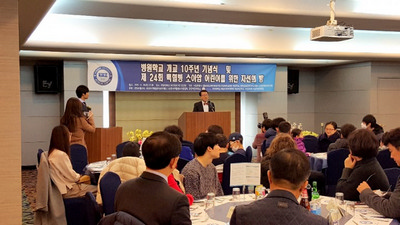
Hospital School Holds 10th Anniversary Ceremony
The hospital school, established by Hanyang University Hospital (President Lee Kwanghyun) to help students receiving long-term treatment return smoothly to school, marked its 10th anniversary by holding an anniversary ceremony at the Hanyang University Alumni Hall on the 26th. In his congratulatory speech, President Lee Kwanghyun said, “Hanyang University Hospital is making its best efforts to help children who must receive long-term treatment for pediatric cancer and other conditions combine treatment and schoolwork so they can return to school normally.” Lee Youngho, Principal of the Hospital School (Professor of Pediatrics Adolescent), said, “The children of our hospital school are building happy memories based on the school motto of healthy children, positive children and children who nurture dreams,” adding, “Current teachers and university student teachers maintain the subject classes of school, and many volunteers, including laughter therapy, extracurricular activity teachers, art therapy and music therapy volunteers, strive to help with the children's emotional development and psychological stability.” At the event, student Ryu Kookmin, who fought and overcame illness and was fully cured, presented ‘A Cured Patient's Experience of School Life,’ and teacher Yoo Soyoung of Majang Elementary School presented on ‘The Impact of the Hospital School on Returning to School,’ followed by a special lecture by national marathoner Lee Bong-ju on the theme ‘Life Is a Marathon.’ Certificates of appreciation were also presented to volunteers and current teachers.
2015-11-27
-
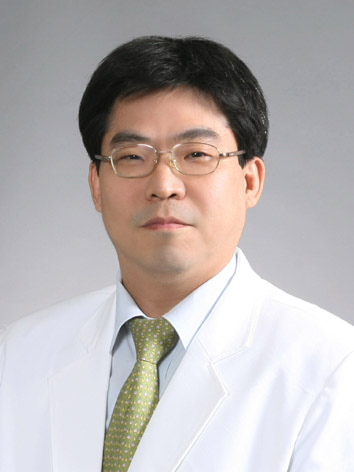
Professor Kim Heetae of the Department of Neurology Elected Next President of Korean Movement Disorder Society
Professor Kim Heetae of the Department of Neurology at Hanyang University Hospital was elected president at the ‘2015 Korean Movement Disorder Society (KMDS) Fall Conference’ held at the International Convention Center Jeju on October 24, and his term runs from 2016 to 2018. Professor Kim was appointed editorial director when KMDS was founded in 2006 and has worked toward KMDS's goals of research on Parkinson's disease and movement disorders, academic exchange and promotion of patients' rights and interests; having served as academic director, planning director and vice president, he will serve as president of KMDS from 2016. Professor Kim graduated from Hanyang University College of Medicine in 1987, received his master's and doctoral degrees from the same graduate school, and trained at the London Institute of Neurology at Queen Square (2002–04). He has served as general affairs director and planning director of the Korean Neurological Association, among other positions, and is currently active as a regular member of the International Parkinson and Movement Disorder Society (MDS) and as Korea's representative executive committee member of the MDS-AsianOceanian Section (MDS-AOS).
2015-11-27