

Total posts : 1394
-
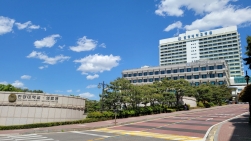
Reselected as the Seoul Regional Operator of the Ministry of Employment and Labor’s ‘Occupational Disease Safety Center’
- Until 2029, the only center in the Seoul region…also serving as the ‘central center’ overseeing the nation Hanyang University Hospital (President Lee Hyeongjoong) has been reselected as the Seoul regional operator of the ‘2026 Occupational Disease Safety Center Operation’ project organized by the Ministry of Employment and Labor. Based on the expertise and operational achievements accumulated since opening Korea’s first ‘Occupational Disease Safety Center’ in 2022, it will continue to serve as a pivotal institution responsible for the early detection and prevention of occupational diseases among workers in the Seoul area until 2029 (2027 + 2-year extension). In particular, with this reselection, Hanyang University Hospital was designated as the sole operator for the Seoul region and was also selected as the ‘central center’ overseeing the projects of the 10 Occupational Disease Safety Centers nationwide. Accordingly, it will be in charge of project planning, coordination and promotion for up to four years from 2026 to 2029, leading the advancement of the national occupational disease monitoring system. The ‘Occupational Disease Safety Center’ is Korea’s first permanent monitoring system that detects occupational diseases early at the hospital visit stage and prevents further industrial accidents through follow-up measures. When an occupational disease defined in the Enforcement Decree of the Serious Accidents Punishment Act occurs, it also provides professional advice on investigation and inquiry processes through cause investigation and analysis. Hanyang University Hospital, which operates the only ‘Occupational Disease Safety Center (Director Professor Kim Ina, Department of Occupational Environmental Medicine)’ in the Seoul region, screens suspected cases of occupational disease among patients visiting the emergency room, conducts in-depth examinations and work-relatedness assessments, and, when a serious occupational disease is confirmed, provides on-site investigation support and investigative advice in cooperation with relevant agencies. President Lee Hyeongjoong said, “Early detection and systematic management are most important for occupational diseases,” adding, “As the central institution of Occupational Disease Safety Centers not only in the Seoul region but nationwide, we will faithfully fulfill our public role in creating safe and healthy workplaces.” Meanwhile, the Department of Occupational Environmental Medicine at Hanyang University Hospital started as the ‘Industrial Health Center’ in 1991 and has led the field of occupational health in Korea by operating a special health examination institution, a specialized health management institution and a work environment measurement institution designated by the Ministry of Employment and Labor. (End)
2026-01-28
-
 (2).jpg)
‘2026 First-Half Retirement Ceremony’ Held
Hanyang University Hospital (President Lee Hyeongjoong) held the ‘2026 First-Half Retirement Ceremony’ at 10 a.m. on the 23rd in the sixth-floor seminar room of the New Building, celebrating the honorable retirement of faculty and staff who have devoted decades to the hospital’s growth and medical advancement. The event was attended by Yoon Hojoo, Executive Vice President for Medical Affairs and President of Hanyang University Medical Center, President Lee Hyeongjoong, key executives and fellow faculty and staff. The ceremony proceeded in the order of the National Ceremony, introduction of retirees, words of encouragement, presentation of plaques of merit and retirees’ farewell remarks. A total of 16 people are retiring this time, including Professor Kim Hyuck of the Department of Thoracic Cardiovascular Surgery, Professor Kim Keunho of the Department of Nephrology, Senior Director Kwon Okyun of the Office of Management Support and Senior Director Kook Eunyoung of the Department of Nursing. In his words of encouragement, Medical Center President Yoon Hojoo said, “Your dedication and achievements live and breathe fully within the name Hanyang and have been a solid foundation for your juniors,” adding, “Even after you leave the hospital, please cherish your bond as members of the ‘Hanyang family’ forever.” President Lee Hyeongjoong also expressed his gratitude, saying, “In an era of change where analog sincerity and digital innovation coexisted, you retirees are the pride of our hospital, having stayed by patients’ side with ‘human warmth’ that technology cannot replace,” and “Retirement is not an end but a new beginning, and the hospital will always remain a hometown that remembers you and waits for you.” Hanyang University Hospital presented plaques of merit and souvenirs honoring their contributions to the 16 faculty and staff members retiring in the first half, and sent messages of support for the second act of their lives. (End)
2026-01-26
-
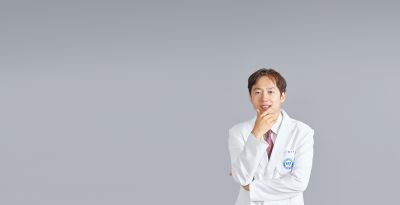
Survival and Treatment Gaps in Male Breast Cancer Identified
- Two related papers published in succession in the world-renowned journal “The Breast” - Male breast cancer in Korea: incidence rising while survival improvement stagnates A study identifying the long-term survival patterns and treatment and prognosis gaps of male breast cancer patients in Korea has been published, further enhancing the clinical understanding of male breast cancer. Male breast cancer is a very rare disease, accounting for less than 1% of all breast cancers, but this study clearly confirmed a survival structure different from that of female breast cancer and differences in access to treatment. The research team of Professor Cha Chihwan of the Department of Breast Surgery at Hanyang University Hospital published two research papers in succession in “The Breast,” a prestigious international journal in the field of breast cancer, comprehensively analyzing long-term survival outcomes, incidence trends and treatment gaps of male breast cancer in Korea using large-scale national data. Male breast cancer is known to be mainly diagnosed in old age and to have a poor prognosis, but in Korea, studies systematically analyzing survival outcomes and treatment characteristics based on large-scale data allowing long-term follow-up have been very limited. This study is significant in that it analyzed the clinical characteristics of male breast cancer from multiple angles using the ‘Korean Breast Cancer Society Breast Cancer Registry (KBCR)’ and ‘National Health Insurance Service (NHIS) complete enumeration data’ to make up for these limitations. - Male breast cancer: cancer-specific survival similar to women’s…overall survival still lower The first study, ‘Long-term survival outcomes of male breast cancer: the propensity score matching analysis of nationwide registry database,’ compared and analyzed long-term survival rates of male breast cancer patients registered in the KBCR from 1981 to 2014 against female breast cancer patients through propensity score matching. The study found no significant difference in 10-year breast cancer–specific survival between men and women. This suggests the possibility that the biological prognosis of the cancer itself in male breast cancer is not fundamentally very different from that of female breast cancer. On the other hand, overall survival was significantly lower in male patients, which was analyzed to be the result of more non-cancer deaths or secondary cancers occurring in men rather than the cancer itself. In addition, while treatment outcomes for female breast cancer have clearly improved over the past several decades, no clear improvement in survival was observed for male breast cancer. - Incidence of male breast cancer in Korea doubles over 16 years…gaps in treatment and prognosis remain The second study, ‘Korean nationwide analysis of male breast cancer: Incidence trends, treatment disparities, and survival compared with female patients,’ is the largest epidemiological and clinical study in Korea, analyzing about 1,400 men among more than 360,000 breast cancer patients using National Health Insurance Service data from 2007 to 2023. The study found that the age-standardized incidence rate of male breast cancer in Korea more than doubled over about 16 years. Although the absolute number of patients is small, this suggests that with the aging of the population, male breast cancer can no longer be regarded merely as an ‘extremely rare disease.’ The analysis of clinical characteristics showed that male patients had a higher average age at diagnosis and more comorbidities than women, and a lower rate of receiving major adjuvant treatments such as radiation therapy, chemotherapy and targeted therapy. In the prognosis analysis, male patients also had a significantly higher risk of recurrence and overall death than women, and these differences persisted even after adjusting for age, comorbidities and treatment status. - Male breast cancer requires independent research and strategies beyond female-centered treatment Both studies commonly show that male breast cancer patients face clinical and social challenges different from those of female breast cancer patients. It was also pointed out as an important problem that, although male breast cancer has a very high rate of hormone receptor positivity, the actual duration of endocrine therapy is short and the likelihood of discontinuing treatment due to side effects is high. Professor Cha Chihwan said, “Because it is a rare cancer, male breast cancer has been treated by applying the treatment strategies of female breast cancer as they are, but from the perspective of long-term survival, many problems remain unresolved,” adding, “This study scientifically shows that male breast cancer should no longer be treated as an ‘appendage disease’ of female breast cancer.” He added, “In the future, multicenter clinical studies targeting male breast cancer, analysis of its biological characteristics, and the development of customized treatment strategies that male patients can actually tolerate are essential,” and “I hope the results of this study will be used as evidence for improving male breast cancer treatment guidelines and establishing health policies.” (End)
2026-01-22
-
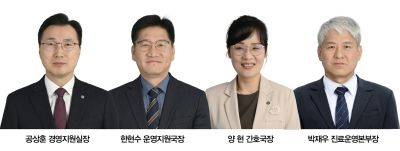
First-Half 2026 Personnel Appointments
[Hanyang University Medical Center] △Director of the Office of Management Support, Hanyang University Medical Center: Senior Director Kong Sanghoon △Director of the Operations Support Division, Hanyang University Hospital: Director Han Hyunsoo △Director of the Department of Nursing, Hanyang University Hospital: Director Yang Hyun △Head of the Clinical Operations Division, Hanyang University Hospital: Director Park Jaewoo Hanyang Foundation appointed, effective February 1, Senior Director Kong Sanghoon as Director of the Office of Management Support of Hanyang University Medical Center, Director Han Hyunsoo as Director of the Operations Support Division of Hanyang University Hospital, Director Yang Hyun as Director of the Department of Nursing, and Director Park Jaewoo as Head of the Clinical Operations Division. ▲Director of the Office of Management Support: Senior Director Kong Sanghoon ▲Director of the Operations Support Division: Director Han Hyunsoo ▲Director of the Department of Nursing: Director Yang Hyun ▲Head of the Clinical Operations Division: Director Park Jaewoo
2026-01-21
-
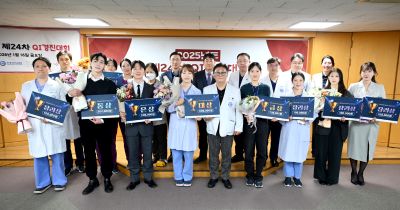
‘24th QI Competition’ Held
- Sharing results of field-centered improvement activities for patient safety and better quality of care Hanyang University Hospital (President Lee Hyeongjoong) held the ‘24th QI (Quality Improvement) Competition’ on January 16 in the seminar room on the 6th floor of the New Building to establish a patient safety culture and improve the quality of care. The QI competition was organized for all departments of the hospital to share the results of field-centered quality improvement activities and to promote patient safety and better work efficiency. A total of 25 teams from various departments, including wards, outpatient clinics, operating rooms and administrative departments, took part, and 11 of them gave oral presentations on improvement cases that can be practically applied in the medical field. The grand prize went to ‘FMEA-Based Intensive Monitoring QI Activity for the Safety Management of Therapeutic Devices in Isolated Patients,’ presented by the ‘18th Floor Safety Guardians’ team of the 18th-floor ward of the Main Building; the gold prize to ‘Improving Patient Satisfaction through Information and Explanation before Robotic Surgery’ by the operating room’s ‘HY Robotic Surgery Team’; the silver prize to ‘Improving Transportation Convenience for Visitors’ by the ‘Dahamkke Chachacha’ team of the Human Resources and General Affairs Team; and the bronze prize to the ‘Step by Step Safely, Falls Zero Go!’ activity presented by the ‘Safe Step’ team of the 7th-floor ward of the East Building. In addition, the CQI Award went to ‘CQI Activity for Standardizing Outpatient Work to Induce a Positive Patient Experience’ by the ‘H.O.P.E’ team of the Outpatient Nursing Team, and encouragement awards were given to several departments, including the 15th-floor ward of the Main Building, the Department of Rheumatology, the Department of Pathology, the Adult ICU Union, the Central Supply Room and the 9th-floor ward of the Main Building, sharing improvement results in various areas such as better patient experience, stronger medical safety and higher work efficiency. President Lee Hyeongjoong said, “The QI competition is a meaningful activity in which faculty and staff voluntarily think about improving the quality of care and patient safety and share excellent cases,” adding, “We will continue to support continuous quality management activities to create a safe medical environment that patients can trust.” Meanwhile, Hanyang University Hospital holds a QI competition every year to strengthen patient safety and improve the quality of medical services, and continues to promote field-centered improvement activities (End).
2026-01-19
-
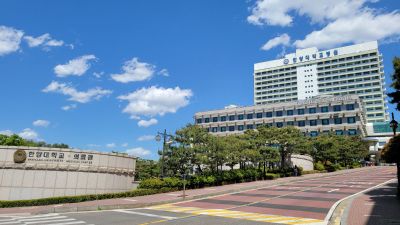
Selected as an ‘Intensive Treatment Hospital for Acute Mental Illness’
- Full-cycle treatment role from psychiatric emergencies and acute treatment to post-discharge linkage Hanyang University Hospital (President Lee Hyeongjoong) was recently selected as an ‘Intensive Treatment Hospital for Acute Mental Illness’ by the Ministry of Health and Welfare. An ‘Intensive Treatment Hospital for Acute Mental Illness’ is a medical institution that provides intensive treatment to patients with acute mental illness, such as patients at risk of harming themselves or others, first-episode patients for whom treatment effectiveness and priority are high, and patients requiring emergency hospitalization. The Ministry of Health and Welfare designated 26 institutions nationwide in the first round after a public call and review targeting tertiary general hospitals and national psychiatric hospitals. With this designation as an intensive treatment hospital, Hanyang University Hospital will operate 10–20% of its intensive treatment unit beds as beds for emergency inpatients. This will establish a care system that enables prompt hospitalization and initial treatment when a psychiatric emergency occurs. In addition, to ensure that treatment is not interrupted even after discharge, it will establish individual discharge plans and provide hospital-based case management services, including home visits and telephone counseling. This will enable continuous treatment even after inpatient treatment. Through these operations, Hanyang University Hospital will play a pivotal role throughout the treatment system for patients with mental illness, from the initial response to psychiatric emergencies to acute intensive treatment and continued treatment after discharge. President Lee Hyeongjoong said, “Our hospital has worked to treat psychiatric emergency and acute patients, and we will continue to provide a treatment environment and system so that patients with acute mental illness can receive timely treatment and return to their daily lives as soon as possible.” (End)
2026-01-14
-
.jpg)
Ceremony Held to Mark 300 ‘da Vinci SP’ Robotic Surgeries
- Single-port robotic surgery quickly established… robotic surgery expertise and capabilities strengthened Hanyang University Hospital (President Lee Hyeongjoong) held a ceremony marking 300 ‘da Vinci SP’ single-port robotic surgeries in the 5th-floor conference room of the East Building on January 12. Since introducing the ‘da Vinci SP,’ a state-of-the-art single-port robotic surgery system, in December 2024, Hanyang University Hospital has reached 300 cases in a short period through stable operation, continuing to achieve meaningful results in the field of robotic surgery. At the ceremony, Vice President Lee Hanglak said, “Since the introduction of the da Vinci SP, robotic surgery has quickly become established and is producing visible results,” adding, “We will continue to provide support so that safer and more precise surgery can be offered to patients based on our excellent medical staff and systematic collaborative care system.” Bae Jaeman, Director of the Robotic Surgery Center, said, “Reaching 300 da Vinci SP surgeries is the result of close cooperation among medical staff from various departments, the nursing team and related departments,” adding, “We will continue to expand the scope of clinical application of robotic surgery and further improve the quality of surgery.” The Robotic Surgery Center of Hanyang University Hospital recorded 181 robotic surgeries in the fourth quarter of 2025, the highest number on a quarterly basis, showing steady growth. It also plans to further strengthen the safety and efficiency of surgery by introducing the latest SP-dedicated staplers and upgrading the system in the near future (End). [Reference] da Vinci SP (Single Port) robotic surgery system The da Vinci SP is a state-of-the-art single-port robotic surgery system that performs surgery through a single incision of about 2.5 cm. A 3D HD high-resolution camera and articulated surgical instruments are inserted through a single channel, enabling precise surgery even in deep or narrow areas of the body. Its advantages are that the small incision reduces pain, bleeding and the risk of complications and shortens the recovery period. Main areas of application - Urology: prostate cancer, kidney cancer, bladder cancer, etc. (Professor Park Sung Yul, Professor Yoon Youngeun) - Obstetrics Gynecology: uterine fibroids, uterine cancer, ovarian tumors, pelvic organ prolapse, etc. (Professor Bae Jaeman, Professor Lee Wonmoo) - General Surgery: thyroid cancer, colorectal cancer, stomach cancer, gallbladder disease, breast cancer, etc. (Professor Ha Taekyung, Professor Jung Yoonkyung) - Otolaryngology: head and neck cancer, salivary gland tumors, etc. (Professor Tae Kyung, Professor Song Changmyeon) - Thoracic Cardiovascular Surgery: lung cancer, esophageal cancer, mediastinal tumors, etc. (Professor Kim Yeonsu)
2026-01-13
-
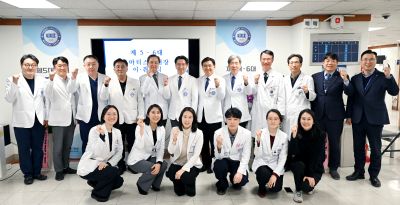
‘Inauguration Ceremony for the 6th Hospital President’ Held
President Sung Yoonkyoung: “Strengthening patient-centered care, research-clinical cooperation and the role of a teaching hospital” Hanyang University Hospital for Rheumatic Diseases held a ceremony for the departure of the 5th president and the inauguration of the 6th president in the lobby on the 1st floor of the Main Building on January 8. Key officials and faculty and staff, including Yoon Hojoo, Executive Vice President for Medical Affairs and President of Hanyang University Medical Center, and President Lee Hyeongjoong, attended the event to congratulate the new president on her inauguration. In her inaugural address, Sung Yoonkyoung, the new 6th president, said, “Thanks to the outstanding insight and unwavering leadership of former President Kim Taehwan, the Hospital for Rheumatic Diseases has led the care and clinical research of highly complex autoimmune diseases,” adding, “Going forward, we will strengthen patient-centered care, build a virtuous cycle between research and clinical practice, and faithfully fulfill our role as a teaching hospital for the next generation of medical staff.” She added, “As we will celebrate the 30th anniversary of our opening in two years, we will not rest on past achievements but take this as a starting point to prepare for the next 30 years.” In his farewell address, Kim Taehwan, the former 5th president, said, “Thanks to the deep trust and cooperation of our members over the past five years, I was able to turn change into reality, firmly lay the foundation for a leap forward and complete my term,” adding, “I will continue to devote myself to care and research as a regular professor and contribute to the hospital’s development.” In his greeting, Yoon Hojoo, Executive Vice President for Medical Affairs and President of Hanyang University Medical Center, said, “Thanks to the dedicated leadership of former President Kim Taehwan and the efforts of all members, the Hospital for Rheumatic Diseases has established itself as a brand representing Hanyang University Medical Center,” adding, “I expect that it will continue to grow under the leadership of new President Sung Yoonkyoung, who has outstanding capabilities in research and care.” President Lee Hyeongjoong said, “President Sung Yoonkyoung showed meticulous planning and drive as chair of the history compilation committee at the time of the hospital’s 50th anniversary,” adding, “I expect her to add new direction on the foundation laid by President Kim Taehwan.” Meanwhile, at the event, new President Sung Yoonkyoung presented a plaque of appreciation to former President Kim Taehwan as a token of gratitude for his contributions during his tenure. (End)
2026-01-12
-
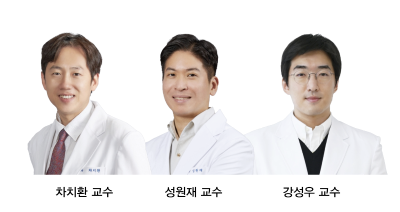
Three Medical Staff Selected for the ‘Global Physician-Scientist Training Program’
- Leading research on severe and rare diseases including male breast cancer, rare dementia and Alzheimer’s disease Three medical staff members of Hanyang University Hospital (President Lee Hyeongjoong) have been selected for the ‘2025 Global Physician-Scientist Training Program (Clinical Physician-Scientist Research Mentoring Program)’ supported by the Ministry of Health and Welfare. The ‘Global Physician-Scientist Training Program’ is a national research and development program that supports young physician-scientists (M.D.-Ph.D.) at tertiary general hospitals in growing into world-class researchers based on research ideas derived from clinical settings. Selected projects receive research funding of up to 60 million won per year. The researchers selected this time are a total of three: ▲Professor Cha Chihwan of the Department of General Surgery ▲Professor Sung Wonjae of the Department of Neurology ▲Professor Kang Sungwoo of the Department of Neurology. Professor Cha Chihwan will conduct an ‘International Joint Cohort Study for the Development of a Prognosis Prediction Model Specific to Male Breast Cancer.’ The goal is to build a more precise prognosis prediction model by internationally analyzing clinical data of male breast cancer patients, on whom research has been limited because it is a rare disease. Professor Sung Wonjae is expected to contribute to the early diagnosis of rare neurodegenerative diseases and the discovery of treatment targets through his study ‘Analysis and Identification of Novel Biomarkers in Patient-Derived Cell Models of the Frontotemporal Dementia Spectrum Associated with TDP-43 Pathology.’ Professor Kang Sungwoo plans to conduct research to elucidate new mechanisms of dementia pathophysiology and identify the causes of imaging abnormalities (ARIA) through his ‘Study on the Pathophysiology of the Glymphatic System and the Mechanism of ARIA Development in Mixed Alzheimer’s-Lewy Body Dementia.’ President Lee Hyeongjoong said, “Our hospital has made continuous efforts in clinical research focused on severe and rare diseases and in training physician-scientists,” adding, “With this selection, we will actively support young physician-scientists in growing into world-class researchers based on their clinical experience.” (End)
2026-01-06